$750bn US AI data centre boom may be a bubble, analysts warn
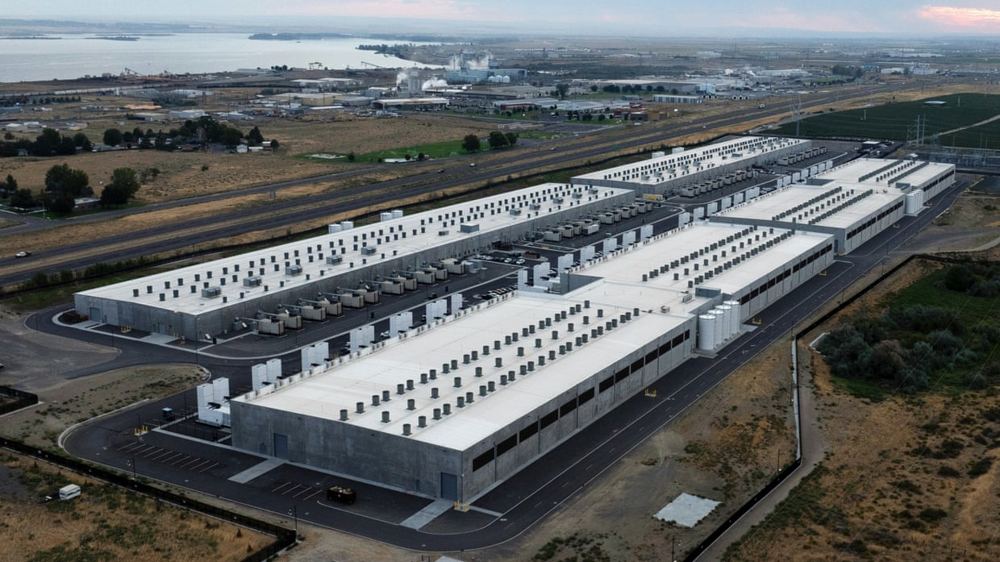
US tech firms are pouring vast sums into AI infrastructure, but analysts warn the physical build-out masks a deeper corporate power grab and risks a market bubble.
US technology firms are investing roughly three-quarters of a trillion dollars into data centre infrastructure this year. However, security technologist Bruce Schneier and data scientist Nathan E Sanders argue this massive capital deployment distracts from the industry's true ambitions.
The analysts warn that AI companies are not merely building computing facilities; they are attempting to capture the value generated by entire sectors. Having disrupted customer service and consumer sales, the industry is now targeting enterprise software development, creative design, management, and legal services.
Local opposition to these facilities has grown across the US due to strains on housing, energy prices, and the environment, compounded by the fact that data centres create very few jobs. Yet, well-capitalised projects frequently overcome such resistance. An OpenAI- and Oracle-backed facility in Saline township, Michigan, recently forced a settlement to proceed despite local rejection, aided by a Trump administration willing to override state objections.
For European investors and markets, the current infrastructure frenzy may be temporary. Chinese competitors like Z.ai are developing techniques to shrink and cheapen frontier-class models. Meanwhile, Apple and Google are building infrastructure stacks to run AI directly on mobile phones. The analysts suggest this build-out could parallel the fibre optic cable collapse of the early 2000s as demand shifts to smaller, localised models.
Beyond market dynamics, the analysts highlight a troubling concentration of corporate political influence. During the recent New York congressional Democratic primary, political action committees linked to AI rivals Anthropic and OpenAI spent millions lobbying for or against "AI safety" regulations.
According to Schneier and Sanders, this dynamic functions as marketing rather than principled concern. OpenAI's allies favour slow-moving federal control that blocks state regulators, while Anthropic backs heavier frameworks that suit its compliance-focused branding. Both profit from the narrative that their products are uniquely powerful.
For European policymakers navigating their own AI regulations, the US experience serves as a cautionary tale. The primary economic risk is not the physical infrastructure, but the exacerbation of inequality and the concentration of wealth among a handful of corporations. The analysts advocate for taxing AI computation and building a "Public AI" ecosystem geared toward public benefit rather than private profit.