OpenAI shuts Atlas browser, shifts AI features to Chrome
OpenAI is abandoning its standalone Atlas browser to embed its AI agent features directly into Google Chrome, conceding that artificial intelligence will augment existing web infrastructure rather than replace it.
OpenAI is shutting down Atlas, the AI-powered browser it launched in October. Rather than building a standalone destination for web surfing, the company will redistribute Atlas’s agentic browsing capabilities into its existing ChatGPT desktop app and a new Google Chrome extension.
The retreat follows a directive from Fidji Simo, OpenAI’s former CEO of applications, to cut back on “side quests.” That same internal push recently led to the shutdown of Sora, the firm’s AI video-generation tool. By closing Atlas, OpenAI appears to have concluded that a browser is a feature, not a product.
For much of the past year, well-funded AI developers have waged an expensive war to unseat Chrome as the primary online gateway. Startups like Perplexity launched their own Comet browser, The Browser Company introduced Dia, and tech giants Microsoft and Google updated Edge and Chrome with native AI tools. OpenAI’s decision to abandon a standalone browser effectively ends its direct challenge to Google’s web dominance. In Europe, where regulators closely monitor digital gatekeepers, this pivot means AI will likely reach most users through Google's existing infrastructure rather than a competing platform.
Instead of fighting Chrome, OpenAI is now building inside it. The new ChatGPT extension for Chrome gives the AI access to the context of whatever page a user is viewing, allowing them to summarize content, ask questions, or trigger longer automated tasks. This puts OpenAI in direct competition with Google’s Gemini Side Panel, which offers similar functionality.
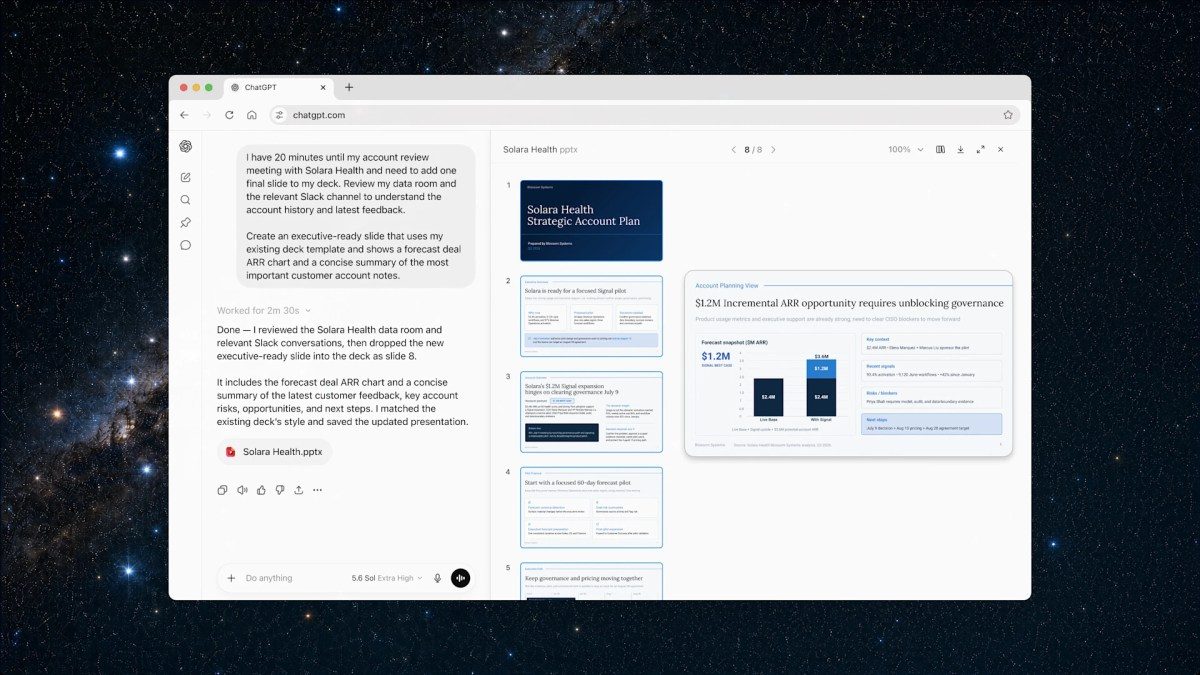
Simultaneously, OpenAI is upgrading its ChatGPT desktop application with a more robust internal browser. Users can now visit websites, log into accounts, download files, and interact with pages without leaving the app. A separate cloud browser, running remotely on OpenAI’s servers, acts as a secure environment where the app’s AI agents can execute tasks on a user’s behalf.
Together, these updates transform ChatGPT from a chatbot into a continuous, cross-platform workspace. For investors and rival tech firms, the move signals a pragmatic maturation within the AI sector. Rather than burning capital to replace established software ecosystems, the industry's most valuable player is focusing on integrating its technology directly into the tools European businesses and consumers already use every day.