Bayeux Tapestry reaches London after secret 11-hour journey
The Bayeux Tapestry has arrived in London for the first time in 1,000 years, a diplomatic loan from France that has already driven exceptional public demand.
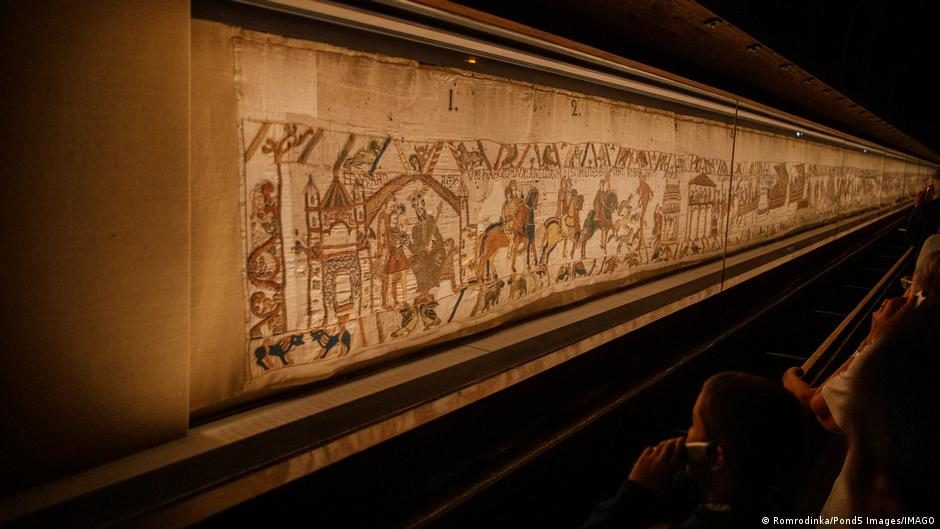
A climate-controlled metal case containing the 70-meter Bayeux Tapestry was unloaded at the British Museum on Friday morning. The 11th-century artwork, secured on loan from France, completed an 11-hour journey from Bayeux via the Channel Tunnel.
The transfer comes roughly a year after French President Emmanuel Macron announced the loan to celebrate Franco-British relations. Against a backdrop of complex post-Brexit ties, the secretive overnight operation served as a high-profile gesture of cross-Channel cooperation. Escorted by police, the truck slowly backed into the loading bay, drawing applause from waiting staff and diplomats from both nations.
To survive the trip, the UNESCO-listed textile was folded in an accordion style inside a specialized cradle designed to cancel out vibrations. It was transported on a vehicle train through France before crossing into the UK.
Museum director Nicholas Cullinan described the arrival as a unique moment. "It's the first time in 1,000 years that such an important piece of British, French too, history is going to be on these shores," he said.
Public interest in the embroidery has exceeded initial expectations. The British Museum sold 100,000 tickets on the first day of sales this month. "I don't take for granted that people care that much about a 1,000-year-old embroidery. I think that's an amazing Thing," Cullinan said.
The artwork remains a powerful symbol of the intertwined, occasionally frictional, histories of Britain and France. Stitched in wool on linen, it depicts the 1066 Battle of Hastings, where Norman invader William the Conqueror defeated English king Harald in the last successful conquest of England. Historians believe it was commissioned by William's half-brother, Bishop Odo of Bayeux, and likely sewn by English women, possibly nuns, before being taken to northwestern France.
The tapestry will remain in its case for several days to acclimatize to its new environment. It will go on public display at the museum from September 10 until July 2027.