US Soccer confronts coaching vacuum ahead of dense 2030 qualifying cycle
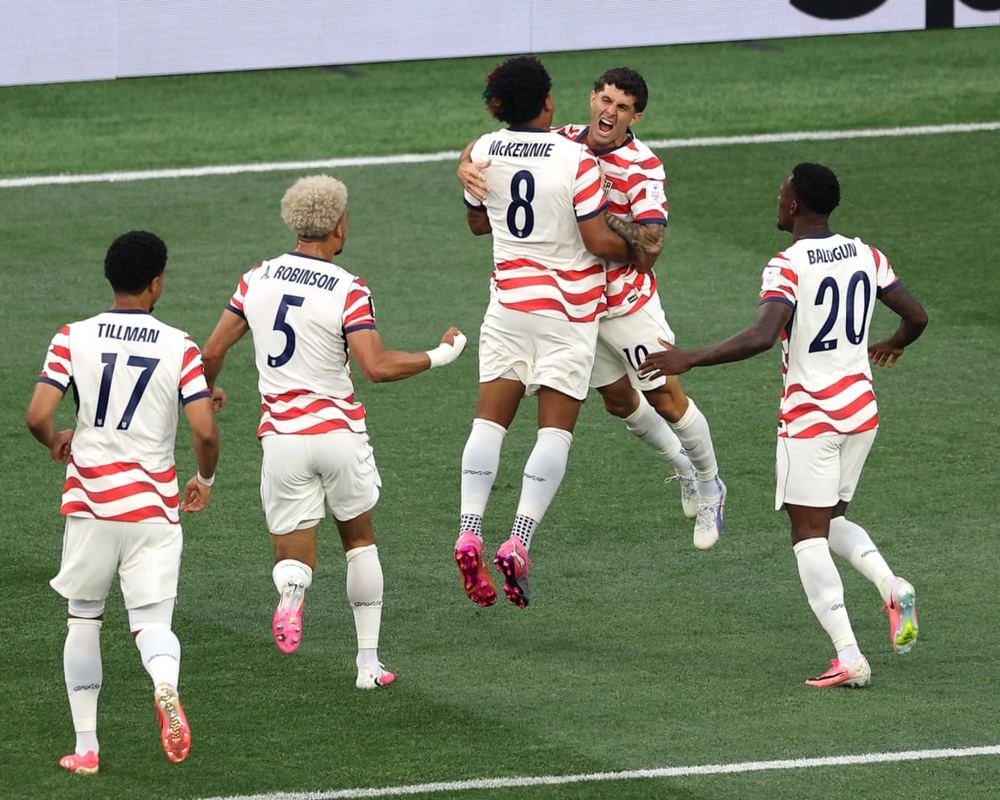
The US men’s national team must resolve Mauricio Pochettino’s uncertain contract status and fill a key sporting director vacancy before a grueling four-year cycle of regional tournaments and World Cup qualifying begins.
The United States men’s national team exited their home World Cup in the last 16, leaving the program in a state of administrative limbo. Mauricio Pochettino’s contract has expired, and while US Soccer has offered an extension, both sides are taking time to decide. The situation is complicated by the abrupt departure of sporting director Matt Crocker, who left for a similar role in Saudi Arabia before the tournament.
European clubs monitoring American talent will note that while the core of the 2026 squad projects through to 2030, four years is a long time in international football. The US must now navigate a dense calendar of regional competitions to bridge that gap. The immediate focus shifts to the 2027 Concacaf Nations League, where the US will likely enter in November after receiving a bye as one of the region's top four teams.
The Nations League semi-finals and final follow in March 2027, offering a chance to prove that strong World Cup form was not an aberration. The US won the first three editions but faceplanted against Panama in 2025 before losing to Canada in the third-place match. Resolving the goalkeeping situation is equally urgent, as Matt Turner turned 32 in June and Matt Freese looked unseasoned against Belgium.
The summer 2027 Gold Cup will serve as a proving ground for the fringe players who were among Pochettino’s hardest cuts, such as Aidan Morris, Diego Luna, Tanner Tessmann and the injured Patrick Agyemang. History shows the tournament's value: Christian Pulisic and Weston McKennie broke out at the 2019 Gold Cup, while Pochettino recently used it to integrate Malik Tillman, Sebastian Berhalter, Alex Freeman and Freese.
The 2028 calendar presents significantly sterner tests. Brazilian newspaper O Globo reported that the 2024 and 2028 Copa América tournaments were awarded in tandem, meaning the US could host South America's flagship competition for a second straight time. This would serve as a vital checkpoint to test the starters against elite opposition before the final stage of World Cup qualifying.
Concurrently, the Los Angeles Olympics will provide a stage for the next generation. While Paris 2024 did not produce World Cup starters, it significantly boosted Tessmann’s stock after he captained the under-23 side to a quarter-final. With a likely generational shift looming after 2030, giving rising players like Zavier Gozo, Niko Tsakiris, Adri Mehmeti and Julian Hall meaningful minutes will be essential.
World Cup qualifying begins in November 2027 and concludes in 2029. The US will enter round two as the top seed in a group of four, needing a top-two finish to advance. The final round features 12 teams in three groups of four, a format more forgiving than the old Hexagonal or Octagonal, with the top two from each group qualifying directly. Avoiding the historic misstep of 2018 will require the US to finalize its style and leadership quickly.