European researchers test drone sensors to predict Sicily's volcanic eruptions
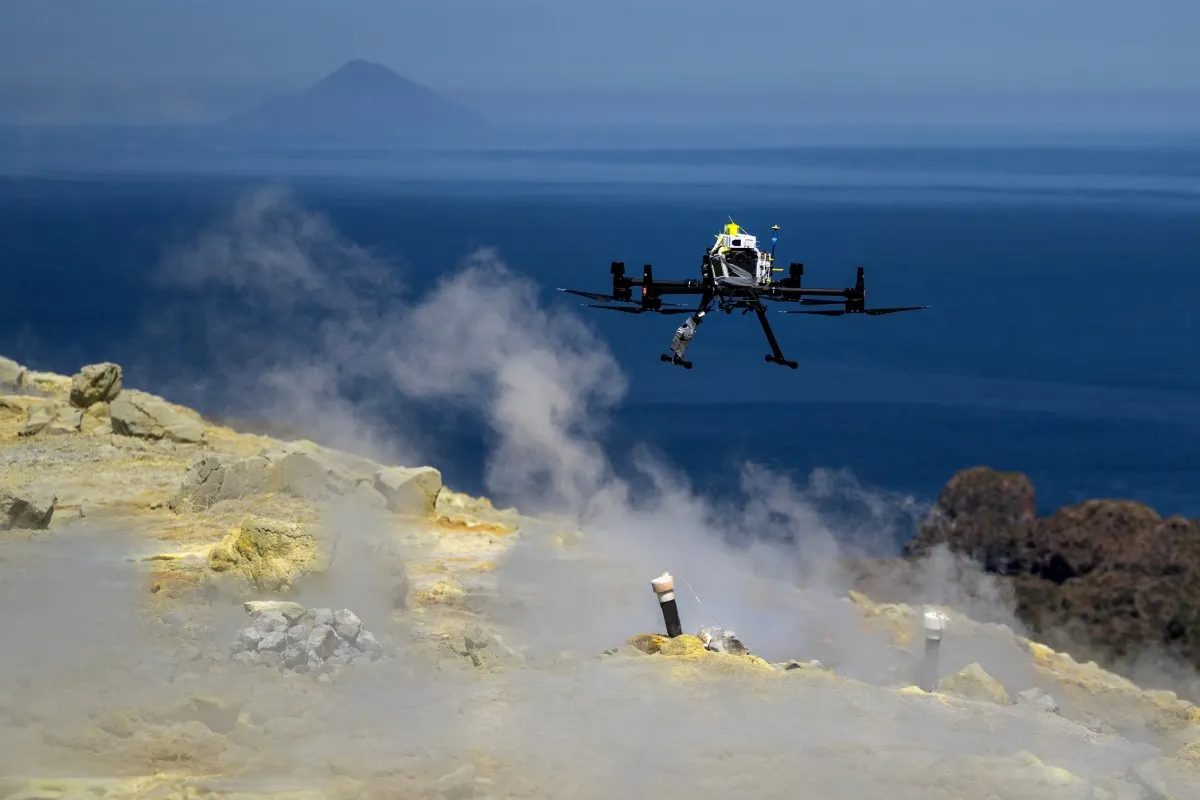
German and French scientists are trialling advanced drone-mounted sensors on Sicilian volcanoes to map hazardous gases safely, a step toward reliable eruption forecasting.
German and French researchers have begun testing new drone-mounted sensor systems on the island of Vulcano off the Sicilian coast to safely measure volcanic gas emissions. The trials come as Mount Etna recently erupted, highlighting the urgent need for better monitoring tools near European populations.
A team from the Technical University of Munich is using a drone as a reflector for a ground-based laser sensor. By keeping both the sensor and the drone out of the corrosive gas plume, the system avoids the constant recalibration previously required when equipment is placed directly inside the fumes. An algorithm then builds a concentration map of the gases within 10 to 15 minutes as the drone follows a predefined path.
Separately, scientists from the University of Mainz and France's National Centre for Scientific Research are flying a 2.5-kilogram drone directly into fumaroles where temperatures reach up to 140C. Named "Tina," the device measures gases, particles, and halogens like chlorine and bromine during 40-minute flights. This direct approach provides highly reliable sensor data due to the constant output of gas at Vulcano.
For a continent where active volcanoes sit beneath dense populations and vital transport networks, this technological step forward has tangible implications for public safety and economic stability. Drones eliminate the need for researchers to enter hazardous zones wearing heavy protective equipment. "Here we don't have a major risk of an imminent eruption but there are volcanoes where you can't reach the summit on foot," noted Tjarda Roberts, a CNRS researcher.
The ability to quickly switch direction if a gas plume changes angle gives researchers a flexibility that stationary sensors lack. Beyond immediate physical danger, the data collected helps scientists understand the broader impact of volcanic emissions on the atmosphere.
However, the primary economic and safety value lies in forecasting. "Another reason is to anticipate volcanic eruptions, because the gas composition can change before an eruption occurs," Roberts said. Because rising lava pressure releases larger amounts of gas, tracking these emissions offers a potential early warning system for authorities.
The Vulcano tests mark the first time the Munich team's laser system has been deployed on a volcano. In the coming days, the technology will face a steeper challenge at Mount Etna, testing whether the drones can reliably operate at the 3,000-metre altitude of an actively erupting volcano.