FIFA's 64-team World Cup plan draws fierce European opposition
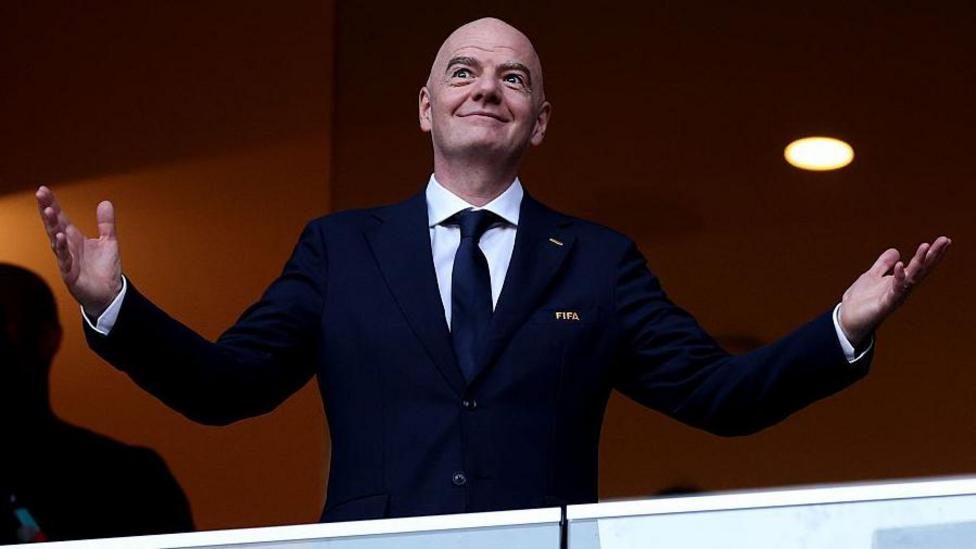
FIFA President Gianni Infantino has signalled a move towards a 64-team World Cup, a proposal that threatens to disrupt the European club calendar and dilute the continent's competitive standing.
FIFA President Gianni Infantino has confirmed that expanding the men's World Cup to 64 teams will be formally examined after the 2026 tournament. The proposal, first put forward by South American governing body Conmebol in April 2025, would feature 128 matches and allow nearly a third of FIFA's 211 member nations to qualify.
Infantino argued the current 48-team format proves global football quality is rising, pointing to the progression of nine out of ten African teams to the knockout stages. "If you don't give smaller countries a chance to participate in the World Cup, they'll lack the incentive to keep improving," he told Swiss broadcaster Blue Sport.
The expansion faces immediate resistance from European football's leadership. Uefa president Aleksander Ceferin has dismissed the 64-team proposal as a "bad idea" for both the tournament and the qualifying process.
Ceferin is not alone in his concern. The heads of the Asian Football Confederation and Concacaf warned the move would bring "chaos" and damage "the broader football ecosystem". For Europe, this ecosystem is driven by the domestic leagues and the Champions League. A bloated World Cup would demand a drastically extended qualifying calendar, directly squeezing the commercial and competitive space available to European clubs.
Despite these logistical and structural headaches, the expansion serves as a potent political and economic tool for Infantino. A larger tournament guarantees more broadcast and sponsorship revenue to distribute to FIFA's member associations. This financial incentive makes the proposal highly popular among smaller nations, even if it risks oversaturating a global football market already struggling with player fatigue.
The physical demands of a 64-team tournament also present a significant barrier. The 2030 World Cup already requires six host countries across Europe, Africa and South America. Whether a single host like Saudi Arabia, set to stage the 2034 edition, could logistically manage 128 games remains an open question.
While European leaders push back, other major markets are eyeing the opportunity. Andrew Giuliani, executive director of the White House's World Cup task force, stated the United States could bid for the 2038 tournament and would be able to "handle it" at the expanded size.
No decision is expected imminently, and the FIFA council holds the ultimate authority. However, given Infantino's track record of rapidly accelerating expansion plans, European football executives will be bracing for a prolonged battle to protect their commercial interests.