German space tech repurposed for remote AI humanitarian deliveries
European aerospace research is being adapted to power remotely operated aid vehicles and AI forecasting systems, marking a major shift in how public-sector technology investments are applied to global crisis logistics.
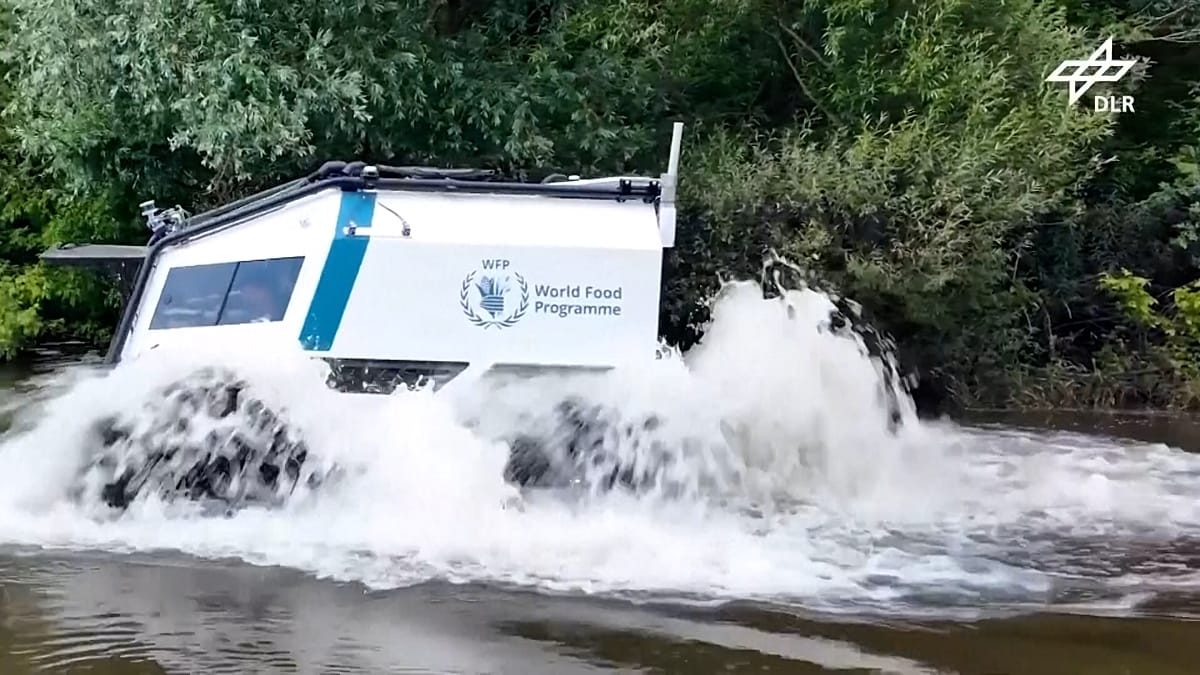
A coalition including the World Food Programme and Germany’s DLR aerospace centre is developing remotely operated all-terrain vehicles to deliver supplies through conflict zones and minefields. The initiative, known as Project AHEAD, removes aid workers from mortal danger by relying on remote operators and terrain-scanning sensors.
The system adapts technology originally built to control planetary rovers on Mars’s moon Phobos for terrestrial logistics. For Europe’s aerospace sector, this represents a significant practical application of public research investment, demonstrating a pathway to adapt deep-space engineering for high-stakes, earthbound supply chains.
The physical delivery system uses a SHERP vehicle developed alongside the Red Cross and technology partners. Beyond ground transport, European institutions are embedding artificial intelligence into the data infrastructure that directs where these supplies actually go.
The WFP’s HungerMap Live platform uses machine learning to track food insecurity across more than 95 countries by analysing conflict, weather and economic indicators. “Right now we’re even looking into forecasting food security 90 days into the future,” said Bernhard Kowatsch, director of the WFP’s Global Accelerator and Ventures division.
AI is also accelerating the mapping of disaster zones. Following earthquakes in northern Venezuela in June, the Humanitarian OpenStreetMap Team used machine learning to extract building data from satellite imagery.
The group mobilised over 600 volunteers in four days to verify structural damage through a mobile app. “Sometimes it’s more important to know more or less where the buildings are. They’re not perfectly mapped, but we know how many people are living in that area,” said Leen D’hondt, the organisation's director of technology and data. “And that’s where AI and machine-learning models come into the picture right now,” she added.
For European tech providers, the gap between developing these systems and integrating them into global emergency protocols presents both a challenge and a future market. While Europe already runs an operational AI weather forecasting system through the European Centre for Medium-Range Weather Forecasts, scaling these models for broad emergency use remains a work in progress.
India currently stands out as an exception with its own operational AI-based early-warning system. “In a lot of countries, it’s still experimental,” said Monique Kuglitsch, innovation manager at the Fraunhofer Heinrich Hertz Institute.