Brussels eyes social media design limits over child age bans
The European Commission is set to propose restrictions on addictive social media features rather than a blanket age ban, a regulatory shift that directly threatens the engagement models of major tech platforms.
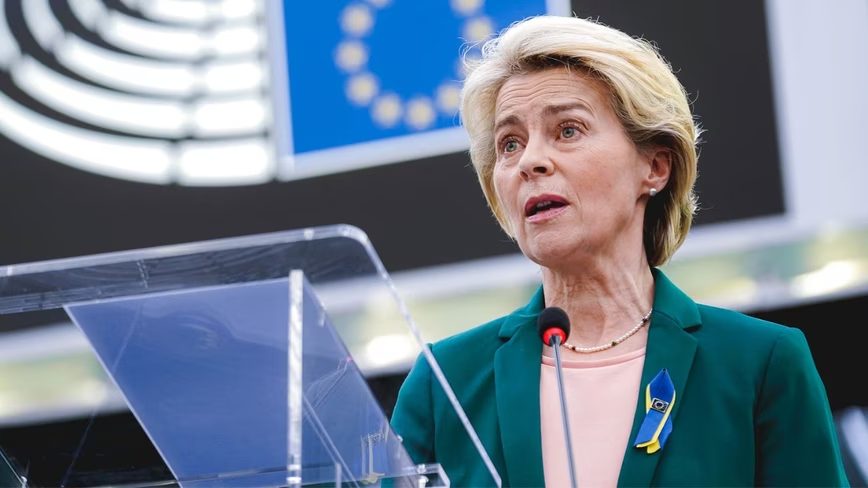
The European Union will propose new limits on children’s access to social media in the coming weeks, Commission president Ursula von der Leyen announced on Monday. The move follows the delivery of recommendations from an expert panel of doctors, academics, youth representatives, and parents convened to shield minors from harmful online content.
Despite pressure from member states like France, Spain, and Greece for strict under-15 or under-16 bans, the bloc is likely to target how platforms operate rather than simply who uses them. A blanket prohibition is not expected. Instead, the Commission is leaning toward a risk-based regime that restricts platforms with what it calls “harmful designs.”
This approach shifts the regulatory crosshairs onto the core engagement mechanisms of social media companies. “If features such as infinite scroll or surveillance advertising aren’t safe, they shouldn’t be on social media in the first place,” said Michiel van Hulten, EU director at Reset Tech. Digital rights groups have spent months arguing for exactly this pivot toward product regulation.
Brussels has already begun acting on this theory. On Friday, the Commission ordered Meta to dismantle the addictive features built into Facebook and Instagram, issuing a similar warning to TikTok five months ago. Consumer protection commissioner Michael McGrath indicated that broader rules addressing these product mechanics are expected later this year.
“Digital markets are designed to capture attention and influence behaviour,” McGrath said. “The new rules will help ensure consumers can make informed choices free from manipulation.” For investors, this signals that the EU is preparing to directly challenge the attention-economy business models that underpin major social media valuations.
A parallel German expert panel, whose co-chair also sat on the EU group, recently recommended either a statutory minimum age of 13 or restrictions on specific services and features, explicitly avoiding a blanket ban. That finding offers a strong signal of the European panel's likely conclusions.
Tech companies have warned that hard age thresholds will simply drive minors toward unmoderated or non-EU services. However, the Commission appears to have already decided the status quo is untenable. The enforcement challenge remains unresolved, compounded by the bumpy debut of the Commission’s own age-verification app.
Harmonizing a single rule across 27 member states remains difficult, with countries like Estonia and Belgium arguing that age-based bans are fundamentally unenforceable. Once a formal proposal is released, the debate will shift to the European Parliament and member states, where the precise parameters of product design restrictions will be fiercely contested.