Portuguese pharmaceutical firms donate 8.7 tonnes of medicines to earthquake-hit Venezuela
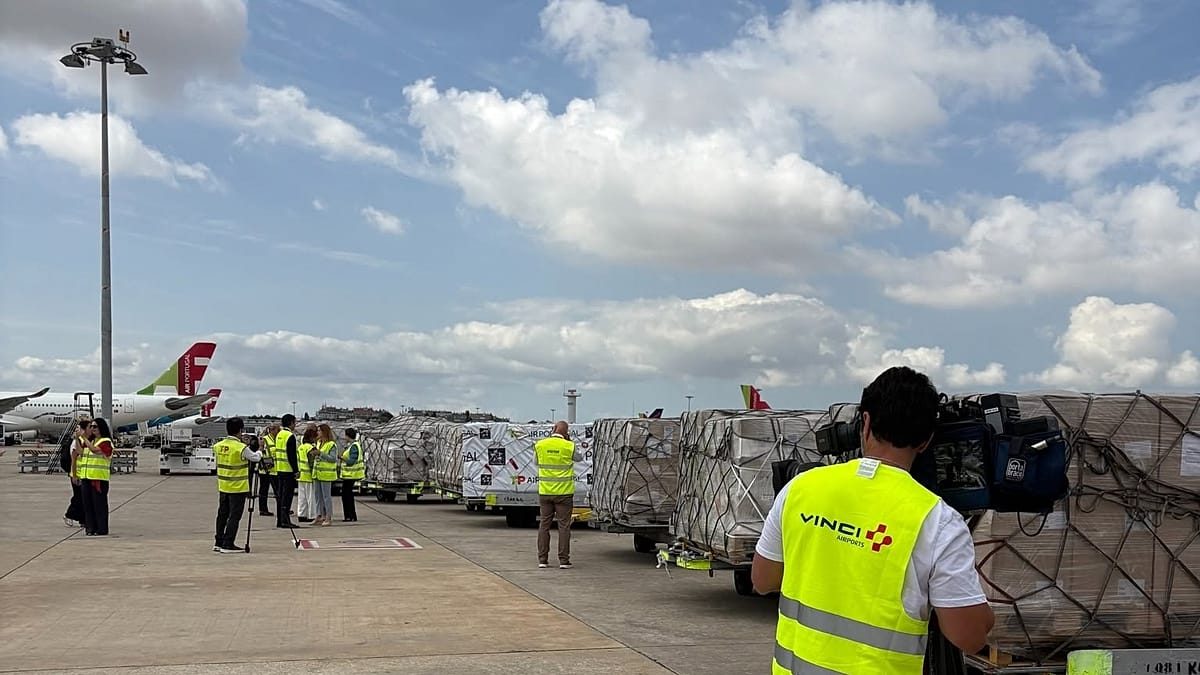
Portugal has dispatched 8.7 tonnes of donated medical supplies to Venezuela, marking a critical intervention in a worsening public health crisis and the tentative resumption of direct air freight links between the two nations.
Portugal dispatched 8.7 tonnes of medicines to Venezuela today, with the cargo departing Lisbon at 10 a.m. bound for the country’s Ministry of Health. The Secretary of State for Health Management, Francisco Pinheiro Catalão, attended the departure alongside ministry and airport representatives.
The medical supplies were donated by a consortium of pharmaceutical companies following an industry appeal. A government statement noted that "it was possible to gather around eight tonnes of medicines, donated by the companies Grupo Tecnimede, BIAL, FAES Farma, Menarini and Bluepharma, which will be donated to the Ministerio del Poder Popular para la Salud."
Beyond the humanitarian payload, this flight represents a logistical milestone as it marks the resumption of direct air links between Portugal and Venezuela. These routes had been suspended in the immediate aftermath of the seismic events.
Carrier TAP announced that its operations will initially be restricted to Arturo Michelena Airport in Valencia. The airline plans to gradually restore flights to other destinations, including Caracas, as the country’s infrastructure recovers.
This aerial delivery follows an initial wave of Portuguese state support last week. Two Air Force flights previously transported hygiene items, two ambulances and debris-clearing tools, while also repatriating personnel from the Joint National Operational Force (FOCON).
The intervention arrives as Venezuela faces a compounding public health emergency. The 24 June tremors, described as the country's largest seismic event this century, have killed 4,490 people and injured more than 16,000.
Over 300 bodies remain unidentified, and the government in Caracas has not released an official figure for the missing. The destruction has also severely damaged medical infrastructure, with the World Health Organization reporting that three hospitals have closed and six others are only partially operational.
The earthquake aftermath exacerbates pre-existing vulnerabilities in the Venezuelan health system. The WHO has previously warned that vaccination rates in the country have been falling due to international sanctions, raising the risk of secondary outbreaks such as dengue, fevers and other infections.
For European pharmaceutical stakeholders, this coordinated donation underscores the capacity of the regional industry to mobilize rapid, large-scale humanitarian logistics. It also highlights the critical role that restored commercial air freight plays in stabilizing supply chains to regions experiencing acute systemic collapse.