Sculptor Valerie Brathwaite dies at 87 amid rising European museum interest
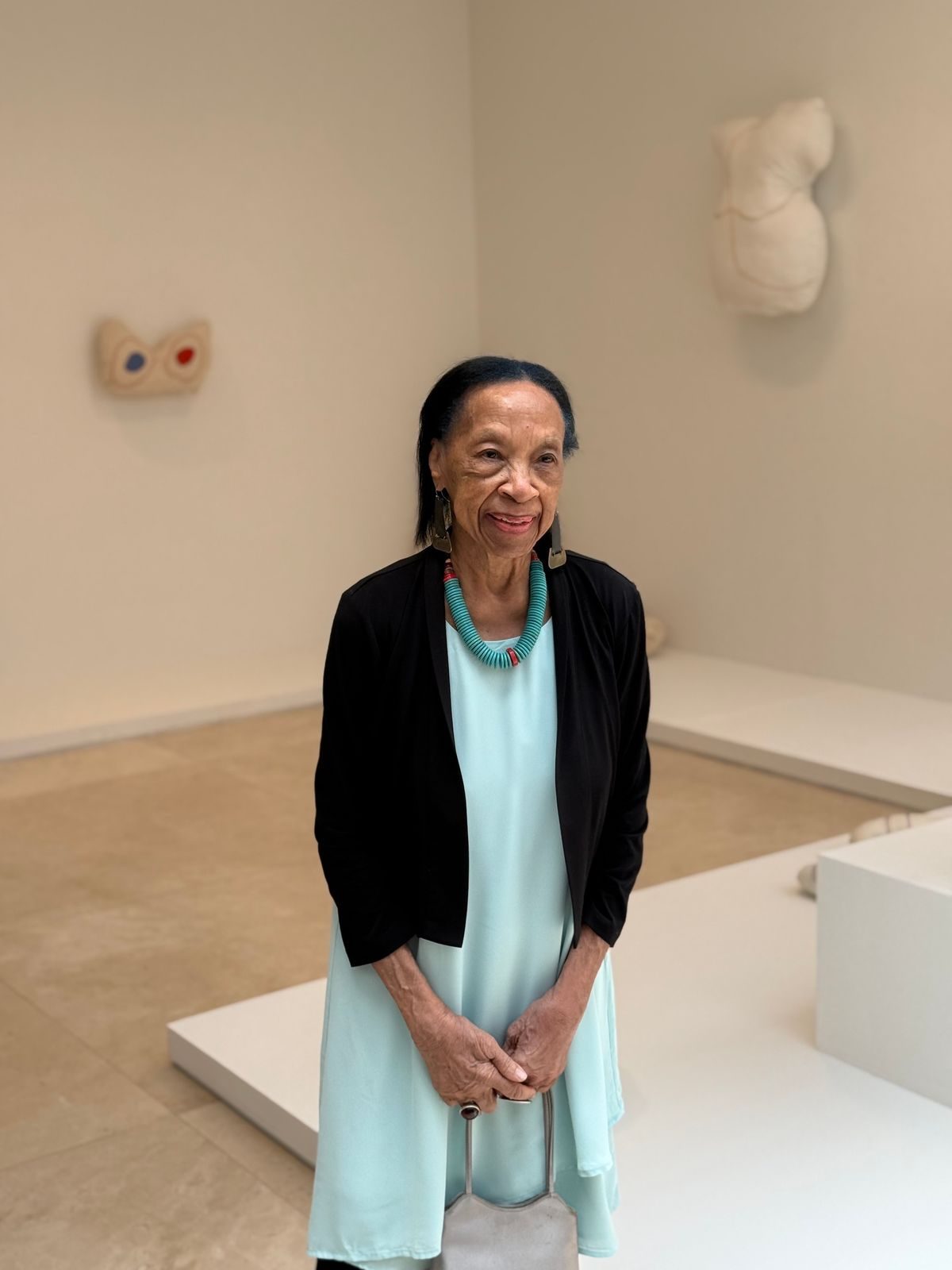
The Trinidadian-Venezuelan sculptor Valerie Brathwaite has died at 87, leaving behind a body of work that is only now gaining the institutional traction and art market recognition long denied to migrant women artists.
Valerie Brathwaite, a Trinidadian-born sculptor who spent six decades building a singular abstract practice in Caracas, died on 6 July at her home-studio. She was 87.
Brathwaite carved out a distinct visual language by incorporating bold colour into her sculptures, a choice that defied the conventions of her teachers at London’s Royal College of Art and the École des Beaux-Arts in Paris. “Colour was a subversive expression for a rebellious artist like Valerie,” said Jesús Fuenmayor, a curator who recently organised an exhibition of her work in Washington, DC.
For the transatlantic art market, her death marks the loss of an artist whose institutional footprint is currently accelerating. Henrique Faria, whose New York gallery represents Brathwaite, noted that interest from European and US museums is growing. That commercial and institutional momentum is tangible: the Solomon R. Guggenheim Museum recently acquired a work from her Soft Series.
This international recognition arrived late. “Sadly, women artists often have to wait until their 70s or 80s to be fully recognised,” said Cecilia Fajardo-Hill, who wrote a landmark 2021 essay on Brathwaite. Fajardo-Hill attributes this delay to Brathwaite’s status as a migrant and her refusal to align with Venezuela’s then-dominant kinetic and conceptual art movements.
After relocating to Caracas in 1969 at the invitation of her friend, the artist Gego, Brathwaite developed a parallel practice grounded in nature and the human body. Her first institutional solo show in 1975 at the Museo de Bellas Artes de Caracas featured horizontal, sinuous sculptures made with concrete placed directly on the museum floor. Time spent studying in Stockholm in the 1970s shifted her work toward a vertical format, leading to her 1980s Dancing Vegetables series inspired by watching cacti grow.
“In Valerie's work, colour shapes form itself,” Fajardo-Hill said. “It departs from traditional notions, becoming sensuous, pop, dynamic and unexpected.” This approach allowed her to bridge modern and contemporary art with a sculptural language entirely her own.
Beyond traditional sculpture, Brathwaite engaged with textiles and performance, and even took up DJing in the 1990s. She performed at the Museo Reina Sofía during Arco Madrid 2024. “The bridge between her sculpture practice and music oscillates between the musicality of movement in her work and the ambiguity of forms,” said Ken Pérez, her assistant since 2020.
Brathwaite’s legacy will be shaped by a vast personal archive spanning from 1958 to 2026. Pérez is working to establish a foundation to open these documents to researchers.
“She was drawing and playing with clay until the very end,” said Freddy Castro, her studio manager. “That was when I realised that a true artist never retires.” A posthumous retrospective at Caracas’s Sala Mendoza is planned for later this year.