DeepSeek founder Liang tops AI wealth ranking after $7.4bn round
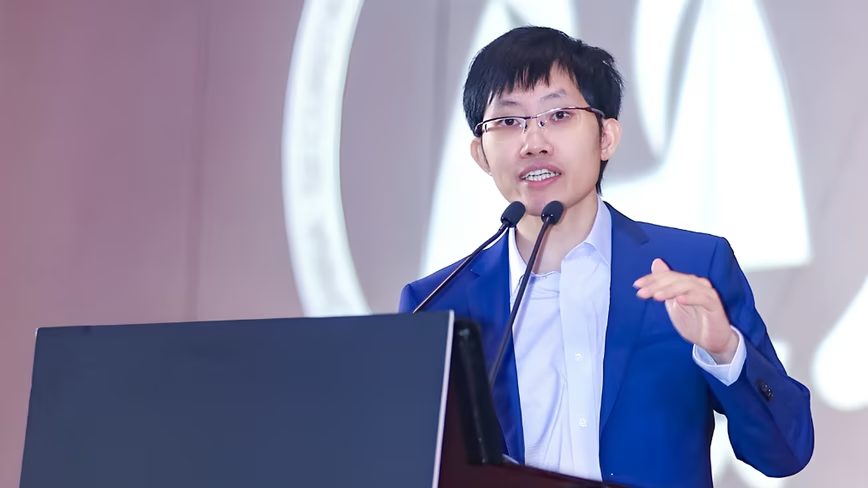
DeepSeek's Liang Wenfeng has become the artificial intelligence industry's wealthiest founder after a $7.4bn funding round, a deal that shows how global capital is surrendering governance rights to access top-tier Chinese models.
Liang Wenfeng is now the richest founder in artificial intelligence, with a net worth of about $36bn, according to the Bloomberg Billionaires Index. A revaluation on 13 July added roughly $19bn to his fortune overnight, placing him above Anthropic’s Dario Amodei and OpenAI’s Greg Brockman.
His ascent accelerated in January 2025, when DeepSeek’s R1 model knocked a trillion dollars off American tech stocks in a single day. That debut turned a little-known Hangzhou quant into a national figure and set the stage for the lab's first external funding round.
The $7.4bn raise in June lifted DeepSeek’s valuation from roughly $10bn in April to approximately $50bn. Despite the capital influx, Liang retained an estimated 78% stake in the company.
What demands attention from global investors is not the size of the round, but its terms. Liang personally contributed around $3bn, or 40% of the total, using profits from High-Flyer, the quantitative hedge fund he co-founded in 2016. Outside investors, including Beijing-backed state funds, received no governance rights in exchange for their capital, yet the round was reportedly oversubscribed.
For European investors monitoring the global AI race, the deal highlights a stark shift in market dynamics. The willingness of capital to accept a $50bn valuation without standard investor protections reflects a market so desperate for frontier model exposure that traditional leverage is being discarded.
Liang has told investors the money will fund the pursuit of artificial general intelligence and the continued release of open-source models, rather than near-term commercialisation. This strategy directly challenges Western commercial models, but it is far easier to sustain when the founder controls the capital and cannot be outvoted.
The wealth ranking is tightly defined to exclude hardware conglomerates and the AI supply chain, focusing only on companies whose primary revenue is AI models. Within those boundaries, Liang’s dominance over his American rivals is stark. Amodei and Brockman hold minority stakes in companies with complex governance and, in OpenAI’s case, highly public federal legal disputes including Brockman’s own journals. Liang answers to nobody who wrote a cheque.
The precise scale of his wealth remains heavily debated. Forbes has valued his stake in High-Flyer, which manages around $8bn in assets, at a fraction of Bloomberg’s estimate. As one Hong Kong paper noted, the founders' net worth is estimated at anywhere from $1bn to $150bn, depending on the source. No shares have traded publicly at these levels, meaning the $36bn figure remains a theoretical valuation based on a private round where investors surrendered all leverage.