Enid Marx exhibition spotlights mass production in public design
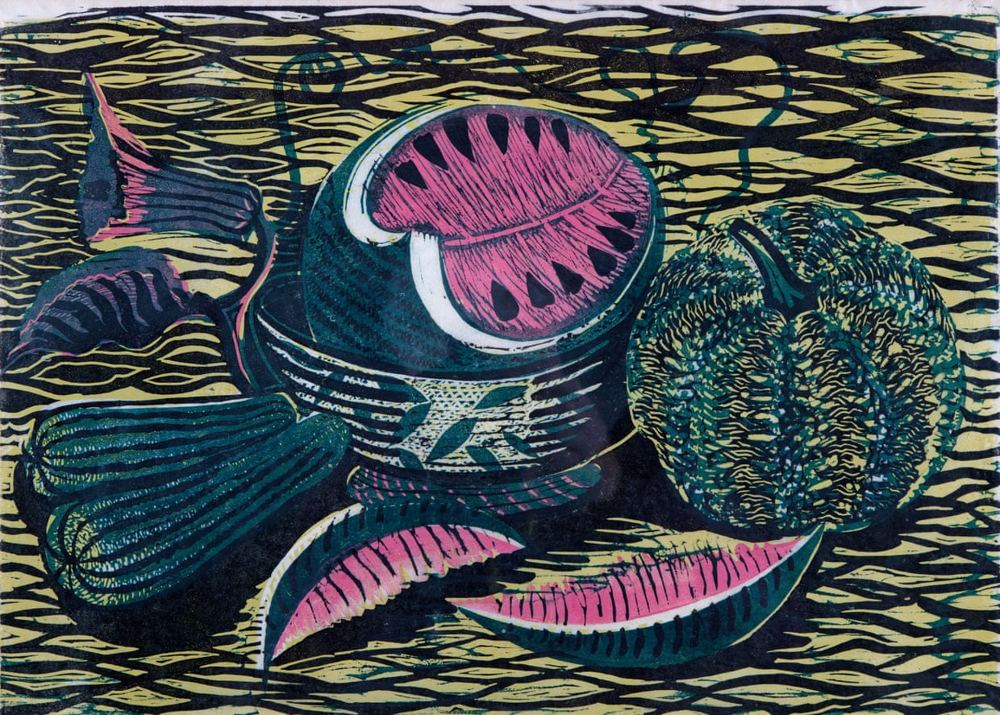
A new retrospective restores the industrial designer who modernised London’s public transport seating and championed mass-produced goods to her rightful place in European design history.
The Pattern of Life: Enid Marx and Modern British Design opens this Saturday at Compton Verney in Warwickshire, showcasing the 20th-century industrial designer who fundamentally altered the aesthetic of London's public infrastructure. The exhibition draws on 165 works, including pieces from the V&A archive that have not been seen by the public for decades.
Before Marx was commissioned by the London Passenger Transport Board in 1937, tube moquette was designed in-house by textile factories using dull browns and greys intended to mask commuter grime. Marx proposed a commercial and psychological shift: bright, cheerful geometric patterns that disguised dirt rather than blending in with it. Her approach became the guiding principle for London Transport seating for decades.
This pivot from craft to industrial manufacturing defined her career. During the Second World War, Marx applied her philosophy of accessible design to the utility scheme, creating low-cost, small-repeat fabrics like Chevron to economically furnish homes destroyed during the Blitz. “She believed there was a space for popular art that was mass produced, that it wasn’t only one-off pieces that constituted ‘art’,” says Oli McCall, senior curator at Compton Verney.
Marx’s work effectively bridged the Arts and Crafts movement and modern industrial design. Her best-known tube fabric, Shield, featured red and green eye-shaped ovals influenced by African designs she studied at the British Museum. “She was influenced by cubism and purism, but more than anything, her work was shaped by the ethnographic displays she saw in the London museums,” says curator Az Crawford. “Her designs show how pattern is political and cultural.”
Marx became only the third woman to be named a Royal Designer for Industry in 1944. Yet her post-war commercial trajectory faltered, with later stamp designs for Queen Elizabeth II rejected, including one famously vetoed by the monarch herself.
The Compton Verney show also features the extensive folk art collection Marx amassed with her partner, historian Margaret Lambert. “She’s been overlooked, forgotten, and this show seeks to explore her life and work with an in-depth examination of the influences on her,” says McCall.