Hormuz attacks push Brent above $85 as US strikes Iranian nuclear port
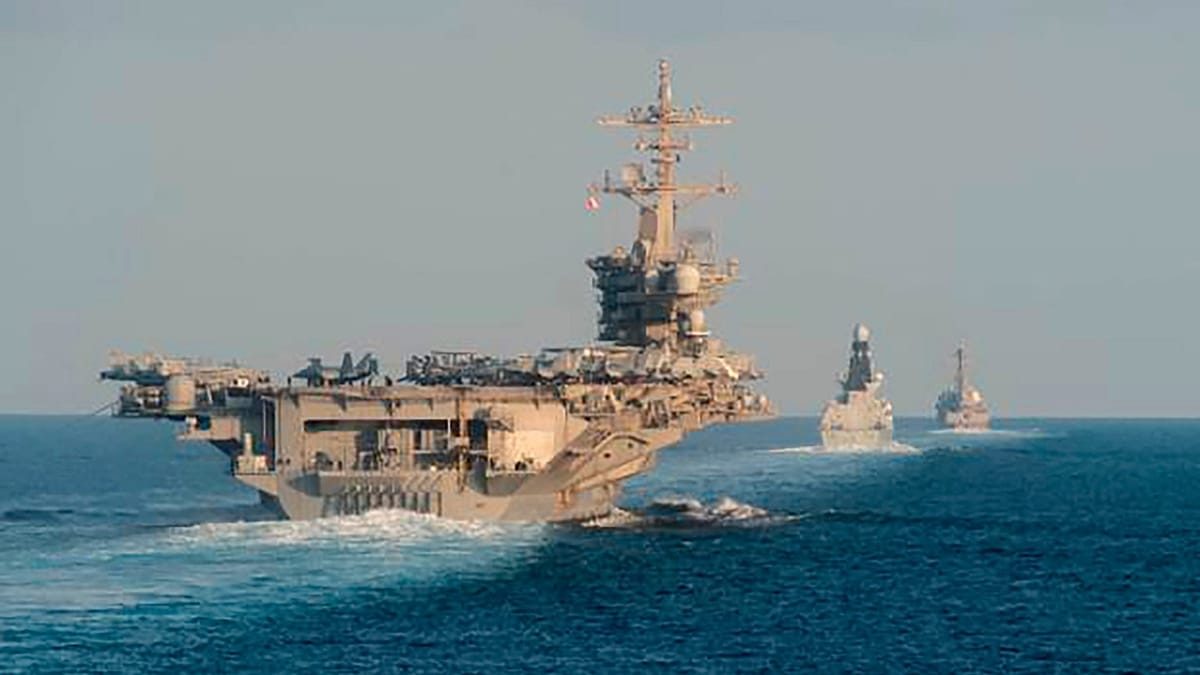
US military strikes on Iranian port cities and Tehran's attacks on commercial shipping have shattered a June ceasefire, pushing Brent crude above $85 and threatening vital European energy supply routes.
The United States launched strikes against multiple Iranian port cities on Tuesday, including Bushehr, which hosts Iran's only civilian nuclear power plant. In response, Iran attacked commercial vessels in the Strait of Hormuz and fired missiles at Bahrain, collapsing a fragile interim agreement reached in June.
Two tankers were struck by Iranian missiles near the coasts of Oman and the UAE, leaving one crew member dead and eight injured. The immediate result for European energy markets was stark: Brent crude climbed roughly 2.5% to breach $85 per barrel, erasing the price stability achieved since the summer ceasefire.
Washington announced a total reimposition of the blockade on Iranian ports, effective 9 pm CET on Tuesday. President Donald Trump stated the US was "taking control" of the Strait of Hormuz and proposed a 20% levy on the total value of all shipments passing through the critical waterway to offset American security costs.
Iranian retaliation and nuclear risks
Deputy provincial governor Ehsan Jahanian confirmed four points in Bushehr were hit by "enemy projectiles," though there was no immediate word on damage to the nuclear facility. Further US strikes hit Abadan, home to the Middle East's oldest oil refinery, and the port of Mahshahr, resulting in at least four civilian deaths across the provinces.
Tehran responded by officially closing the strait and targeting Bahrain with drone and missile strikes, which Bahrain's air defences intercepted. Brigadier General Akraminia warned that any Gulf state cooperating with Washington's management of the waterway would be regarded as committing "an act of war."
Political fallout in Tehran
Iran's parliament, which reconvened on Monday after a months-long suspension, tabled a bill asserting permanent Iranian control over the Strait of Hormuz. Ebrahim Azizi, head of the parliamentary National Security Committee, confirmed the legislation was formally submitted as US drones were shot down over the region.
The parliamentary move highlights internal fractures over the June memorandum, which several MPs opposed. Despite the renewed US blockade and the withdrawal of sanctions waivers, Oil Minister Mohsen Paknejad claimed Tehran had still exported around 80 million barrels of oil over the past 26 days using mechanisms designed to bypass sanctions.
China, a major oil buyer, urged both sides to de-escalate. Foreign Ministry spokesperson Lin Jian called the swift resumption of safe transit a "shared demand of the international community."