T. rex skeleton 'Gus' fetches record $50.1m
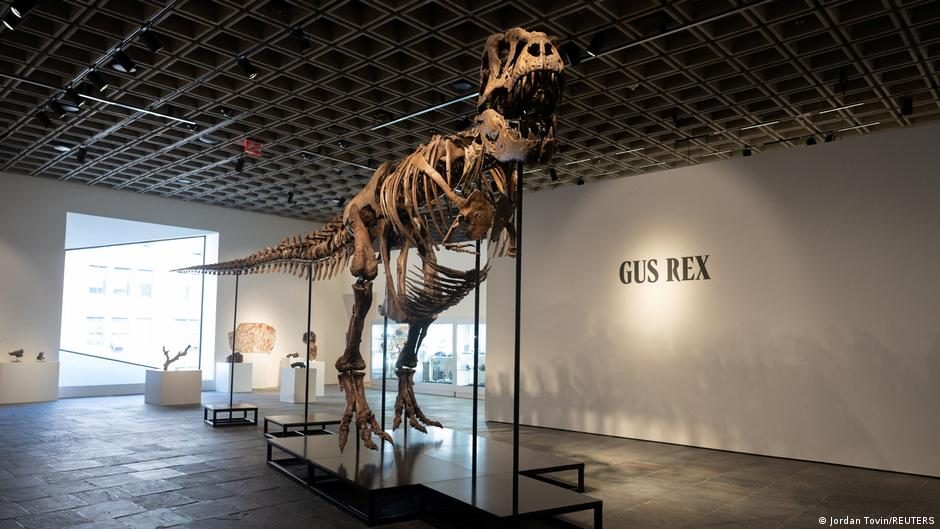
A Tyrannosaurus rex skeleton has sold for $50.1 million in New York, highlighting the rapid inflation of the alternative asset market for rare natural history specimens.
A Tyrannosaurus rex skeleton known as "Gus" sold for $50.1 million, or roughly €44 million, at Sotheby’s in New York on Tuesday. The sale followed a tense, 10-minute bidding battle involving seven parties before an anonymous purchaser ultimately claimed the lot. The transaction establishes a new benchmark for the commercial value of dinosaur fossils.
For market observers, the result signals a rapid escalation in what has become a highly competitive alternative asset class. Just last year, the previous record was set when "Apex," a Stegosaurus skeleton, fetched $44.6 million at Sotheby's. That a T. rex has now eclipsed that figure in a matter of months indicates sustained, aggressive capital deployment into rare natural history specimens.
The premium paid for Gus is directly tied to its physical scarcity. Discovered in 2021 on a South Dakota cattle ranch, the 38-foot, 11.6-metre skeleton dates back roughly 67 million years to the Late Cretaceous period. The fossil was named after the ranch's late owner, Gary "Gus" Licking.
Cassandra Hatton, Sotheby’s vice chairman and global head of science and natural history, noted that the specimen's market appeal stemmed from its exceptional condition. "Gus is one of the biggest and most complete T. rex ever found," Hatton said ahead of the auction. She pointed to "the completeness, the quality, the size, the preservation," as well as the meticulous work required to excavate and prepare the bones.
A market at odds with science
However, these soaring valuations present a growing tension between commercial auction houses and the research community. While the market for dinosaur fossils is expanding, some scientists warn against specimens being held in private collections. When a fossil valued at over $50 million is purchased anonymously, the scientific community stands to lose irreplaceable research opportunities.