Dutch Damen design central to $2.2bn US landing ship contract
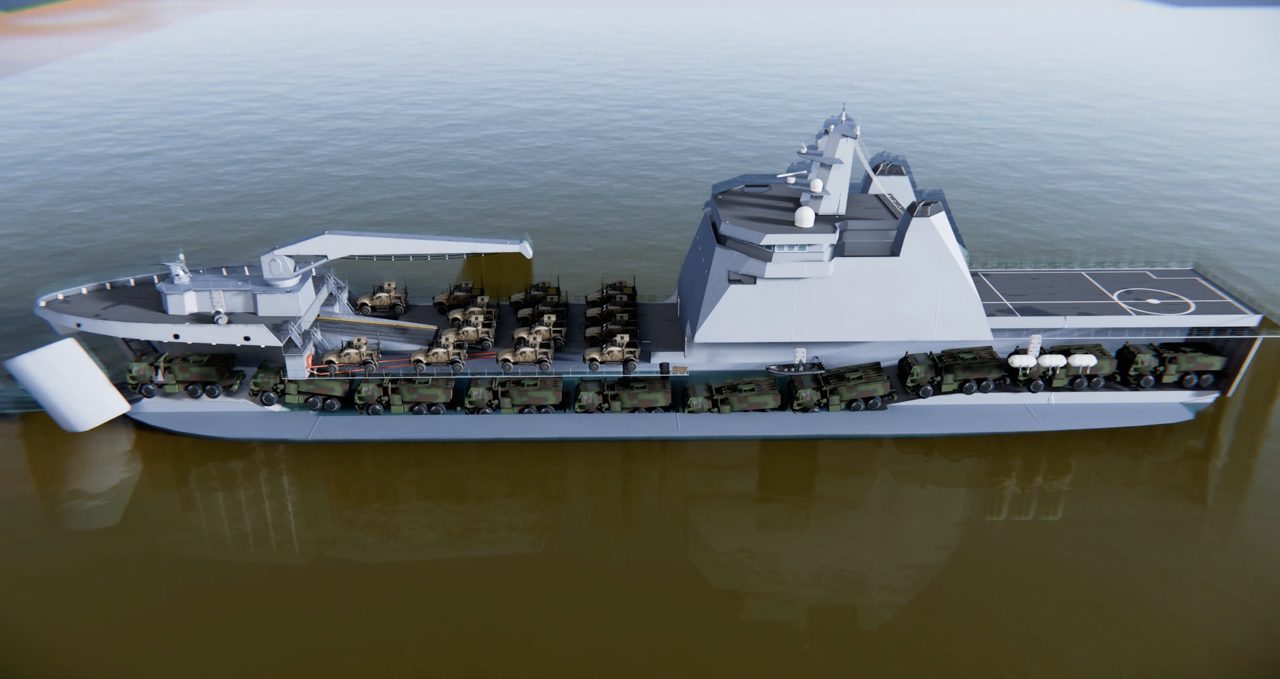
The US Navy has awarded a $2.2 billion contract to build new landing ships, relying on a proven Dutch design that underscores Europe's role in American Indo-Pacific military preparations.
The US Navy has awarded a $2.2 billion vessel construction management contract to TOTE Services LLC to oversee the building of up to eight new Medium Landing Ships.
The vessels will be built to the Landing Ship Transport 100 specification, a design developed by Dutch shipbuilder Damen Naval. The Navy selected Damen to provide the design for the initial tranche of these ships last December, marking a significant entry for a European manufacturer into a major US military procurement program.
For Europe’s defense sector, the deal underscores the global competitiveness of its naval engineering. The LST-100 is a proven product already in active service with the Nigerian Navy, and the Australian Navy selected the same Damen design for its own fleet in 2024. Securing the US military as a customer establishes the Dutch firm as a key supplier in the Pentagon's supply chain.
Measuring around 100 meters, the vessels are smaller and more agile than traditional landing ships. They can beach themselves to unload over 800 tons of troops, equipment, and supplies, and boast a range of 3,400 nautical miles. The Marine Corps commissioned the ships specifically to support island-hopping operations during potential conflicts with China in the Indo-Pacific.
The contract structure reflects a shift in how the Pentagon approaches defense procurement. Under the FY2026 National Defense Authorization Act, Congress directed the Navy to hire an outside commercial entity to manage the project. The goal is to accelerate the construction of simplified ship designs by importing standard commercial shipbuilding practices into the military sector.
TOTE Services will manage the actual production. Bollinger Shipyards will construct one vessel, while Fincantieri Marinette Marine will build four. TOTE will determine the subcontracting strategy for the final three ships. Construction is set to begin later this year, with the first delivery scheduled for the autumn of 2029.
The project is a component of President Donald Trump’s “Golden Fleet” initiative, a broader undertaking aimed at expanding the Navy with both manned and unmanned vessels while maintaining its legacy fleet. “We’re taking a proven design and leveraging congressional authorities to move with urgency and approach shipbuilding differently,” Christopher Miller, the Navy’s portfolio acquisition executive for maritime, said.