US Navy seeks expendable drones for future carrier air wing
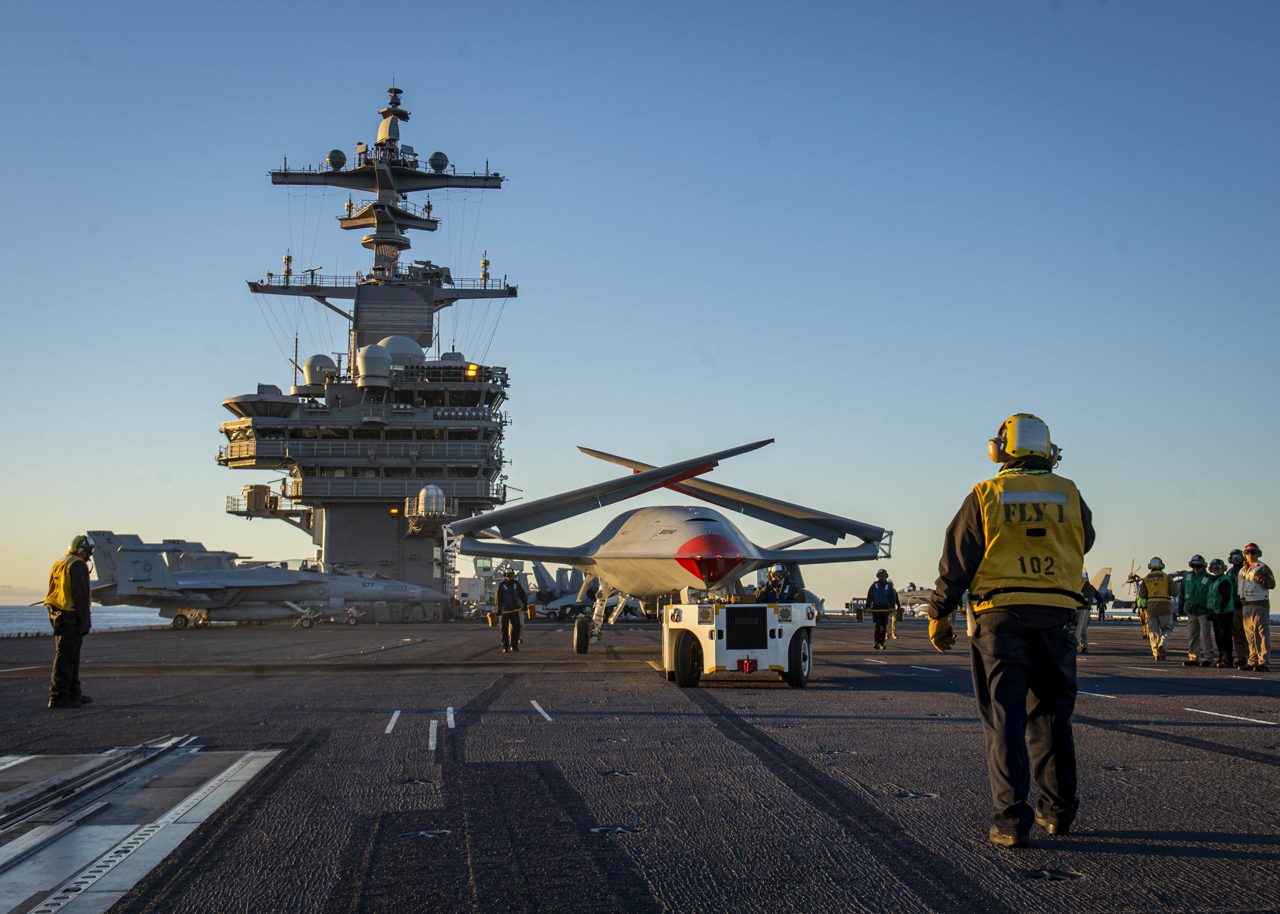
The Navy wants its next-gen carrier-based drones to handle a wide range of missions, from strikes and anti-submarine warfare to aerial refueling and more.
The US Navy issued a July 14 Request for Information asking defense contractors to design a family of carrier-based drones capable of fulfilling a wide variety of combat and logistical missions. Responses to the RFI, which carries an Aug. 13 deadline, will shape the service's transition away from fourth-generation manned jets toward a mix of fifth- and sixth-generation manned and unmanned platforms.
The service wants autonomous systems optimized for Ford-class and Nimitz-class nuclear aircraft carriers that can perform eight distinct missions. These include strikes against land and surface ships, anti-submarine warfare, air-to-air combat, electronic warfare, intelligence gathering, aerial refueling, and resupply. Drones designed for strike missions must have a minimum range of 1,000 nautical miles and demonstrate "flight autonomy (e.g., carrier pattern, taxiing) and mission autonomy (e.g., dynamic tasking/retasking, threat evasion, automated aerial refueling) maturity."
The Navy is not limiting the search to carrier decks. The RFI explicitly solicits "novel concepts that can operate from any air capable platform in addition to the CVN (e.g., DDG, ESB) using Vertical Take-Off and Landing (VTOL)."
For European defense firms, the RFI signals a decisive shift in how the Pentagon intends to procure and deploy air power. The Navy is asking for "industry expertise to identify a mix of platforms that can provide affordable mass, risk-tolerant platforms." This marks a pivot away from exquisite, expensive fighters toward attritable systems designed for a protracted battle of attrition.
This strategy places intense new pressures on the transatlantic industrial base. Contractors are required to "detail how your production approach supports rapid scaling and elasticity in a surge scenario." Manufacturers must also explain how they will "keep unit recurring flyaway (URF) and sustainment costs within sustainable limits" while minimizing maintenance burdens and fitting into existing naval supply chains.
To prove they are serious, the Navy is demanding that bidders submit "planned capital investments (CAPX) or Internal Research and Development (IRAD) commitments to mature the solution." European aerospace companies currently involved in US drone programs, such as the MQ-25A Stingray tanker or the Collaborative Combat Aircraft initiative, will have to weigh these heavy upfront investment demands against the potential scale of the contract.
The drone program is a core component of the Trump administration’s Golden Fleet expansion plan for the Navy. To succeed, proposed platforms "must demonstrate increased combat effectiveness over current fourth generation platforms at a given spot factor" while remaining cheap enough to lose in large numbers.