India-UK free trade deal takes effect, reshaping key markets
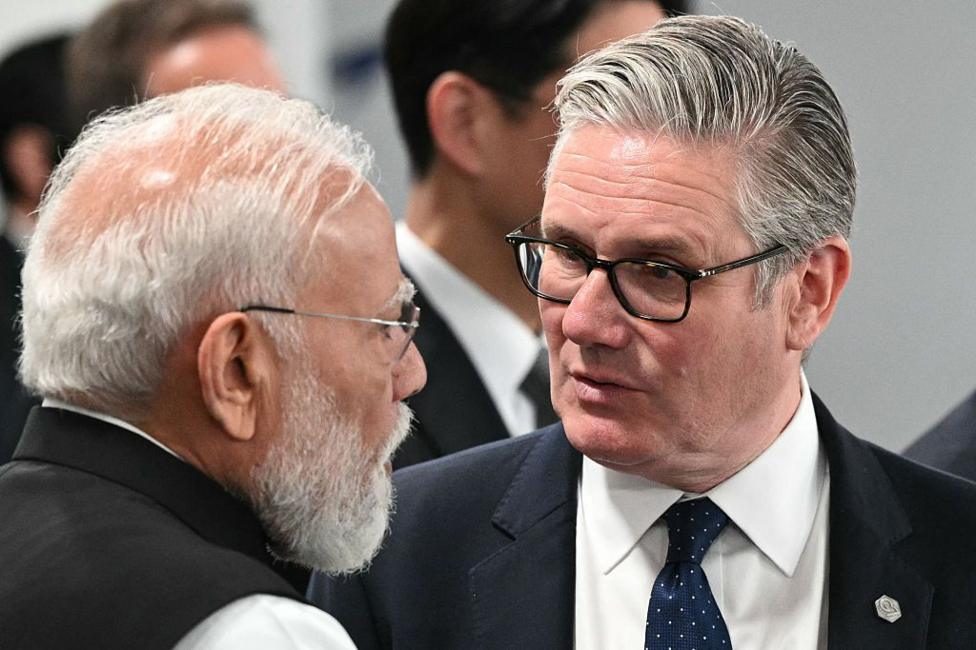
A new free trade agreement between Britain and India eliminates the vast majority of tariffs, offering London a crucial post-Brexit commercial win while triggering a shift in Asian-European supply chains.
The India-UK free trade agreement entered into force on Wednesday, removing or reducing tariffs on 99% of Indian exports to Britain and 90% of UK imports into India.
The British government has labelled it the country's most economically significant bilateral trade pact since leaving the European Union. Economists estimate the deal will add £4.8 billion to the UK economy and £5.1 billion to India's in the long run.
The immediate impact is most visible in labour-heavy manufacturing sectors like textiles and garments. Indian producers are positioning themselves to capture market share from regional rivals that previously enjoyed duty-free access. Dipali Goenka, CEO of textile giant Welspun Living, noted that UK brands are now engaging in long-term joint planning previously reserved for US clients.
The deal levels the playing field for Indian exporters. Under the UK's Developing Countries Trading Scheme, competitors like Pakistan currently hold a 55% share of the British home textiles market, compared to India's 6-7%, because India paid a 12% tariff. "I'm expecting our exports to the UK to now grow in double digits," Goenka said.
For British exporters, the spirits sector stands to gain substantially. Customs duties on Scotch whisky are dropping immediately from 150% to 75%, with a phased reduction to 40% over the next decade. Avneet Singh of Indian import house Modern Drinks Pvt Ltd described the cut as a "real shift, not a small tweak."
Despite this optimism, trade analysts urge caution regarding the pact's broader macroeconomic impact. Ajay Srivastava of the Global Trade Research Initiative warned that the overall effect could prove "incremental rather than transformational." More than half of India's $13.4 billion in goods exports to the UK last year already entered duty-free, and over 45% of UK imports to India consist of silver, which remains excluded from the agreement.
New trade frictions could also dampen the benefits for Indian businesses. The UK's planned carbon border adjustment mechanism could effectively offset tariff reductions by increasing compliance costs for carbon-intensive sectors. Additionally, quota-based tariffs on steel remain in place to protect British domestic producers.
Broader supply chain realignments, however, favor the agreement's success. CareEdge Research projects India could double its share of the UK's ready-made garment imports from 6% to 12%, capitalizing on declining Chinese competitiveness and recent instability in Bangladesh. The think-tank forecasts overall bilateral trade growth accelerating to 15% annually, up from the current rate of 10-12%.