Bayreuth Festival Confronts Nazi Legacy Amid 150th Anniversary Controversies
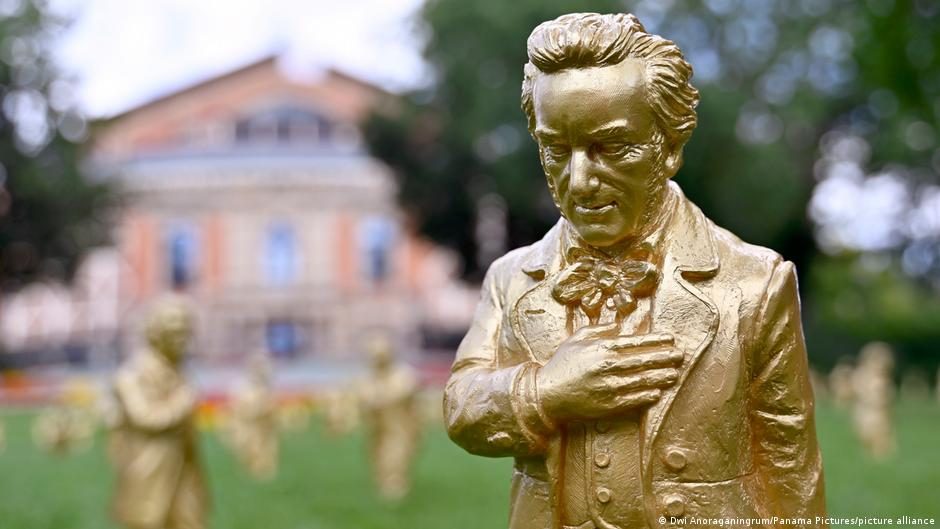
As the Bayreuth Festival marks its 150th anniversary, intense scrutiny over its handling of Richard Wagner’s antisemitic legacy threatens to undermine the institution's efforts to modernize its cultural standing.
The Bayreuth Festival begins its 150th anniversary season on July 25 amid renewed criticism over how the institution manages its historical ties to National Socialism. The controversy intensified after Jewish public intellectual Michel Friedman was briefly disinvited from a memorial ceremony, only to be reinstated following public backlash.
Observers argue this episode reflects a broader institutional reluctance to face uncomfortable truths. The Süddeutsche Zeitung characterized the reversal as evidence of a "chronic German desire to be spared from confronting its own history."
Academic criticism has also mounted regarding the festival’s programming choices. Anno Mungen, director of the Research Institute for Music Theater Studies at the University of Bayreuth, accused the leadership of being "historically oblivious" for staging Wagner’s "Rienzi" for the first time, noting it was Adolf Hitler’s favorite opera.
Richard Wagner remains a deeply polarizing figure due to his revolutionary artistic vision and his outspoken antisemitism, notably articulated in his 1850 essay "Judaism in Music." His legacy was later appropriated by the Nazi regime, which used his music for propaganda and psychological torment in concentration camps.
The festival has long struggled to distance itself from this shadow. After World War II, Wieland and Wolfgang Wagner took over leadership, with Wieland introducing minimalist productions to break from the past, while Wolfgang later opened the festival to external directors.
Today, artistic director Katharina Wagner is actively pushing the festival into the 21st century to maintain its relevance. Recent seasons have featured contemporary reinterpretations, augmented reality in "Parsifal," and stage design assisted by artificial intelligence.
The new production of "Rienzi" by Hungarian directors Alexandra Szemeredy and Magdolna Parditka aims to reframe the opera as a courtroom drama drawing parallels to modern populist societies. Ahead of the performance, the festival will host a concert of music by Jewish composers, followed by Friedman’s lecture.
For Europe’s cultural sector, Bayreuth’s trajectory highlights the delicate balance between preserving artistic heritage and addressing historical accountability. The festival draws around 60,000 visitors annually to its acoustically distinct Festspielhaus, making its institutional reputation vital to regional tourism and the broader European cultural economy.