Veteran Argentine broadcaster Enrique Macaya Marquez signals retirement after 18 World Cups
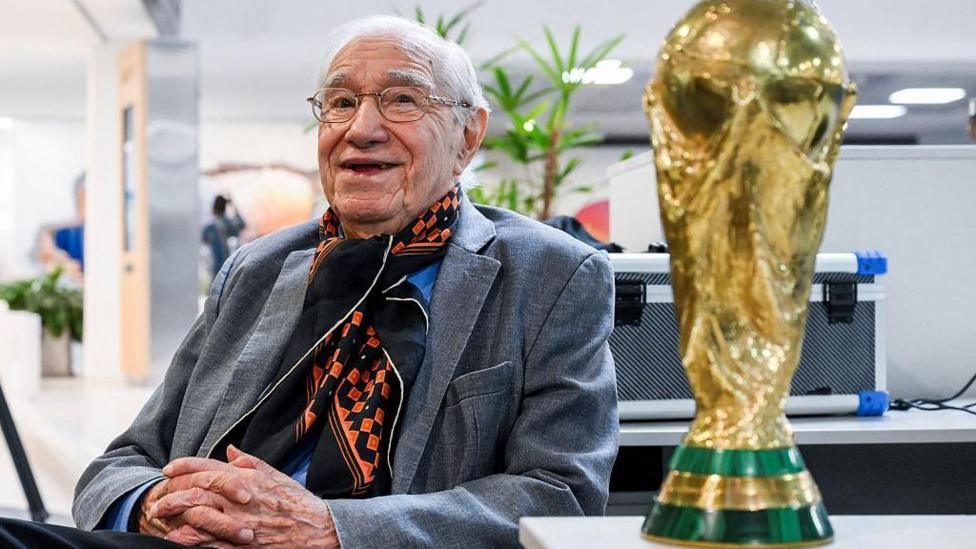
After nearly seven decades of reporting, the 91-year-old journalist’s impending retirement highlights the shifting landscape of sports media and the enduring value of nuanced analysis in a data-driven industry.
Enrique Macaya Marquez, the 91-year-old Argentine journalist, has indicated he is ready to retire after covering 18 consecutive World Cups. The veteran broadcaster, who began his career at the 1958 tournament in Sweden, made the remarks as Argentina faces England in the World Cup semi-final on 15 July.
His career trajectory mirrors the massive commercial and technological transformation of the global sports broadcasting market. Over nearly seven decades, Macaya has witnessed football evolve into a digitized, data-rich global spectacle, fundamentally altering how media companies package and monetize sporting events for international audiences and investors.
Despite the industry’s shift toward instantaneous statistics, Macaya has maintained a deliberate refusal to rush to judgement. This approach shaped his initial skepticism when Lionel Scaloni was unexpectedly appointed Argentina manager in 2018. Macaya, a commentator on DSPORTS Radio, admitted he "didn't have high hopes" and "didn't know him" at the time.
Scaloni subsequently led the national team to Copa America, Finalissima, and World Cup glory. Macaya noted that watching this unfold reinforced his core professional belief: "You can't pass judgement without a much deeper, more complete understanding of the person being judged."
This nuanced perspective also defines his view on football history. While he names Lionel Messi as his favourite Argentine player, he rejects definitive historical rankings. "That question deserves a smile," he said, noting that "there's no way to measure players throughout history."
He applies the same logic to comparisons between Messi and Diego Maradona, or Pele’s 1970 Brazil and Maradona’s 1986 Argentina. He argues that changing opponents, tactical needs, and teammate support make cold comparisons impossible, observing that "the opponents were different" and "the needs were different." As he put it, "there is no way to compare them" because "the style is completely different."
Macaya’s extensive career began in 1958, having arrived in Sweden at age 24. He witnessed Argentina’s 6-1 defeat by Czechoslovakia, an event locally known as the 'Disaster of Sweden'. "It remains etched in my memory as a tremendous thrashing for the Argentine national football team," he recalled, explaining that a lack of data allowed the opponents to surprise them.
As the sport continues to expand into a highly monetized global enterprise, Macaya’s impending departure marks the end of an era for traditional sports journalism. "I'm going to retire at some point," he said with a laugh, adding, "I'm retiring now... so I'll hang up and leave it for another time."