EU-UK treaty removes Gibraltar border fence, securing workforce
The physical border fence between Gibraltar and Spain has been removed under a new EU-UK treaty, eliminating the threat of a hard frontier that would have disrupted the territory's reliance on 15,000 daily Spanish workers.
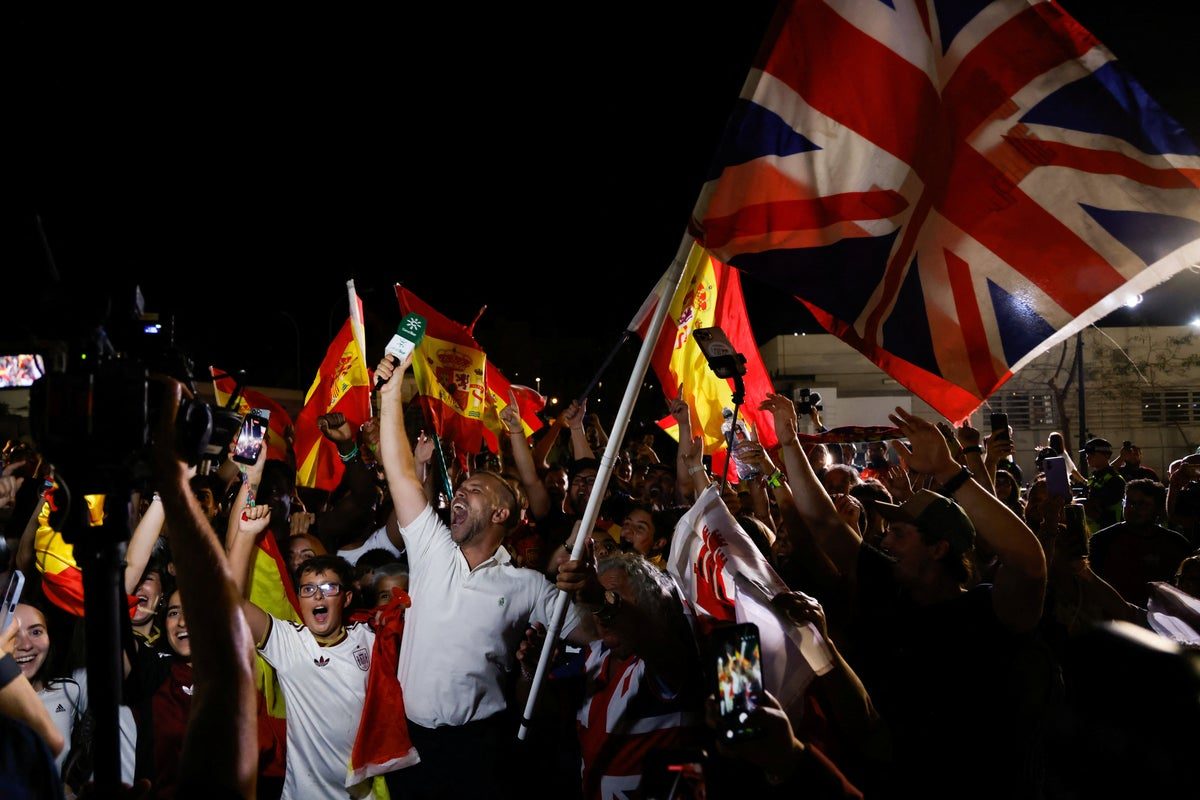
The border fence separating Gibraltar from Spain was dismantled at midnight on Wednesday, marking the physical end of a post-Brexit frontier. Hundreds gathered to celebrate the moment, which followed the signing of a landmark treaty between the European Union and the United Kingdom on Tuesday.
The agreement resolves a years-long impasse that posed a direct threat to Gibraltar’s economy. The territory of 38,000 people depends heavily on cross-border labour, with roughly 15,000 Spaniards crossing the frontier every day to make up nearly half of its workforce. Without a deal, Gibraltar would have faced a hard border with full passport checks, severing the daily flow of workers and stalling local business.
Under the new treaty, Gibraltar is effectively brought into the EU’s Schengen free travel area. Entry and exit checks at the territory’s airport and port will now be conducted jointly by British and Spanish border officials. This model mirrors the arrangement used at Eurostar terminals in London and Paris, allowing people and goods to move with minimal friction.
Maroš Šefčovič, the EU’s trade representative, highlighted the protracted effort to reach this point. “It has taken four years of patient, complex negotiation, but the outcome speaks for itself,” Šefčovič said. “It is a very special feeling to see a fence come down.” The UK’s Foreign Office Minister Stephen Doughty noted that the treaty secures Gibraltar’s long-term economic future and interests.
The removal of the barrier translates directly into economic predictability for border communities. “People who are visiting family in Spain, or whose Spanish family is visiting them in Gibraltar. Children who are going to football matches and extracurricular activities, either in Spain or in Gibraltar. They will be able to do that without having to worry about frontier queues,” Chief Minister Fabian Picardo said.
The integration into Schengen comes with new security infrastructure. Travellers arriving from outside the Schengen area will be processed through the EU Entry-Exit System, introduced in April, which replaces passport stamps with biometric data. Gibraltar has also installed live facial recognition cameras at its entry points and expanded CCTV, police, customs, and Coast Guard resources.
“The fortress has become a digital fortress now,” Picardo said. While the treaty secures the practical realities of cross-border life and commerce, it does not settle the underlying territorial dispute. Spain has maintained its claim to the territory since it was ceded to Britain in 1713.