Rock Bands Subverted BBC Miming Rules, Highlighting Risks of Broadcast Standardisation
Decades of deliberate on-air sabotage by rock bands on the BBC’s Top of the Pops demonstrated the inherent friction between rigid broadcast formats and artistic integrity, a dynamic that continues to inform how media companies manage live entertainment and brand authenticity.
For over 40 years, the BBC’s Top of the Pops served as the pinnacle of television success for musical artists in the UK. As New Order’s Peter Hook noted in 2005, appearing on the programme was the only time relatives thought the band had truly made it. However, the show’s strict requirement that artists mime to backing tracks provoked decades of deliberate on-air sabotage.
These historical clashes illustrate the inherent friction between rigid broadcast standardisation and artistic integrity. For media companies and the cultural economy, such incidents highlight the reputational risks and audience engagement challenges of enforcing manufactured formats on creative industries.
The resistance began early in the programme’s history. During a 1971 performance of Maggie May, Rod Stewart and The Faces abandoned the charade entirely when guitarist Ronnie Wood retrieved a rogue football. The band proceeded to kick it around the stage instead of miming their number one hit.
The punk movement further jarred with the programme’s polished aesthetic. In 1977, The Stranglers’ Hugh Cornwell performed live vocals while bassist Jean-Jacques Burnel aggressively waved a newspaper to clear stage dry ice. Cornwell concluded by sarcastically playing a guitar solo no-handed directly into the camera.
Some bands resorted to elaborate deception to mock the policy. When Killing Joke appeared in 1982, vocalist Jaz Coleman had fled to Iceland. The band replaced him with a man in a hazmat suit miming keyboards, while drummer Paul Ferguson mimed the vocals.
New Order attempted an authentic live performance of Blue Monday in 1983, introduced by presenter Richard Skinner as playing and singing live. The studio’s lack of live acoustic infrastructure resulted in overpowering synths and a flat mix. Despite the chaotic broadcast, the song climbed the charts the following week.
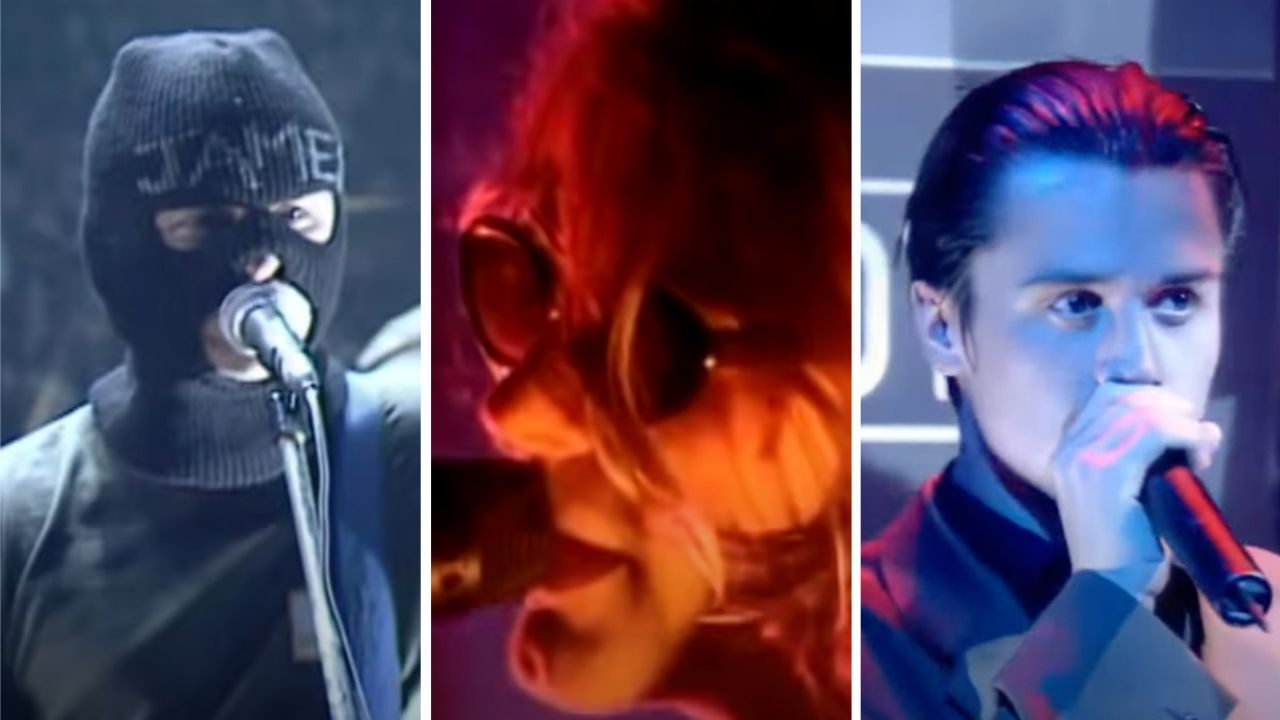
The most infamous disruption occurred in 1991 when Nirvana performed Smells Like Teen Spirit. Denied a fully live performance, Kurt Cobain barely touched his guitar, deliberately annunciated the "Load up on guns, kill your friends" line, and thrust his microphone. Bandmates Kris Novoselic and Dave Grohl played their instruments erratically, culminating in crowd members rushing the stage.
The consequences of such defiance could be severe in terms of public backlash. A 1994 performance by Manic Street Preachers, featuring vocalist James Dean Bradfield in a balaclava, generated over 25,000 viewer complaints. Audiences were unsettled by the band’s military regalia and nihilistic presentation.
Other acts opted for visual satire, such as The Eels in 1997, who performed Novocaine For the Soul using miniature toy instruments before drummer Butch smashed his kit and bandmates stomped the replicas. Ultimately, these disruptions proved that audiences often reward authentic, albeit chaotic, artistic expression over polished, corporate-controlled broadcasts.