Zipline scales drone delivery to airline levels, enters US healthcare market
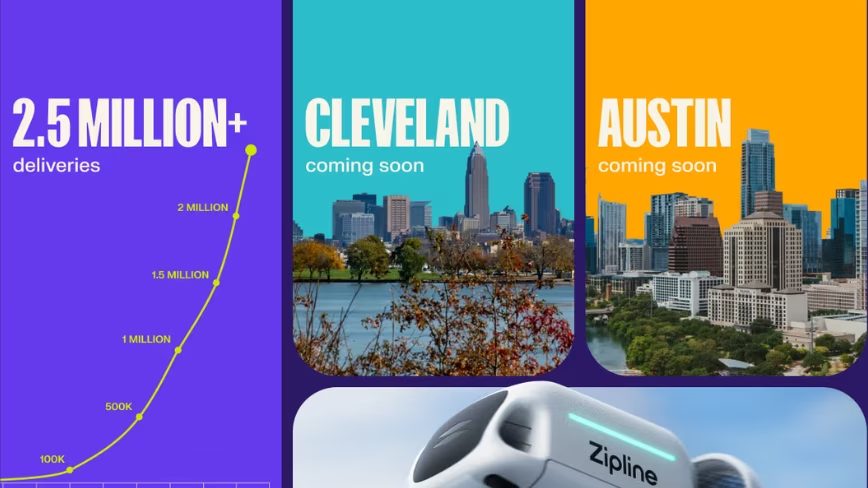
Autonomous drone firm Zipline has hit 2.5 million deliveries and expanded into healthcare logistics, signaling a shift from niche technology to mainstream infrastructure that will pressure European logistics and healthcare providers to accelerate their own automation strategies.
Zipline completed its 2.5 millionth commercial delivery in the first half of 2026, a milestone that includes one million deliveries in the past year alone. The company now operates more daily flights than major US airlines, with roughly 70 percent of those flights occurring within the United States.
The company is pushing beyond fast food into regulated healthcare supply chains through a new partnership with Cleveland Clinic. Starting in the Beachwood suburb of Cleveland, Zipline will deliver prescriptions to eligible patients at no additional cost. The programme will later expand to transport lab samples, medically tailored meals, and hospital-at-home materials.
Simultaneously, Zipline is scaling its consumer retail operations, launching food and retail deliveries in Austin in as little as five minutes. Major chains are deepening their ties, with Little Caesars expanding from five to 65 Zipline-enabled locations and Wonder committing to the platform for 50 upcoming Texas food halls. Chipotle and local restaurants are already active on the network, helping Zipline deliver 20 million items overall.
Executive hires signal infrastructure play
To manage this expansion, Zipline has hired three veterans of the autonomous vehicle and ride-hailing sectors. Sendil Palani joins as chief financial officer after 17 years at Tesla, having started when the automaker produced just one vehicle per day. Kevin Vosen becomes chief legal officer after nearly seven years at Waymo, while Allen Penn, who helped grow Uber from 25 to over 25,000 employees and ran global operations at Uber Eats, takes the role of head of commercial.
These appointments underscore how drone delivery is evolving from a suburban novelty into competitive infrastructure. The company has flown 135 million autonomous miles without a single safety incident, a distance equivalent to driving every road in America 32 times. For European logistics firms and investors, Zipline's rapid marketplace growth, up 13 times in the first half of 2026, highlights the pace at which regulatory clarity and commercial demand are converging to build networks that resemble ride-hailing platforms more than traditional logistics.