Rising night heat costs southern Europeans 51 hours of sleep yearly
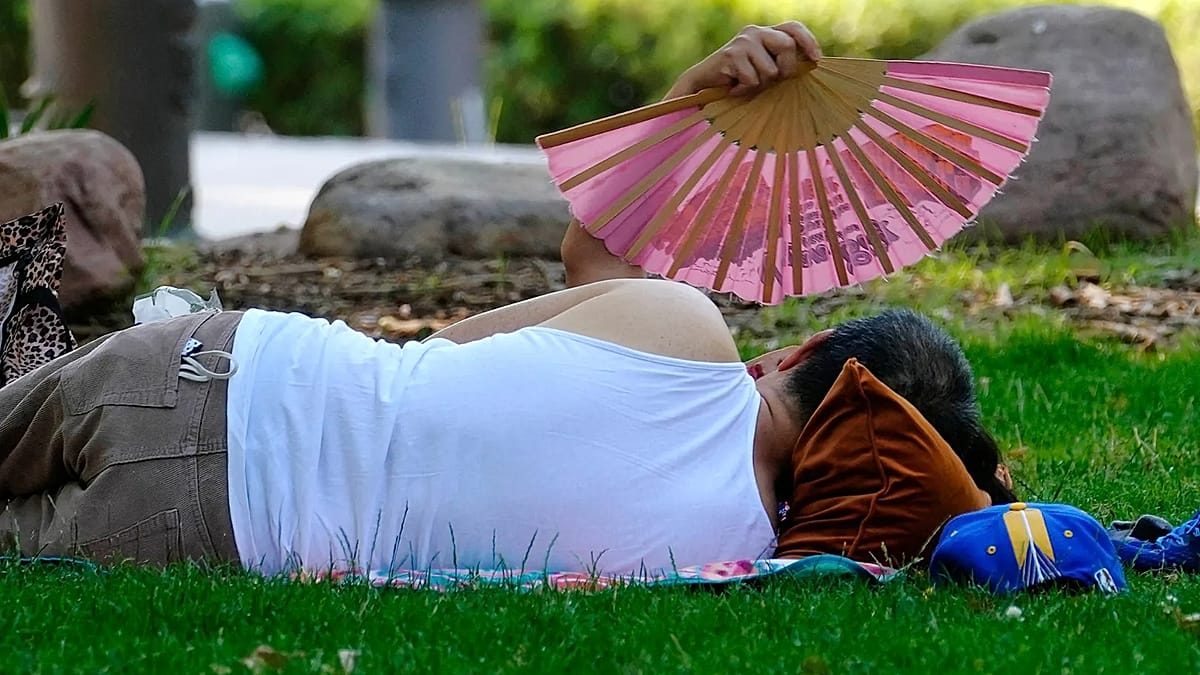
Climate change is stripping Europeans of sleep, with residents in southern cities losing up to 51 hours annually, a hidden drag on public health and workforce productivity.
Rising night-time temperatures are quietly eroding the sleep of Europeans, with a new analysis showing the average person globally lost nearly 56 hours of rest per year between 2020 and 2025. The study by Climate Central attributes this loss, equivalent to almost seven full nights, to the increasing frequency of hot nights where temperatures remain above 20°C.
In Europe, the burden falls heaviest on southern cities. Residents of Naples lost 51 hours of sleep annually over the last five years, the highest figure on the continent. Athens followed at 45 hours, while Valencia, Lisbon, and Marseille each recorded losses of 40 to 42 hours.
Northern Europe is not immune to the trend. People in Edinburgh lost 21 hours of sleep per year, compared to 20 hours in both Stockholm and Helsinki, and 18 hours in Oslo. Across the globe, the highest losses were concentrated in the Middle East and Southeast Asia, ranging from 55 to 91 hours annually.
The problem is accelerating. Climate Central analysed over 1,300 cities and found that temperature-related sleep loss has at least doubled since the early 1970s. In a typical city of 500,000 residents, annual sleep loss crept from 46 hours in the 1970s to 50 hours in the 2020s before hitting 56 hours in the 2020-2025 period, with climate change driving a growing share of that increase.
This accumulated sleep debt carries direct implications for the economy and public life. The study notes that poor sleep degrades mood, cognitive performance, and physical productivity. It also strains cardiovascular and immune health, factors that can increase workplace absences and reduce economic output over time.
Certain demographics face disproportionate risks. Adults over 65 experience sleep disruption from warm nights more than twice as much as middle-aged adults. Women and people living in inherently hotter climates are also more severely affected.
While lower-middle-income countries suffer nearly three times the impact of high-income nations, the trend threatens to widen internal inequalities as urban heat islands amplify night-time temperatures. Because the body relies on cooler night-time temperatures to recover, repeated disruptions over a hot season compound into a significant health and economic strain.