Bavarian hop farmer scales elevated solar to fight drought
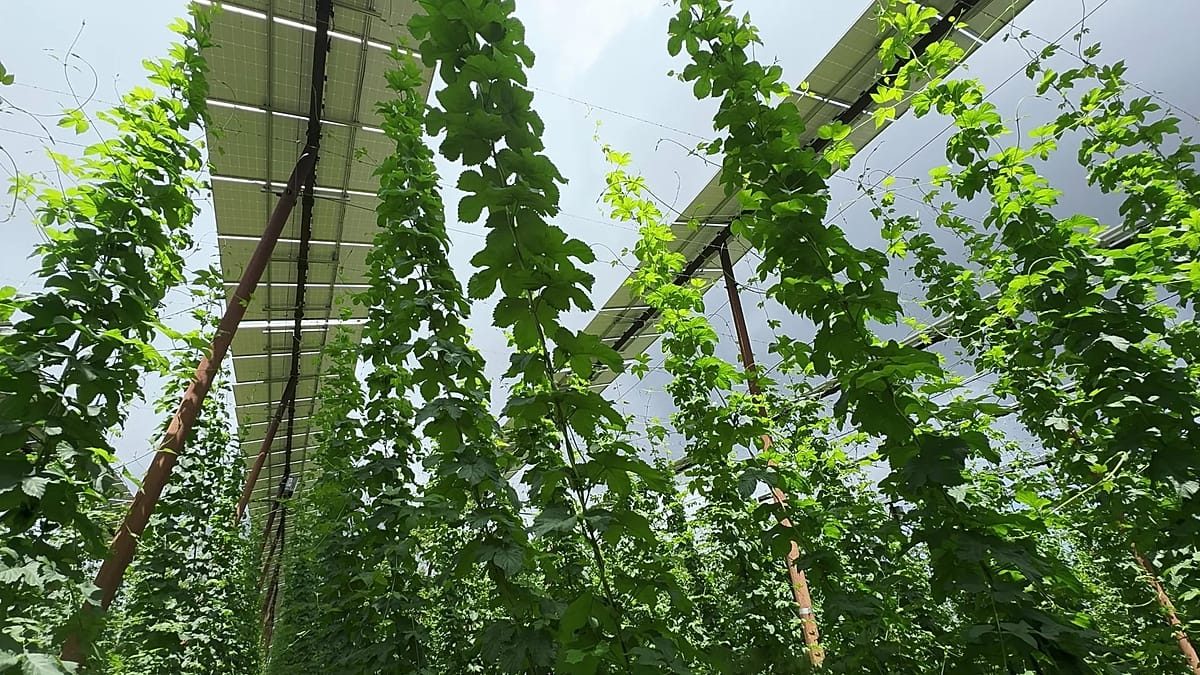
A Bavarian farmer is expanding a world-first elevated solar system to protect his hops from climate-driven drought, but lengthy permitting threatens to stall a potential model for European agriculture.
A farmer in Bavaria’s Hallertau region is scaling a world-first elevated solar power system over his hop fields to combat severe drought, despite facing two years of bureaucratic delays. Josef Wimmer has already installed photovoltaic modules seven metres above a five-hectare plot, and is now preparing a major expansion.
The urgency is driven by a slow collapse in German hop cultivation. The number of specialist hop farms has fallen 40 percent since 2006, dropping to 904 by next year. “When I did my training 30 years ago, there were more than 2,000 hop growers in the Hallertau, today it is well below 1,000,” Wimmer says. Rising temperatures and parched soils are compounding long-term declines in beer consumption and global prices.
Wimmer partnered with Bernhard Gruber, a former Airbus engineer, to design a system that generates power while shielding the shade-loving plants. “In a first step we covered five hectares of hops with PV,” Wimmer reports. “That gives us an output of two megawatt peak.” The initial results have prompted a rollout: “Over the next two to three years we’ll expand it to 20 hectares, which will give us eight megawatt peak of PV capacity; and we’ll add a battery storage system with a capacity of one megawatt.”
Balancing energy generation with agricultural output required precise engineering. The first prototype used panels tilted at 20 degrees, which maximised electricity but cast too much shadow, causing the plants to produce bushy shoots instead of valuable cones. Gruber spent two years refining the model, ultimately determining that a 45-degree tilt provides the optimal mathematical balance between crop yield and power production.
However, the infrastructure economics remain challenging due to red tape. It took Wimmer nearly two years to secure building approval. He must also fund a five-kilometre cable connection to a substation himself. Gruber warns that such delays are a major barrier to wider adoption. “Long approval procedures are a problem. They put some farmers off from going for agri-PV on a larger scale, because the bureaucratic effort is simply too great for many of them,” he says.
For European policymakers, the Hallertau experiment demonstrates that agri-PV can physically protect climate-vulnerable crops while producing clean energy. Yet until grid connection costs are addressed and planning permissions are accelerated, this dual-purpose technology will struggle to move beyond individual pioneers to rescue broader agricultural sectors.