Big Tech's AI Travel Push Meets Market Resistance
As Google, Meta and Apple embed AI into travel planning and wearable glasses, a growing market for digital detox devices highlights consumer scepticism towards the technology's reliability and privacy.
Tech companies are embedding artificial intelligence into every stage of travel, from map planning to augmented reality glasses, even as a parallel market for disconnected devices gains traction among consumers wary of the technology.
Google Maps recently integrated its Gemini large language model via a feature called Ask Maps, promoting it as a tool to replace manual research. However, AI travel planning is generating severe accuracy issues. “Chatbot outputs are not based off of a database of facts,” explains Alex Hanna, director of research at the Distributed AI Research Institute. “They are based on the next best guess of the words which come before it.”
This reliance on probabilistic text generation creates notable risks for destinations with less online data. Peruvian guide Miguel Angel Gongora Meza recently had to stop tourists from embarking on a trek to the "Sacred Canyon of Humantay," a non-existent location generated by AI. “No wonder they sound so fabulous; they’re not true!” Meza said of fabricated local lore AI provided to other tourists.
Despite these trust deficits, the hardware push continues. Meta is running billboard campaigns positioning its Ray-Ban smart glasses as essential travel gear, while Google is partnering with Warby Parker and Gentle Monster for Android XR specs slated for later this year. Apple is targeting a 2027 release for its own competing product.
Convincing travellers to wear cameras on their faces remains a significant commercial hurdle. “People are still very much wary of cameras on smart glasses,” says Julian Chokkattu, a senior editor at Wired, noting concerns over non-consensual recording. A Meta spokesperson emphasised built-in privacy measures, stating that a capture LED “blinks when you take a photo or video... it can’t be turned off.”
The friction caused by always-on AI is fuelling a distinct commercial counter-trend. Sales of single-purpose devices are surging, driven by travellers seeking to intentionally disconnect.
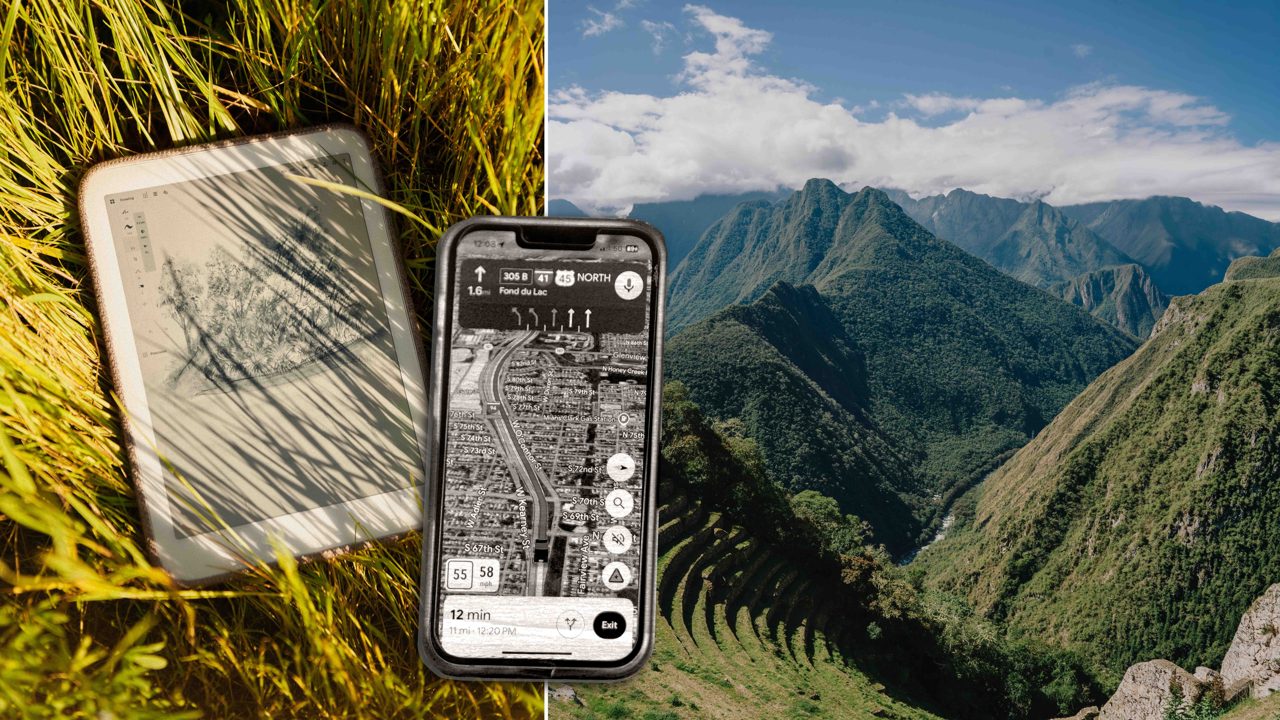
This includes viral compact cameras like the Fujifilm X100VI and a new generation of "digital detox" phones. The Commodore flip blocks social media but allows ride-hailing apps, while the Light Phone III offers GPS without the distractions of a smartphone. “It’s not black and white,” says Light CEO Kaiwei Tang. “A lot of our users keep a smartphone as a secondary device.”
For tech giants, travel represents a primary use case to justify expensive wearable hardware. But the simultaneous rise of intentional disconnection suggests the market may fracture, forcing companies to prove their AI tools offer genuine utility rather than just novel distractions.