Boston Dynamics tests Spot robot to bridge logistics porch gap
Boston Dynamics is testing its Spot robot for doorstep deliveries, a move that could reshape the economics of last-mile logistics for European carriers struggling with labour costs.
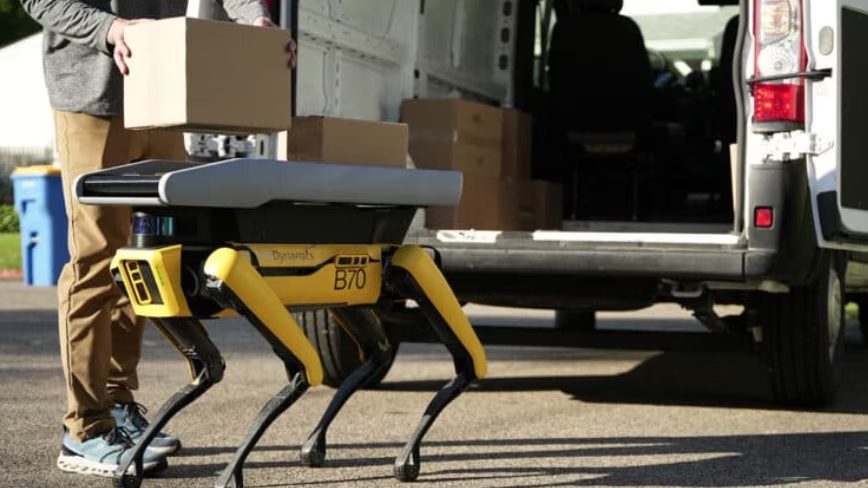
Boston Dynamics is testing its four-legged Spot robot as a parcel courier, equipping the machine with a conveyor belt to carry packages from delivery vans to front doors. The company, owned by Hyundai, posted a video on Tuesday showing a human driver loading parcels onto the robot before it walks up to houses and rotates the belt to drop them off.
The trial targets what the company calls the "porch gap," the final 50 feet between a parked van and a doorstep. "So much of logistics is already automated, but we believe that the final frontier of logistics automation is that last 50 feet," said Marco da Silva, vice president and general manager for Spot. Unlike wheeled delivery robots, Spot uses legs to navigate curbs, stairs, gravel, snow and ice.
The conveyor payload holds two parcels at a time, which Boston Dynamics estimates covers at least 60 percent of the packages in an average delivery van. Stop sensors allow the robot to split a single load across multiple stops, while a tray mechanism slows the drop speed to prevent damage.
Automating this final stretch represents a major potential cost saving for logistics firms. Boston Dynamics is targeting a pilot where Spot works alongside a driver to deliver 200 packages a day, five days a week. The company estimates that for every three packages Spot delivers, the human driver can fit an additional package into the van, increasing daily throughput without adding headcount.
The cost equation
Spot currently costs roughly $75,000, meaning its commercial viability will depend on how many routes a single unit can handle per day. Logistics companies will have to decide if they are willing to pay a premium to reduce driver fatigue and increase delivery speed.
The test is a signal for European parcel carriers. Companies across the continent face the exact same last-mile cost pressures and labour shortages. While DoorDash has started using a wheeled robot called Dot in Arizona, that machine cannot climb stairs. DoorDash CEO Tony Xu has noted that getting items from curbs to doorsteps remains one of the hardest parts of automating delivery. If the economics of a $75,000 legged robot prove out, European logistics operators may soon face pressure to adopt similar technology to navigate multi-storey buildings and varied terrain.