Emerging therapies target lysosomal dysfunction to combat age-related diseases
New research evaluating therapeutic strategies that target lysosomes could open future avenues for the life sciences sector to address the growing economic burden of age-related pathologies in Europe.
Emerging therapeutic strategies are being evaluated to target lysosomes. These cellular structures are increasingly identified as active drivers of ageing biology and age-related pathologies.
As European healthcare systems brace for the economic burden of an ageing demographic, pinpointing the cellular mechanisms of functional decline is becoming a priority for biomedical research. Understanding these pathways is critical for the life sciences sector, which is actively seeking interventions to promote healthy ageing.
Lysosomes are essential regulators of cellular homeostasis. During the ageing process, these structures exhibit impaired biogenesis, defective acidification, reduced hydrolytic activity, and compromised membrane integrity.
These specific defects impair the clearance of damaged organelles and macromolecules. Consequently, this promotes cellular stress responses, inflammageing, and senescence, causing age-dependent functional decline across tissues.
This lysosomal dysfunction is now recognized as a hallmark of ageing that directly drives age-related pathology. It has been increasingly linked to neurodegeneration, cardiometabolic disorders, and an increased susceptibility to infection.
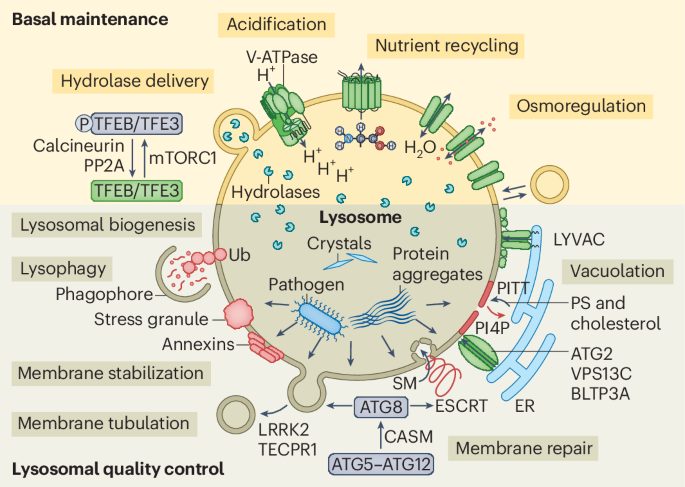
Recent scientific progress details the complex molecular networks governing these processes. Transcription factors such as TFEB and TFE3, alongside the mTORC1 signaling pathway, regulate lysosomal biogenesis and the clearance of cellular debris.
Furthermore, research highlights specific mechanisms of lysosomal maintenance and repair. Proteins including V-ATPase, TRPML1, and the unconventional H+ transporter SLC7A11 are critical for lysosomal acidification and general physiology.
When membrane integrity is compromised, cells deploy specialized repair machinery. The ESCRT machinery, ATG8 conjugation, and proteins like Galectin-3, Annexin A7, and VPS13C/PARK23 mediate endolysosomal repair and lipid transfer to promote cell survival.
The heterogeneity of lysosomes and their protein turnover is also a growing area of investigation. Success in translating these cellular repair mechanisms into viable therapies could eventually offer new avenues to ameliorate age-associated pathologies across the continent.