Watered-down EU rules fail to block forced labour cotton
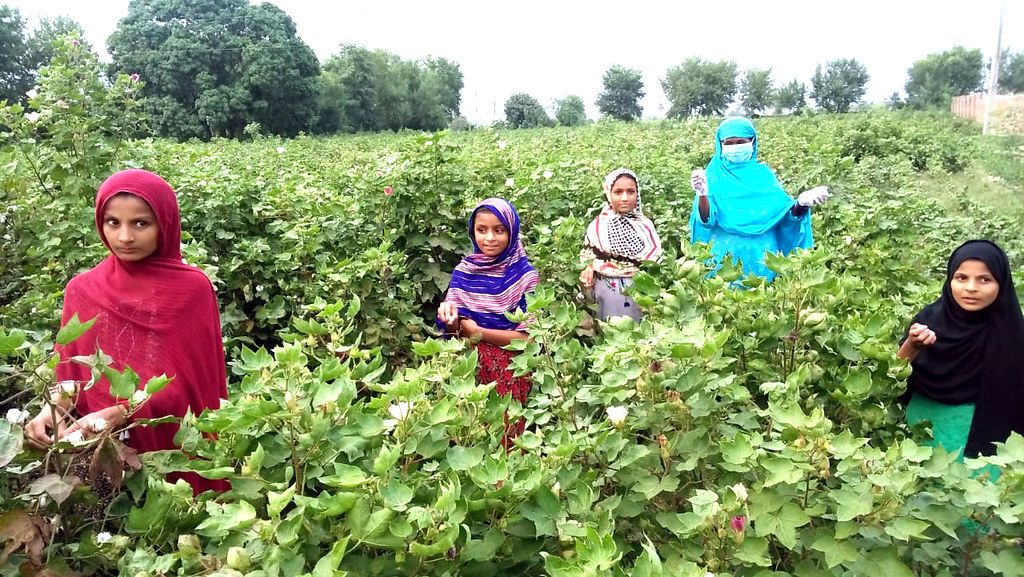
EU lawmakers bowed to fashion industry lobbying by removing mandatory supply chain tracing, allowing garments linked to Pakistani child and bonded labour to remain on European shelves.
European lawmakers have watered down impending forced labour bans, yielding to fashion industry pressure to drop mandatory farm-to-factory supply chain tracing. The European Parliament approved the weakened provisions in April, and the Council of the 27 member states has delayed its final approval until autumn.
The legislative gaps have immediate consequences for Pakistan, the world’s seventh-largest cotton producer and a major source of garments for European high street brands. Half of Pakistan’s garment exports head to the EU, its largest fashion market. Yet Pakistan ranks 18th on the Global Slavery Index, with an estimated 2.3 million bonded labourers trapped in a feudal agricultural system.
Major European retailers like Zara, H&M and C&A rely on the Better Cotton initiative to claim responsible sourcing. However, the system's architecture prevents actual accountability. A Better Cotton spokesperson admitted that "our chain of custody does not ensure 100 percent traceability to final retail products." This is because spinners mix certified bales with uncertified ones, making it impossible to guarantee the final fabric is free of exploitation.
The brands themselves acknowledge their audits stop at the factory gates. "Better Cotton’s approach does not yet allow us to know the exact source of cotton in our products," confirmed Bianca Maley, head of external affairs at C&A. Yaqoob Ahmed, chairman of Pakistani manufacturer Artistic Milliners, which supplies these brands, conceded that "there is no way anyone can be 100 percent sure about the working conditions at those farms."
The European Branded Clothing Alliance successfully lobbied against mandatory raw material traceability. "Companies would need sufficient time to map out their complete supply chain in third countries, [...], imposing it by law will not immediately make it happen," the group argued. Critics note the technology to track cotton already exists. "Technical methods already exist to ascertain where the cotton comes from, including electronic labelling," said Priscilla Robledo of the Clean Clothes Campaign.
For the European economy, the softened rules mean corporate sustainability claims will remain largely unaudited at the raw material level. Furthermore, the burden of proof under the new EU framework will fall on victims and NGOs rather than the companies holding the supply chain data.
"A large barrier to justice is that victims would have to bear the burden of proof in courts," Robledo noted. This ensures that the estimated 22.8 million Pakistani children working in the informal economy will continue to supply European fashion profits without any realistic avenue for legal recourse.