Nvidia lures Japan’s top robot makers into its physical AI stack

Nvidia has secured the intent of Japan’s largest industrial robotics firms to use its foundational AI models, a platform play that threatens to redefine global manufacturing and pressure European rivals.
Nvidia has secured the intent of 22 major Japanese companies to join its Cosmos Coalition, an open world-model programme designed to underpin physical artificial intelligence.
The roll call, announced during Jensen Huang’s week in Tokyo, includes FANUC and Yaskawa Electric. As the two largest industrial robot makers on earth by installed base, their willingness to move away from decades of proprietary control stacks is a significant shift. It mirrors the strategy Nvidia used with Hyundai for the Atlas humanoid, positioning the chipmaker’s architecture against Tesla’s vertically integrated Optimus programme.
For European manufacturers, this represents a direct challenge. Europe’s industrial base faces the same demographic and labour shortages driving Japan’s pivot to automation. If Japan’s legacy giants standardise on a third-party AI stack, European robotics firms and factory operators will face heavy pressure to adopt the same infrastructure or risk falling behind in capability.
The technical foundation of this push is Cosmos 3 Edge, a four-billion-parameter model built on Nvidia’s Nemotron family. Crucially, it runs on Jetson edge hardware rather than relying on remote data centres, allowing developers to adapt it to specific machines in about a day. Fujitsu is leading the most concrete application, exploring a collaborative control platform with FANUC, Yaskawa, and Kawasaki that uses Nvidia’s Isaac robotics platform and Newton physics engine to validate robots in simulation before factory deployment.
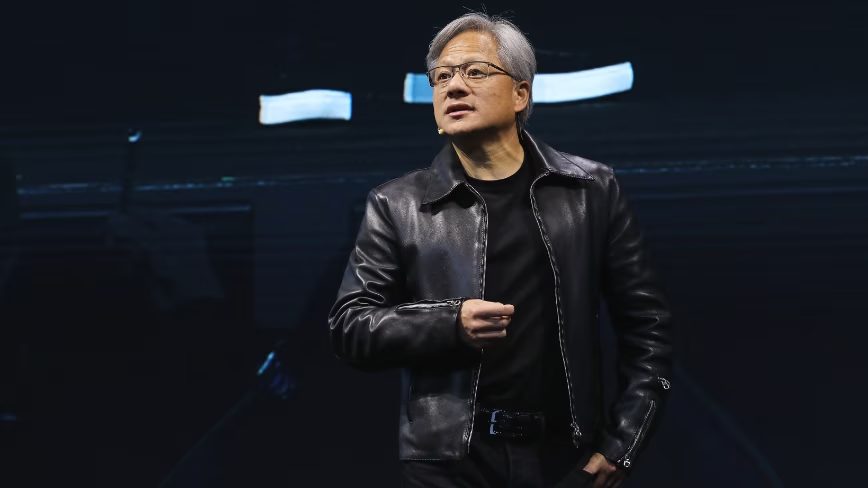
Huang framed the partnerships as a matter of national sovereignty. "Every nation and every company should own and control its intelligence infrastructure," he said. "Open models make that possible." It is a pitch Nvidia has recently replicated in Europe, where it unveiled 35 new AI supercomputers.
However, the reality is that these open models run best on hardware sold exclusively by one company. Alongside the robotics push, Japanese firms like SoftBank and NTT DATA are using Nvidia’s Nemotron datasets to train domestic language models, while companies like Kubota and Kawasaki apply the physical AI tools to agriculture, shipbuilding, and healthcare.
What remains unresolved is whether world models actually shorten the journey from demonstration to commercial deployment. Until that gap is closed, the Japanese coalition is a powerful statement of intent rather than a proven industrial standard.