Ukraine dismisses modernizer defense chief, nominates Naftogaz CEO as PM
President Volodymyr Zelensky’s dismissal of modernizing Defense Minister Mykhailo Fedorov and nomination of a new prime minister has sparked public protests, testing his political authority as Ukraine prepares for another winter of war.
President Volodymyr Zelensky has moved to dismiss Defense Minister Mykhailo Fedorov, a decision that prompted immediate street protests in Kyiv, Dnipro, and Odesa. The dismissal came as parliament convened to debate a broader cabinet reshuffle, including the nomination of Naftogaz chief executive Serhii Koretskyi as the new prime minister. Lawmakers are rushing to confirm the changes before the summer recess begins on Saturday.
Fedorov’s departure after just six months removes a central architect of Ukraine’s military modernization at a critical juncture in the war. The 35-year-old former digital transformation chief had redirected funds from salary payments into midrange strike capabilities, fiber-optic drones, and reconnaissance systems. His exit raises questions about the continuity of sweeping procurement changes and Patriot missile defense contracts that involve European and allied defense industries.
Zelensky offered no public explanation for the dismissal, though unconfirmed Ukrainian media reports pointed to a strained relationship between Fedorov and General Oleksandr Syrskyi, the 60-year-old commander of the armed forces. Fedorov himself acknowledged on social media that he failed to complete the ministry’s transformation to NATO standards or move all procurement to competitive tenders. He noted that while he dismissed many officials, “it was necessary to dismiss even more people who were hindering the changes.”
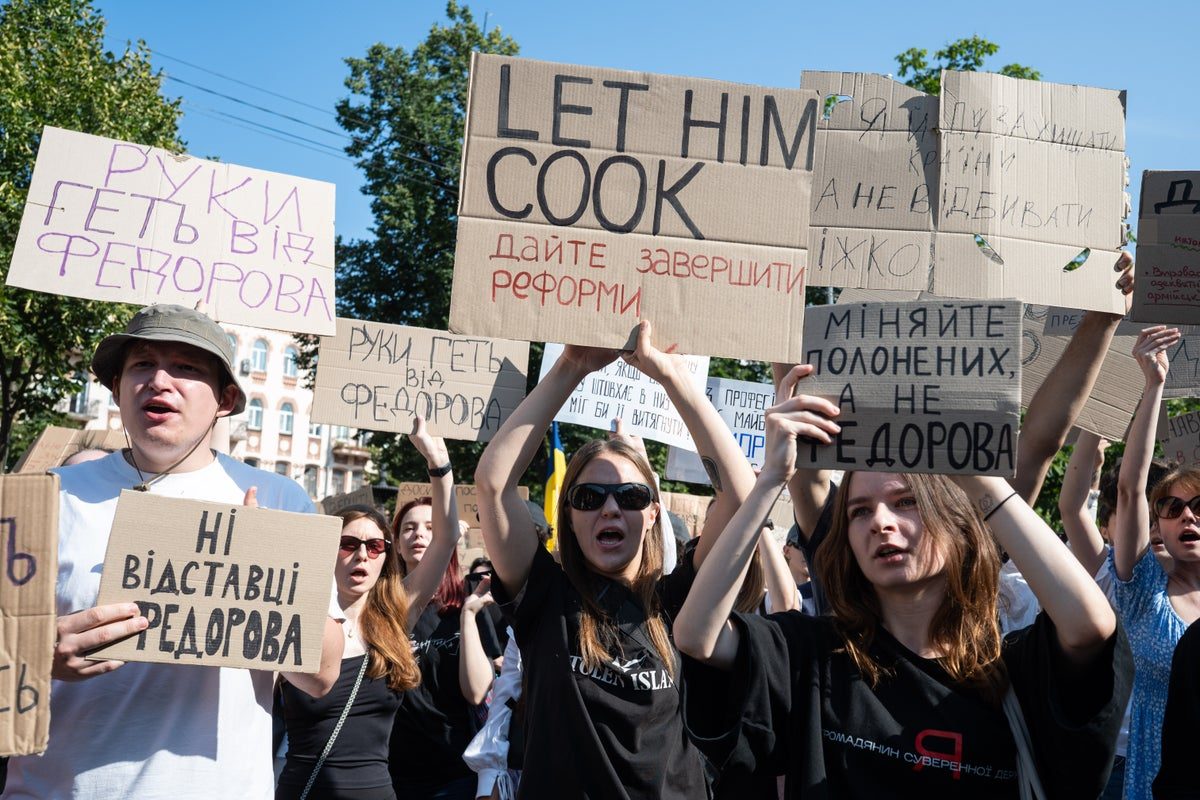
The response on the streets of Kyiv was swift, with mostly young demonstrators shouting Fedorov’s name and crude remarks about Syrskyi. Protesters chanted, “Syrskyy go away!” and “A European army for a European country!” Bohdan Huryak, a Kyiv resident, said he was “deeply outraged” by the minister’s exit. “I’m not deeply invested in the internal political debates, but this is a person who shows results on the battlefield, we see results, we feel the fighting spirit and confidence in victory rising,” Huryak said. “And then, six months later, he is removed from office? Come on.”
While the defense portfolio faces turbulence, Zelensky pivoted to energy security by nominating Koretskyi to lead the government. The president explicitly cited the Naftogaz CEO’s sector experience as essential for preparing Ukraine for another difficult winter. Securing energy infrastructure is a primary economic and logistical concern for both Ukraine and its European neighbors as the invasion nears its four-and-a-half-year mark.
The public backlash represents a direct test of Zelensky’s political authority. Large-scale demonstrations have previously forced the president to reverse course, most notably in July last year when protests over a law curbing anti-corruption watchdogs threatened his leadership. How parliament handles the current cabinet overhaul will signal whether Zelensky can maintain domestic stability while managing the war effort.