Hungary cancels €48.6m fireworks contract in procurement shake-up
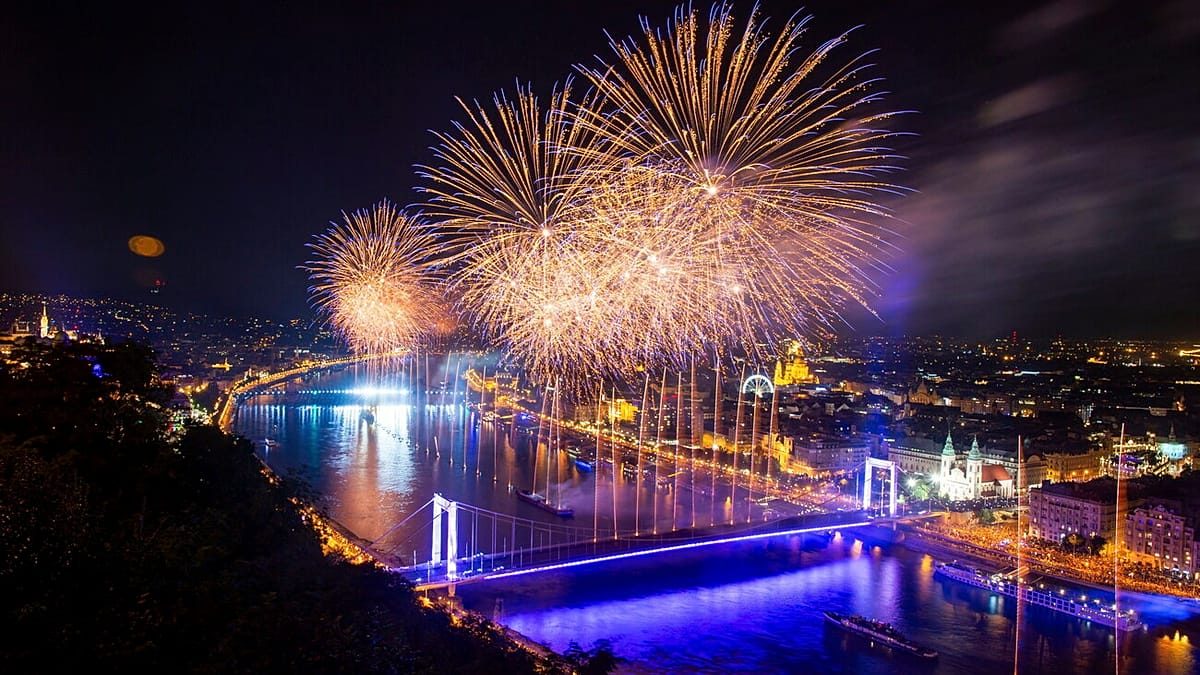
Hungary's new government has torn up a €48.6m contract for its national day celebrations, shifting state business away from a politically connected firm and sparking a debate over public spending priorities.
The Hungarian government has terminated framework contracts worth 17.5 billion forints (€48.6m) with the Lounge Group for the 20 August state celebrations. The move followed criminal proceedings against the conglomerate, owned by Gyula Balásy, which resulted in its bank accounts being frozen. With payments to subcontractors at risk, the National Event Organising Agency scrapped the agreements just weeks before the national holiday.
The collapse of the contracts highlights the sudden risks surrounding large-scale state procurement tied to political connections in Central Europe. Lounge Event had effectively monopolised major state events in recent years. Under the cancelled agreements, the company was set to receive 5 billion forints (€13.8m) for the fireworks alone and 12.5 billion forints (€34.7m) for the broader St Stephen’s Day programme. Half of this total commission had already been paid out as an advance before the termination.
The Interior Ministry has since launched an extraordinary public procurement procedure, arguing the previous arrangement was unreasonably expensive. Budapest-based Hardrock Szolgáltató, the sole bidder in the rushed negotiated procedure, is widely expected to secure the contract. The ministry claims the entire series of events can now be staged for less than 4 billion forints (€11.1m), a fraction of the original cost, albeit with a reduced technical specification.
Péter Magyar has indicated that the celebrations will be organised in a more modest form than in previous years. However, he confirmed the fireworks and a drone show will proceed because they were ordered and paid for by the previous government. The drastic reduction in the projected bill has nevertheless intensified public scrutiny over how state funds are allocated for official representation.
The cost controversy has amplified parallel calls to cancel the display entirely on environmental grounds. Budapest’s mayor, Gergely Karácsony, argues the money would be better spent tackling the country's severe drought. "What is more, this year more than 230,000 people have signed the petition supporting the use of the fireworks budget for drought defence," Karácsony wrote on Facebook. "The issue of drought and water scarcity clearly cannot be solved in its entirety from this money, but what is certain is that every public forint would be well spent there."
Civil organisation aHang, which organised the petition, noted that the new 4 billion forint estimate nearly matches the 4.7 billion forints the government allocated last year to the National Water Directorate-General for tackling drought. "Our position, and that of aHang, is that our campaign is not against 20 August but against expensive and environmentally polluting fireworks," said Viktor Szalóki, the organisation's political director. "The founding of our state can, and must, be celebrated in a fitting way, but we do not need to shoot billions of forints of public money into the sky to do so!"