Polish teen charged in Russian plot to fracture Ukraine ties
Polish prosecutors have charged an 18-year-old Ukrainian with Russian-backed sabotage aimed at fracturing bilateral relations, exposing a hybrid warfare campaign that threatens stability on the EU's eastern flank.
Polish prosecutors have charged an 18-year-old Ukrainian man with 47 criminal acts, alleging he carried out Russian-directed sabotage designed to destabilise one of Europe's critical security partnerships. Identified only as Illia K under privacy laws, the suspect was arrested in August 2025, three days before he allegedly planned to fly a drone over President Karol Nawrocki's vehicle during an August 15 Armed Forces Day parade in Warsaw.
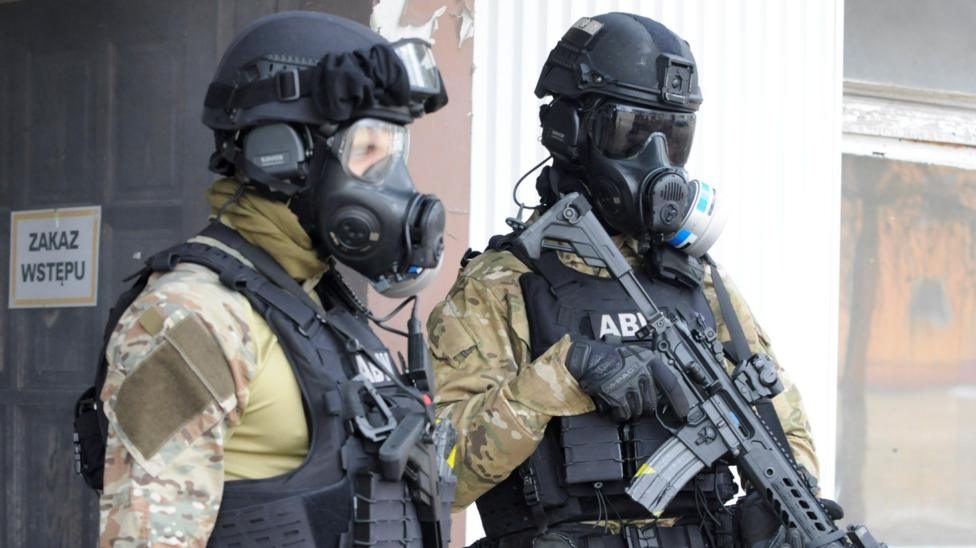
The suspect's targets were carefully chosen to exploit historical trauma. He is accused of vandalising the Monument to the Jewish Heroes of the Warsaw Ghetto, as well as monuments to Polish victims of the Volyhnia massacre in Domostawa and Wrocław, placing inscriptions that glorified the Ukrainian Insurgent Army. "The aim was to incite ethnic tensions between Poland and Ukraine," the Internal Security Agency (ABW) said.
While the teenager allegedly acted for financial rather than ideological reasons, prosecutors stated the operations were "for the benefit of foreign intelligence". The ABW said Illia K received tasks via a messaging service and sent back photographic proof, using cryptocurrencies registered in Russia and China to pay recruits.
For European policymakers and investors, the case highlights a sophisticated Russian strategy to undermine the political consensus sustaining Ukraine's defence. Poland serves as the primary logistical hub for military and civilian aid to Kyiv, making bilateral trust an economic and security imperative for the continent. The ABW noted it launched 48 espionage investigations last year, more than double the 2024 figure, with Russian services specifically focused on exploiting "historical ethnic antagonisms, mainly in Polish-Ukrainian relations".
This intelligence operation converged with an already severe diplomatic crisis. In May, President Volodymyr Zelensky issued a decree naming a Ukrainian military unit after the "Heroes of the UPA". Nawrocki responded by stripping Zelensky of the Order of the White Eagle, a step taken only once before in 300 years.
The friction stems from the Volyhnia massacre, during which up to 100,000 Poles were killed by the UPA in 1943 and 1944. Wojciech Konończuk, director of Warsaw's Office for Eastern Studies, noted that the two societies view the UPA through entirely different lenses. "For Ukrainians they are heroes because they fought the Soviets," Konończuk said. "Many years after the Second World War, the UPA were fighting the Soviet occupation, so Ukrainians only want to remember that part of the history of the formation after 1945. So they don't know, or don't want to know what were the UPA activities before 1945."
Conversely, Konończuk added: "For Poles, the UPA were a criminal structure which was responsible for the mass killing of the Polish population. At the same time the level of knowledge in Poland of the history of UPA after the Second World War - basically they were fighters against the Soviets - is usually non-existing knowledge in Polish society."
Illia K faces life in prison if convicted. The broader threat, however, lies in Moscow's proven ability to weaponise these deeply entrenched historical blind spots to fracture European unity.