Israeli access limits render EU's €900m Gaza pledge ineffective
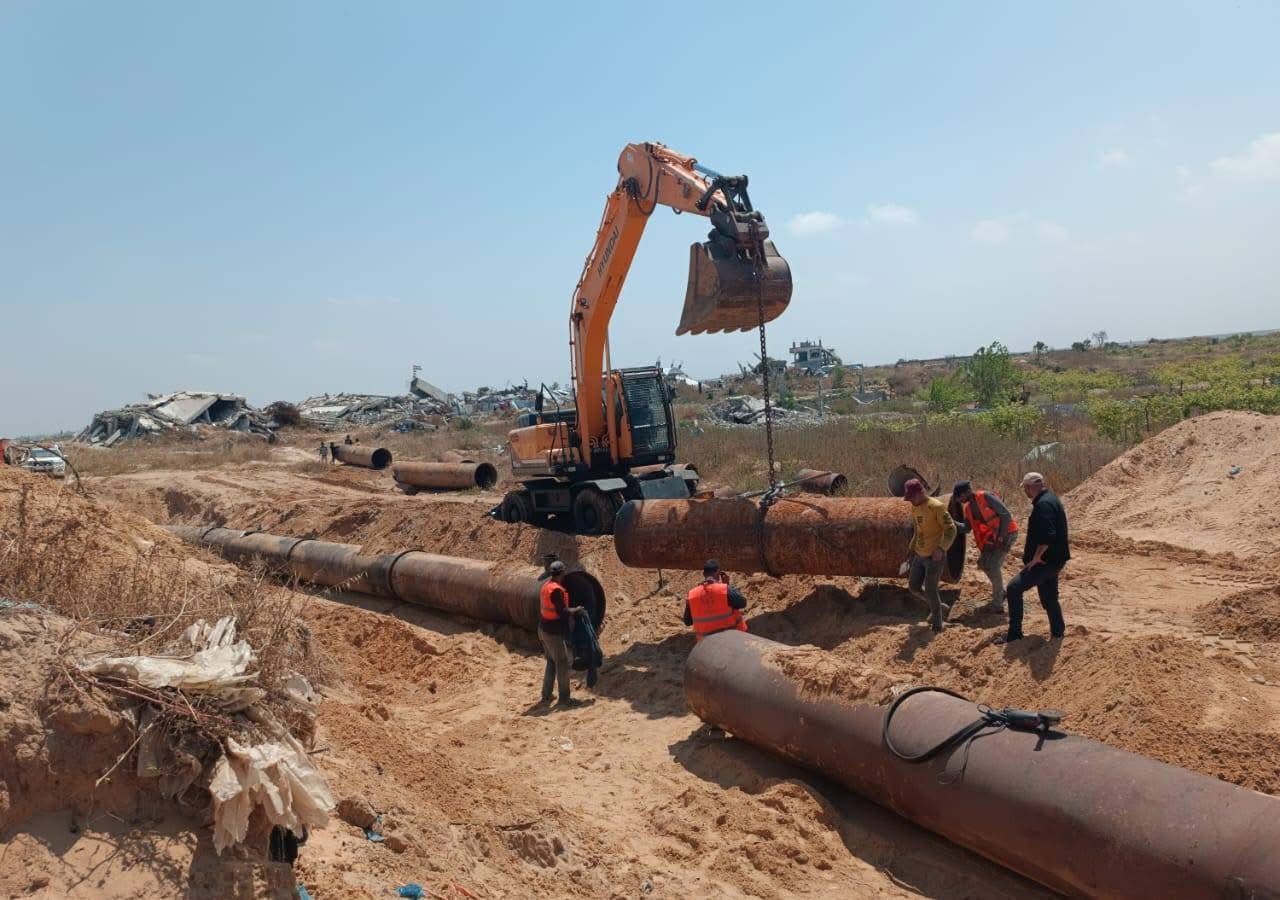
The European Union has pledged nearly €900m to rebuild Gaza, but without Israeli guarantees for physical entry, the funding risks becoming a symbolic gesture that exposes the bloc's reluctance to use economic leverage.
The European Commission announced nearly €900m in reconstruction funding for Gaza this week, but the initiative faces a fundamental blockade before any money can be spent. EU Commissioner for the Mediterranean Dubravka Šuica unveiled the pledge in Brussels on Monday after co-chairing a meeting of the Palestine Donor Group with Palestinian Prime Minister Mohammad Mustafa. The funds are earmarked for restoring critical infrastructure, social services and governance, though the enclave requires at least €70bn for a full rebuild.
The immediate obstacle is physical entry. A declared ceasefire has not stopped near-daily Israeli airstrikes and artillery attacks that have killed over 1,100 people, while ground forces continue to compress the territory's population. Šuica conceded that the core issue is access, noting that the National Committee for the Administration of Gaza, a Palestinian technocratic body created to oversee rebuilding, is stranded in Cairo because Israel will not let them in. "They should be in Gaza. This is the key problem,” she said.
Analysts and the Palestinian leadership agree the financial commitment is toothless without ground-level access. "It’s not about the money. It’s about access, primarily. And at the moment, there is very little access being allowed by the Israelis,” said James Moran, an associate senior research fellow at the Centre for European Policy Studies. “Frankly speaking, you’re making a pretty empty announcement, and there is no sign, as far as I can see at the moment, that any such arrangement has been made with the Israelis.”
Mustafa struck a similar note, warning that funding alone cannot overcome the territorial constraints. "Not much will happen until Israeli withdrawal from Palestinian areas. If that doesn't happen, the problem will remain. And even when if the money is there. Not much will progress," he told reporters.
Economic leverage left unused
The stalled funding highlights a broader hesitation within the bloc to deploy its economic weight to influence the conflict. While EU member states have sanctioned violent settlers, they have declined to target far-right Israeli ministers, a step the United Kingdom recently took by banning Itamar Ben-Gvir and Bezalel Smotrich from entering the country.
Discussions on a full ban of imports from illegal Israeli settlements took place on Monday but were pushed to October. That timeline aligns with Israeli elections, introducing political uncertainty that could further delay concrete measures. By announcing reconstruction funds without securing access, or tying the pledge to trade restrictions, the EU risks projecting a message of business-as-usual rather than executing a viable policy ahead of the summer recess.