How Striker the dog changed World Cup merchandising
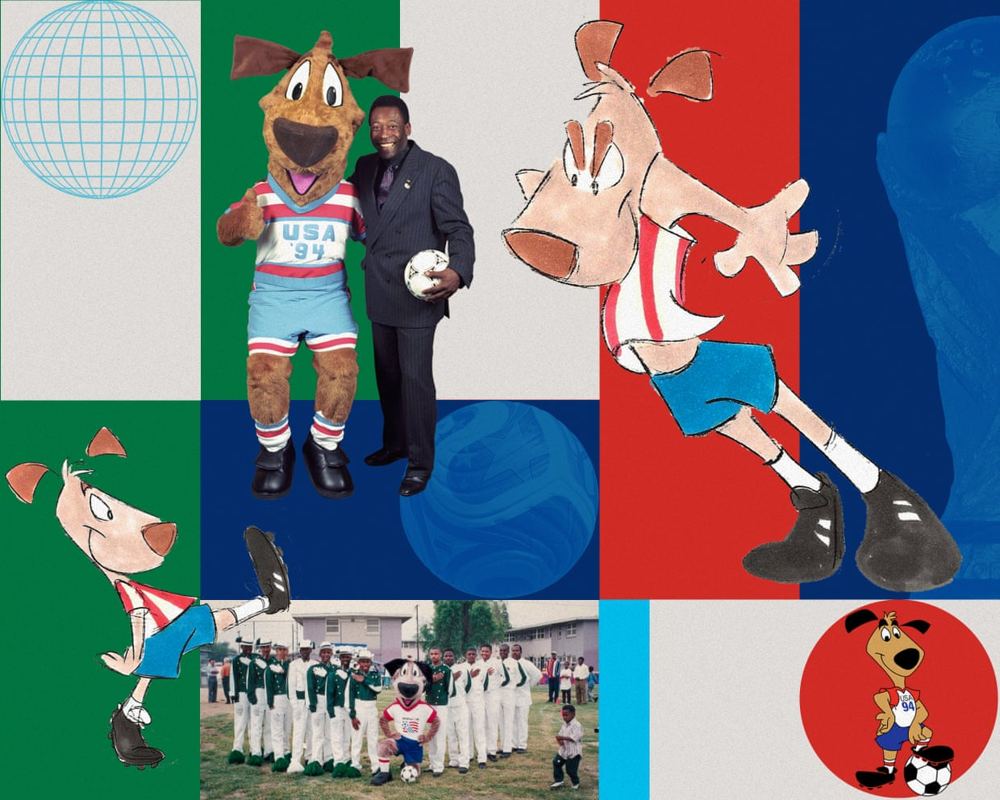
The 1994 World Cup mascot Striker, designed by Warner Brothers animators to drive merchandise sales, marked a turning point in football's commercial expansion.
The preserved remains of Striker, the cartoon dog that revolutionised World Cup merchandising in 1994, lie in a dark warehouse in North Carolina. For a seismic summer 32 years ago, this character was more ubiquitous than the players themselves, plastered across Coke cans, key chains and video games. His creation marked a turning point in the commercialisation of the tournament, demonstrating how American marketing machinery could turn a football mascot into a massive consumer product.
Striker was born out of a Hollywood labour dispute. In the summer of 1992, animators at Warner Brothers found themselves with no work between seasons of Tiny Toon Adventures and Animaniacs. Steven Spielberg intervened to prevent layoffs, prompting studio president Jean MacCurdy to accept a meeting with Alan Rothenberg, the US Soccer Federation president, who needed a mascot.
The task fell to John Over and Joey Banaszkiewicz, young artists who thrived in the studio's irreverent culture. “The currency there was ‘how hard could we make each other laugh,’” Over says. Their early concepts, however, did not fit the corporate brief. Banaszkiewicz’s initial pitch, called Soccerey Bally, was a humanoid soccer ball that featured players taking the character on romantic dinners and into bed.
US Soccer rejected the cartoon pornography, pushing the animators toward a safer, more marketable concept. They reviewed previous tournament mascots and noticed a lack of broad commercial appeal. “Soccer was sort of not super popular here, so we thought let’s do this ‘underdog’ kind of idea,” Over says.
The final design process highlighted the frequent friction between artistic creativity and corporate marketing. “We ran into problems with these dorks at [US Soccer],” Over says. Executives pushed back against exaggerated animation, arguing that “a child could never kick a ball that hard.” Banaszkiewicz notes the corporate interference was suffocating. “It ended up being sort of a design by committee thing,” he says. “And in the world of animation, that’s always death.”
To maximise consumer engagement, the organising committee bypassed corporate naming and launched a public vote. Fans were encouraged to call a 1-900 number at a cost of $0.95 per call or use mail-in ballots to choose between Striker, Sweeper, Champ and Sidekick. Roughly 25,000 people voted over six weeks, handing Striker a clear victory.
The committee then ordered a dozen Striker costumes at $2,500 each from Scollon Productions, a small costume shop in South Carolina. This heavy branding push stood in stark contrast to the early history of World Cup mascots. When Reginald Hoye and Richard Culley invented the first mascot, World Cup Willie, in 10 minutes for the 1966 tournament in England, the event was largely devoid of consumerism.
Today, tournament organisers continue to chase the merchandising success Striker achieved. Yet as the 2026 World Cup approaches with its trio of mascots, Maple the Moose, Clutch the Bald Eagle and Zayu the Jaguar, the current designs lack the simple, mass-producible charm that made the 1994 dog a financial hit.