London luxury hotel market expands past 3,000 properties
London's hotel sector is absorbing premium conversions and major brand launches as room supply surpasses 3,000, signaling sustained high-end demand.
London’s hotel sector has surpassed 3,000 properties, with the market bracing for further high-profile additions this year including the Waldorf Astoria Admiralty Arch and the Auberge Collection's Cambridge House.
The continued expansion underscores the resilience of premium tourism and corporate travel in the capital. Developers are betting on ample demand for ultra-luxury accommodations, increasingly relying on landmark conversions rather than new builds to capture high-spending visitors.
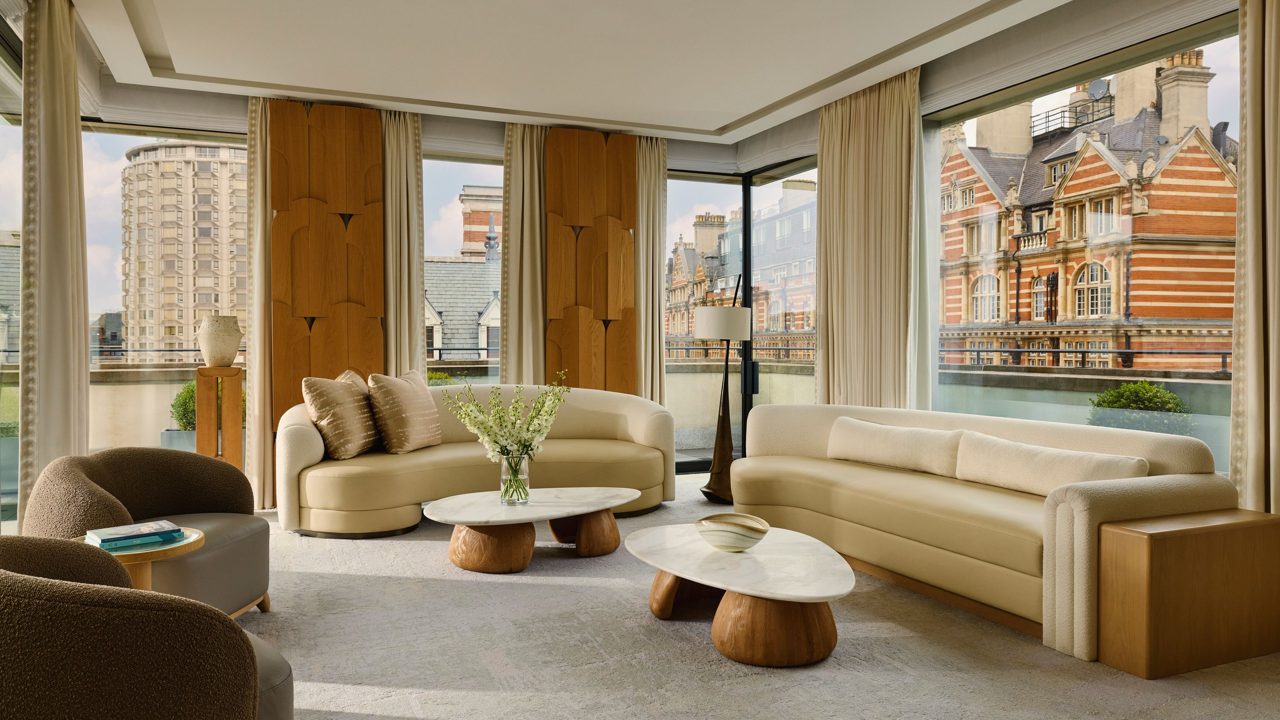
A prime example is the former American Embassy in Mayfair, which operated on Grosvenor Square for almost 60 years. The building has been transformed into a 144-suite luxury property featuring an original 35-foot gilded eagle by Theodore Roszak. With floor-to-ceiling windows and super-sized marble baths, the hotel commands rates from around $1,693 per night, positioning it at the apex of the city's pricing.
International brands are simultaneously importing their specific niches into the dense urban market. Six Senses, a brand typically associated with remote, leafy resorts, has opened its first London outpost in the historic Whiteley Building. Rooms start at roughly $1,100 per night. The property relies on a high-tech wellness floor and locally sourced food, the head chef visited 30 British farms to select suppliers, to differentiate itself.
These new entrants must compete against established heritage operators that dominate the luxury segment. The Connaught, known for an English aesthetic that inspired Ralph Lauren to commission a replica of its staircase for his Madison Avenue shop, charges from about $1,335 per night. It anchors its appeal with a three Michelin-starred restaurant by Hélène Darroze and a Jean-Georges outlet overlooking a Tadao Ando water sculpture.
Claridge’s, founded in 1812 and listed in an 1878 Baedeker’s guide as "the first hotel in London," remains the benchmark for legacy properties. Rather than relying solely on history, the hotel has recently expanded into an adjacent building to add modern suites, while investing in a subterranean spa designed by André Fu. It maintains rates of about $1,071 per night.
The influx of supply has also created opportunities for smaller, thematic operators. A Bloomsbury property comprising three conjoined Georgian townhouses offers 43 rooms starting at roughly $471 per night, leveraging a speakeasy-style salon and cigar garden. In Fitzrovia, The Newman targets a similar demographic at around $721 per night with a ground-floor brasserie and bar concept.
Together, these varied approaches highlight a market that is fragmenting by price point and experience. Broadwick Soho is currently drawing a younger, fashion-conscious crowd, while the Mandarin Oriental Hyde Park continues to dominate the family segment. As the capital's room count grows, operators are finding that sheer volume is less relevant than highly targeted luxury positioning.