Buxton festival stages Francesca Caccini’s 1625 opera La Liberazione di Ruggiero
The Buxton festival’s production of the earliest surviving opera by a female composer underscores the cultural value of diversifying the European classical canon.
The Buxton festival is currently staging Francesca Caccini’s 1625 work La Liberazione di Ruggiero, marking a notable presentation of the earliest surviving opera composed by a woman. The Buckinghamshire-based ensemble Vache Baroque is leading the production under the direction of Eloise Lally.
Originally premiered at the Medici court under the regency of Maria Maddalena of Austria, the opera adapts Ariosto’s Orlando Furioso. The narrative subverts traditional dynamics, presenting the warrior Ruggiero as a captive while the sorceresses Alcina and Melissa battle for control over him.
For European cultural institutions, staging such rare 17th-century repertoire represents a growing commitment to broadening the classical canon. Highlighting female composers from the early modern period offers both historical correction and fresh programming opportunities for regional festivals.
Music director Jonathan Darbourne leads a band that supplements Caccini’s score with instrumental pieces from her Florentine contemporaries. The orchestration features three recorders, a trio of sackbuts, violins, theorbo, and guitar, creating a textured and idiomatic soundscape.
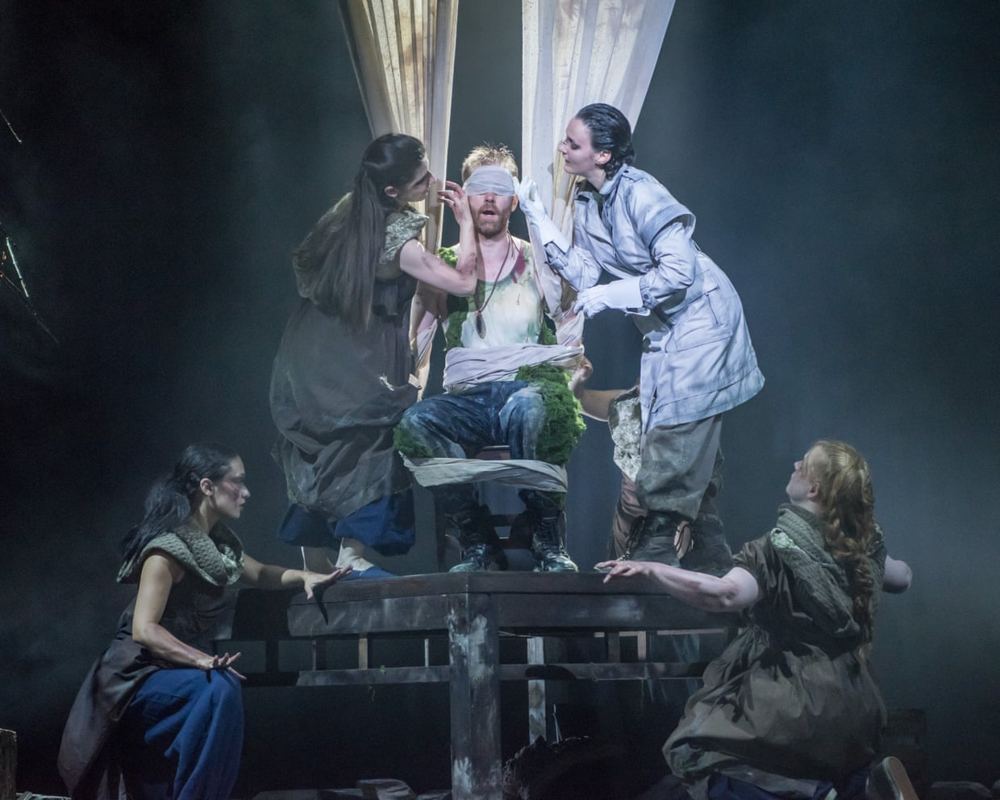
The production design by Zahra Mansouri juxtaposes pastoral themes with gritty, modern elements. A blindfolded Ruggiero, sung by Jon Stainsby, is bound with a dirty shower curtain, while Alcina’s potion-making visually evokes cooking meth.
This dramatic escalation demands vocal power that the cast only partially delivers. While Stainsby provides an impassioned confrontation and Harriet Burns offers a liquid-lovely soprano in supporting ensembles, the smaller voices struggle to sustain full-scale psychodrama.
Camilla Seale portrays Alcina with a brooding, contained mezzo that is ultimately outgunned by Phoebe Rayner’s bright Melissa. Filippo Turkheimer also brings distinct vocal personality to his brief cameo as Neptune.
Although the staging omits the horse ballet that reportedly concluded the original 1625 premiere, the production succeeds musically. It demonstrates how regional European festivals can effectively champion obscure historical works with energetic, if occasionally uneven, modern interpretations.