New Irish novel The Red Mouth uses bogs to frame climate dilemma
Sheila Armstrong’s second novel uses the discovery of ancient remains in Ireland’s peatlands to interrogate the tension between deep geological time and the immediate urgency of the climate crisis.
Sheila Armstrong has published her second novel, The Red Mouth, a meditation on the Irish landscape that uses two bog discoveries to explore the collision between the ancient past and the modern climate crisis. The excavations of a "monstrous, bog-black antler" from a great Irish elk and the mutilated body of a girl known as Belroe Woman set the narrative in motion.
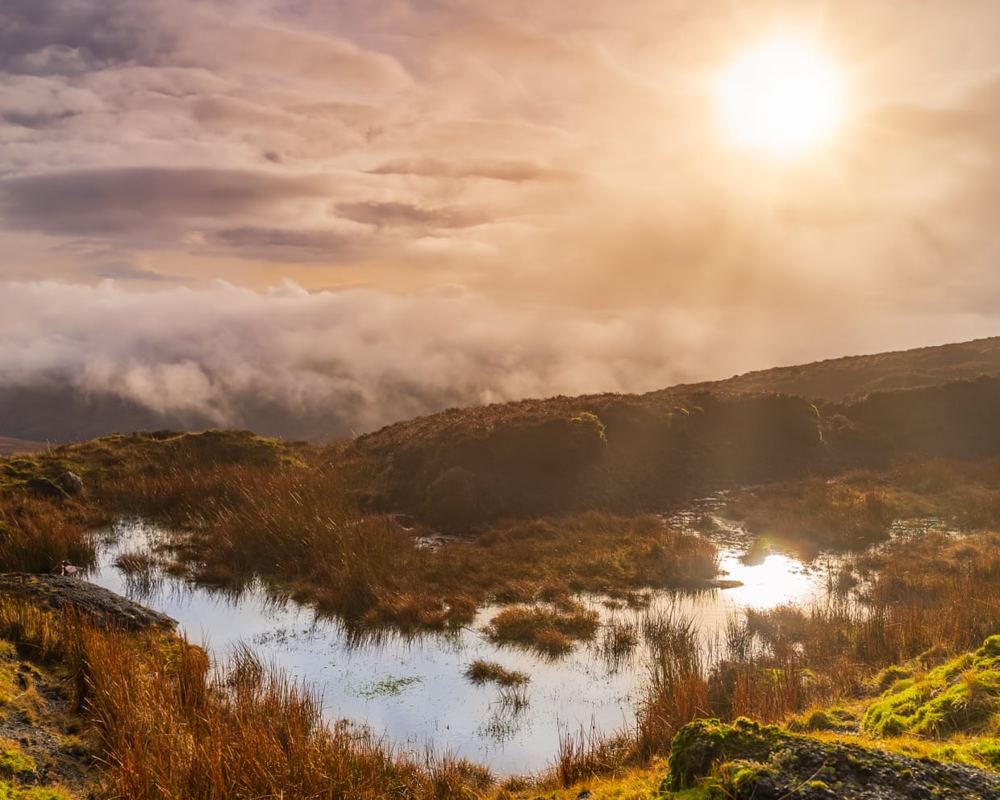
Almost 14% of Ireland is covered by bogs, moss-carpeted landscapes that hold layers of compounded history within their mulch-black turf. In a European context where land management and environmental policy are fiercely debated, Armstrong frames these peatlands as battlegrounds for competing ideas of economic progress and ecological preservation.
The story follows intersecting lives shaped by the discoveries. Patch, a returned émigré, is led to the antler by his rescue dog. Maeve, a socially anxious scientist, arrives to conduct environmental assessments, finding a "seeping dread" in the landscape. Decades earlier, turf-cutter Tomás tries to support his family as the march of progress threatens his traditional livelihood.
Over time, the physical landscape itself transforms from a working bog into managed wilderness and finally a national park. This evolution mirrors the broader European transition away from extractive land use, a shift that brings economic displacement alongside environmental protection.
The novel’s intellectual weight rests on its treatment of time. Tomás questions modern notions of development, arguing that “surely the development has already taken place, over hundreds of thousands of years, the press and formation of the blanket of peat across a rock singing to itself in the middle of the Atlantic”. This long-view clashes with the archaeologist's insistence that “there are no experts in this, only us, only now”.
This tension speaks directly to the core of contemporary climate discourse. European nations are tasked with fostering an appreciation for deep geological time while simultaneously recognising the immediate, catastrophic urgency of the present moment. Armstrong explores this friction through human collateral damage, as the archaeologist's relentless focus on the past causes his estranged partner and troubled daughters to unravel.
Armstrong avoids heavy-handedness by grounding these vast themes in vivid, lyrical descriptions of sphagnum matrices and buttery August light. The plot unfolds in quiet increments, offering no easy answers. As one character ultimately accepts: “things happen, one after the other, and there is no smooth parabolic curve that can connect all the checkpoints … uncertainty is the only certainty”.