France and Germany seek defence reset after fighter jet collapse
France and Germany are launching a new push to align their defence industries after the collapse of a flagship fighter jet project, a crucial test for Europe's ability to reduce its reliance on US military hardware.
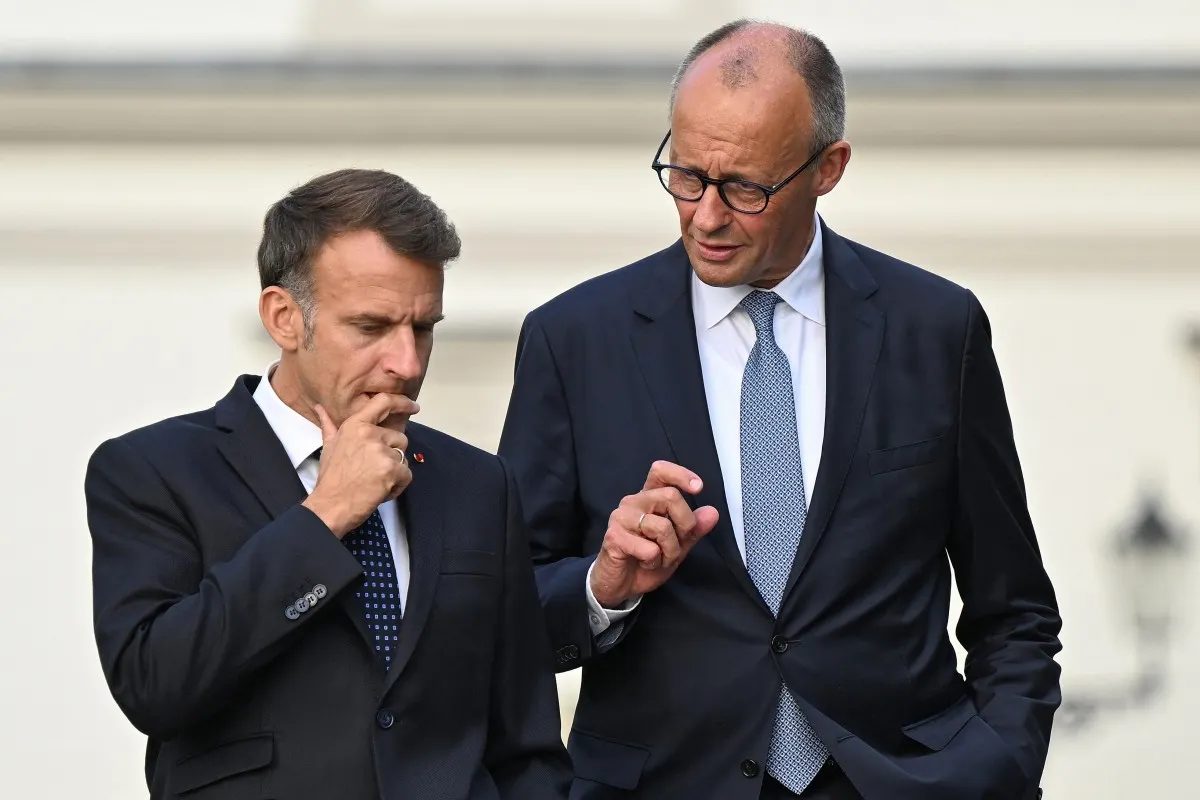
French President Emmanuel Macron and German Chancellor Friedrich Merz are chairing the annual Franco-German meeting near Cologne on Friday, aiming to establish a "new dynamic" in defence cooperation. The talks come just weeks after the collapse of the Future Combat Air System (FCAS), a flagship joint fighter jet project that fell apart due to disputes between Airbus and France’s Dassault.
The implosion of the FCAS has exposed deep fractures in Europe's defence industrial base at a time when the continent is rushing to rearm. Paris and Berlin are now under pressure to salvage parallel programmes, such as the Main Ground Combat System (MGCS) for battle tanks, which has suffered internal friction since Germany’s Rheinmetall entered the fray. For European aerospace and defence contractors, the outcome of these negotiations dictates whether the bloc can consolidate a unified supply chain or splinter into competing national camps.
A central tension lies in fundamentally opposing approaches to air defence procurement. Germany is advancing its European Sky Shield Initiative, a system heavily reliant on American Patriot and Israeli-American Arrow-3 interceptors. France has flatly refused to participate, arguing the initiative would lock Europe into US dependency rather than bolstering the continent's own defence industry.
Industrial rivalry is further complicating the political alignment. France, the world’s second-largest arms exporter, is watching nervously as Merz pursues his ambition to build the "strongest conventional army in Europe." This buildup is backed by a German borrowing splurge that Paris fears will simply subsidize a new generation of domestic competitors to French military exporters.
To bridge these divides, the two governments are preparing to launch a joint "steering group" focused on radar systems, "deep-strike capabilities" and missile defence. They will also address a French-led nuclear deterrence scheme, though a German government source stressed it must remain "complementary" to Nato and avoid creating "different security zones" across Europe.
Friday's meeting takes place at Augustusburg Castle, where Charles de Gaulle and Konrad Adenauer laid the groundwork for their 1962 friendship treaty. The historical echo highlights the urgency of the moment. With Macron leaving office before the next annual summit, the two allies have a narrow window to convert recent political convergence into concrete industrial agreements.