Europe's June heatwave caused over 12,000 excess deaths
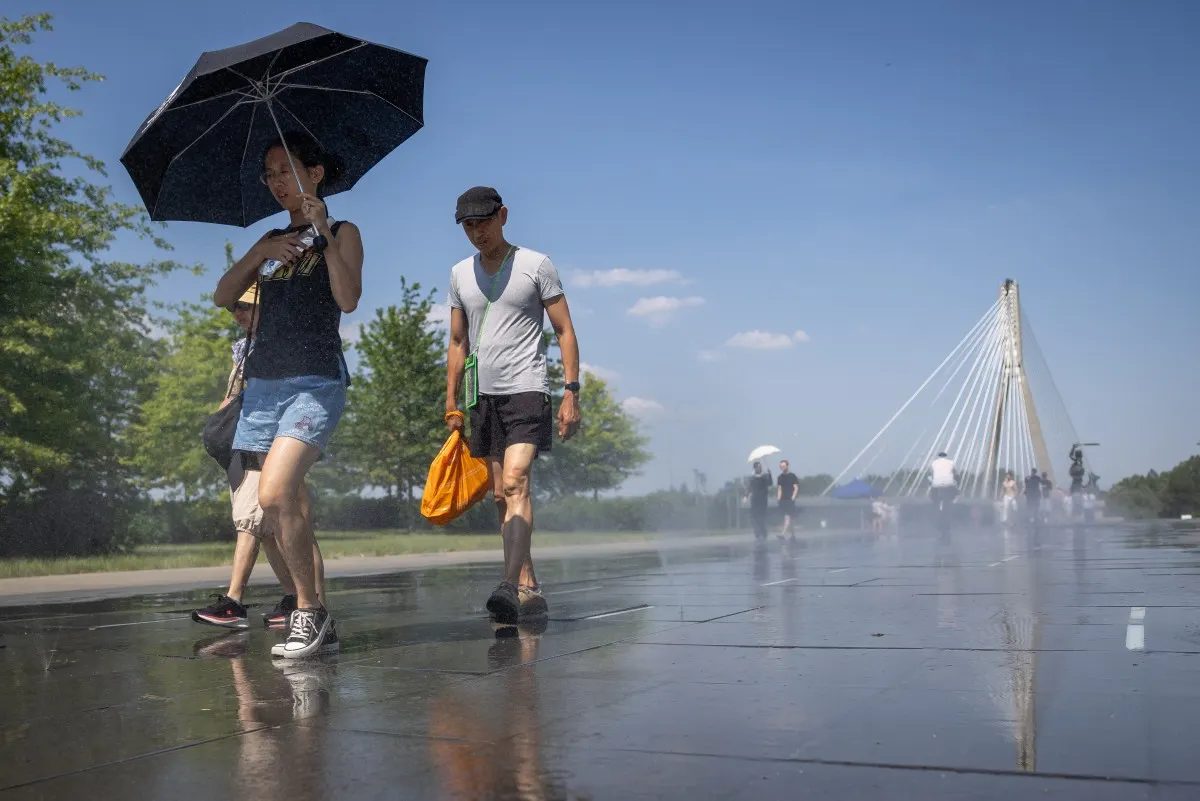
Record June temperatures caused at least 12,000 excess deaths across Europe, exposing a fatal gap in how governments manage climate-driven health crises.
Late June's record-breaking heatwave caused at least 12,000 excess deaths across Europe, according to new data. An analysis of mortality figures from seven countries found roughly 10,000 excess deaths between June 22 and 28. A further 2,200 deaths were estimated in England and Wales by the Met Office over a slightly longer period.
The continent-wide toll is likely higher. The European Mortality Monitoring network, drawing on data from 24 countries representing 400 million residents, recorded 14,260 excess deaths in the final week of June alone. That represents the highest mortality rate for any June week since the network began aggregating European figures in 2020.
The World Weather Attribution group of scientists has determined that these temperatures would have been "virtually impossible" in June without climate change. Lasse Vestergaard, coordinator of EuroMOMO, said there is no other known explanation for the spike. "There's no other reasons for excess mortality that we know of than heat -- and it's quite dramatic," he said.
Germany suffered the heaviest known impact, with Destatis recording 5,780 excess deaths compared to the four-year average for that week. The Robert Koch Institute noted that more people in Germany had died from the heat so far this summer than over the previous six years combined. France and Belgium also recorded sharp spikes of 2,025 and 1,747 excess deaths respectively, while Spain, the Netherlands and Switzerland reported hundreds more.
These mortality figures point to a systemic failure in how Europe protects its population during extreme weather. Hans Henri P. Kluge, the WHO regional director for Europe, warned that governments are making a dangerous miscalculation. "This is not a natural disaster and it's repeating itself every year because too many governments are still treating heat as a weather event rather than a health emergency," he said.
Kluge stressed that the evidence and guidance to prevent these deaths already exist. "What governments do next is a choice, and this summer shows what's at stake," he added. These initial figures are provisional and typically revised upwards over the following four weeks, but the WHO director left no doubt about the immediate future: "The summer is not yet over."