UK nationalises British Steel to keep sole virgin furnaces alive
The UK government has taken British Steel into public ownership to prevent the loss of the country's last virgin steelmaking capability, a move that has drawn anger from Beijing.
The British government has taken British Steel into public ownership, seizing control of the Scunthorpe plant from China's Jingye Group. The nationalisation on 16 July marks the end of a turbulent private ownership era and an attempt to stop the immediate collapse of the country's primary steelmaking capacity.
The intervention was triggered by severe financial losses. Jingye reported the facility was losing around £700,000 a day, while the National Audit Office put the daily cost to the government at £1.3 million. The company blamed unsustainably high electricity costs, global overproduction, a 25% US tariff imposed in March, and the expenses of transitioning to lower-carbon production.
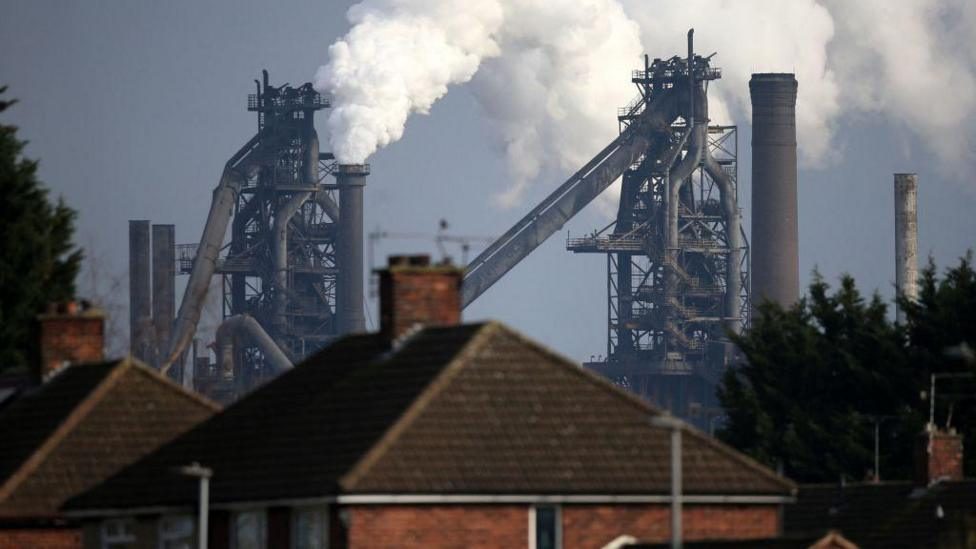
Scunthorpe is now the sole site in the UK producing virgin steel, a material essential for major railway and construction projects because it contains fewer imperfections than recycled alternatives. The plant employs 2,700 people, accounting for roughly three-quarters of British Steel's workforce. Without it, the UK would become the only G7 nation unable to manufacture its own virgin steel, a scenario the government views as a direct threat to economic security.
Keeping the plant running presents immediate engineering challenges. Only two of Scunthorpe's four blast furnaces remain operational: Bess, which started in 1938, and Anne, which began production in 1954. These structures must run continuously, as allowing them to cool solidifies the molten metal inside and risks cracking the furnace, rendering it permanently unusable. Supplies of coking coal and iron pellets needed to feed them are currently running low.
Business Secretary Peter Kyle framed the takeover as a necessary emergency measure to buy time. "But let me be really clear, there is an alternative here - that we let this business go bust," he told the BBC. "If that business disappears, we will lose the ability for primary steel production in our country, we will become entirely dependent on global supply."
The nationalisation has sparked a diplomatic dispute. China's commerce ministry stated it "firmly opposes and is strongly dissatisfied with the British government's decision". Jingye is now seeking compensation, the exact amount of which will be determined by an independent assessor.
The UK's broader steel sector has been in long-term decline, producing just 5.6 million tonnes of crude steel in 2023-0.3% of the global total compared to the EU's 126 million tonnes. Last September, Tata Steel shut its blast furnace at Port Talbot after securing £500 million in state aid to shift toward greener production. To meet its needs, the UK imported nearly 7 million tonnes of steel in 2024, with roughly two-thirds coming from the EU, led by the Netherlands, Spain and Germany.