Poland's Nawrocki vetoes civil partnerships bill
Poland's president has blocked a bill legalising civil partnerships, keeping the country socially misaligned with most of the EU and exposing deep political limits within Prime Minister Donald Tusk's government.
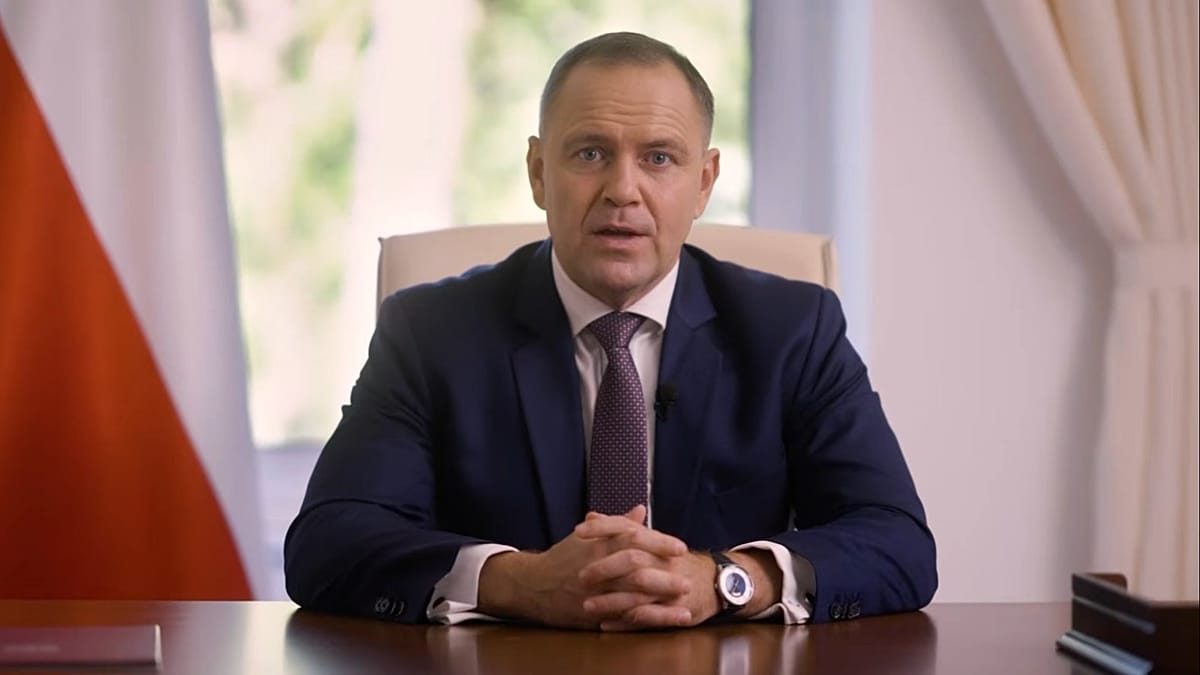
Polish President Karol Nawrocki vetoed a bill on Friday that would have legalised civil partnerships for unmarried couples, including same-sex partners. The legislation, proposed by Prime Minister Donald Tusk's centrist government, sought to establish a "status of the closest person" granting rights like joint property ownership, medical information access and burial rights.
Nawrocki framed his decision as a defence of the constitution. "I have always emphasised that nothing that is a quasi-marriage can count on my support," he said on X. "As the guardian of the Constitution, I cannot accept a solution that would lead to the loss of the special status of marriage defined... as a union of a woman and a man."
Tusk sharply criticised the move on X as "an expression of contempt toward people and their right to happiness and a normal life." The veto highlights the structural constraints facing Tusk's pro-European Civic Coalition. After winning last year's parliamentary elections, the party pledged to introduce civil partnerships within its first 100 days in office. However, governing alongside more conservative coalition partners and sharing executive power with Nawrocki has stalled several social reform promises.
Parliament could theoretically override the presidential veto, but doing so would require a three-fifths majority in the lower house. Such a supermajority is a rarity in Polish politics, making the veto effectively fatal for the current legislation.
For European investors and businesses, the veto underscores the persistent political fault lines in the EU's largest eastern economy. While Warsaw has made strides in aligning with EU rule-of-law standards, social policy remains heavily contested. Poland stands alongside Bulgaria, Romania and Slovakia as one of the last countries in Europe not to legalise same-sex marriage or civil unions. This ongoing divergence keeps Polish corporate law misaligned with Western European norms on equality, a tangible consideration for multinational employers monitoring talent mobility and inclusive workplace policies.
The political deadlock also contrasts sharply with shifting domestic public opinion. A 2025 survey by state research agency CBOS found that 62% of Poles supported legalising same-sex partnerships, the highest level ever recorded. To pass the original bill, the ruling coalition had attempted to frame the "closest person" status as a legal tool for neighbours or relatives, rather than strictly romantic partners, in a bid to appease conservative opponents.