Bayeux Tapestry reaches London unharmed ahead of September display
The Bayeux Tapestry has arrived at the British Museum in pristine condition for its first display in England in a millennium, offering a major symbolic boost to Anglo-French cultural relations.
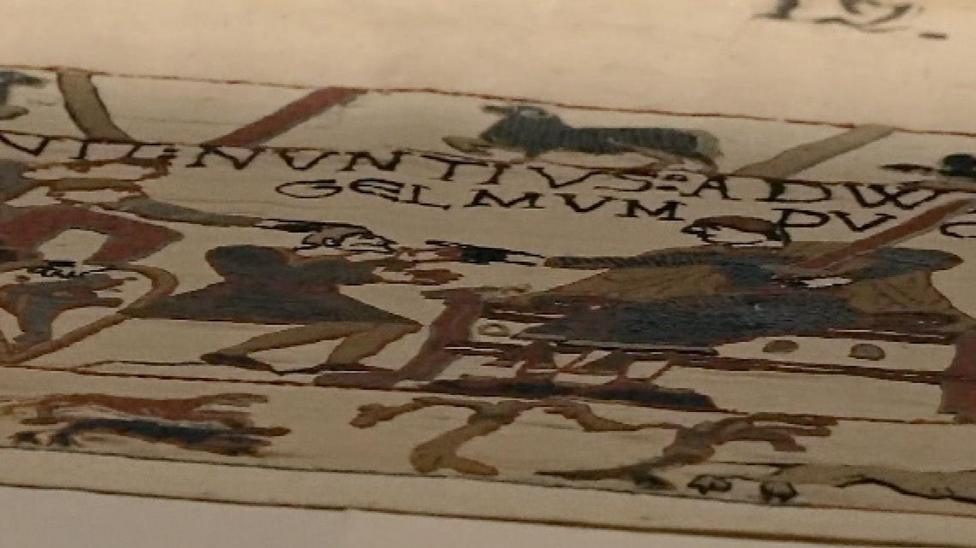
The Bayeux Tapestry has been safely unfurled at the British Museum, marking the first time the 70-metre medieval artwork has been on English soil in 1,000 years. French and British conservators spent 18 painstaking hours unrolling the embroidered linen, which is actually coloured yarn stitched onto fabric rather than a woven tapestry. French Culture Minister Catherine Péragard confirmed the masterpiece is in a "wonderful state", aiming to silence critics who feared the journey from Normandy was too risky.
The successful transport represents a significant feat of cross-Channel cooperation, particularly given anxieties in France about lending such a fragile treasure. Péragard noted that the extensive precautions taken should "reassure all the sceptics" who opposed the move. To prevent gravitational strain, the museum agreed to a strict stipulation that the artwork must be displayed entirely flat rather than hung upright. Visitors will be limited to 40-minute viewing slots to manage the expected one million attendees over the nine-month exhibition starting 10 September.
Guests will first view the entire 58-scene narrative from an elevated mezzanine before walking alongside the 50-centimetre-high embroidery. Currently shielded by giant polyester sheeting to prevent light damage, the artwork details the events leading to the 1066 Norman Conquest. It features 626 figures, 202 horses, and poignant glimpses into civilian suffering, such as a woman fleeing her burning home with a child.
Despite its age, the tapestry still holds historical mysteries. Professor Michael Lewis, the exhibition's curator, noted that the famous depiction of an arrow striking King Harold's eye is likely a 19th-century restoration, as earlier drawings omit the weapon. The 11th-century seamstresses, believed to have worked in Canterbury, demonstrated such skill that their figures appear three-dimensional.
The loan was proposed in 2013 when the Bayeux Museum faced renovations, with the British Museum sending a rare Anglo-Saxon helmet from the Sutton Hoo collection in Suffolk in return. George Osborne, the museum's chair, framed the exchange as a reflection of the intertwined history shared by the two neighbours. "There's a kind of frenemy, love-hate relationship between the British and the French," Osborne said, noting it is a fitting tribute to cross-Channel friendship ahead of a weekend World Cup match between the nations.