Infantino avoids IOC censure over Trump Balogun intervention
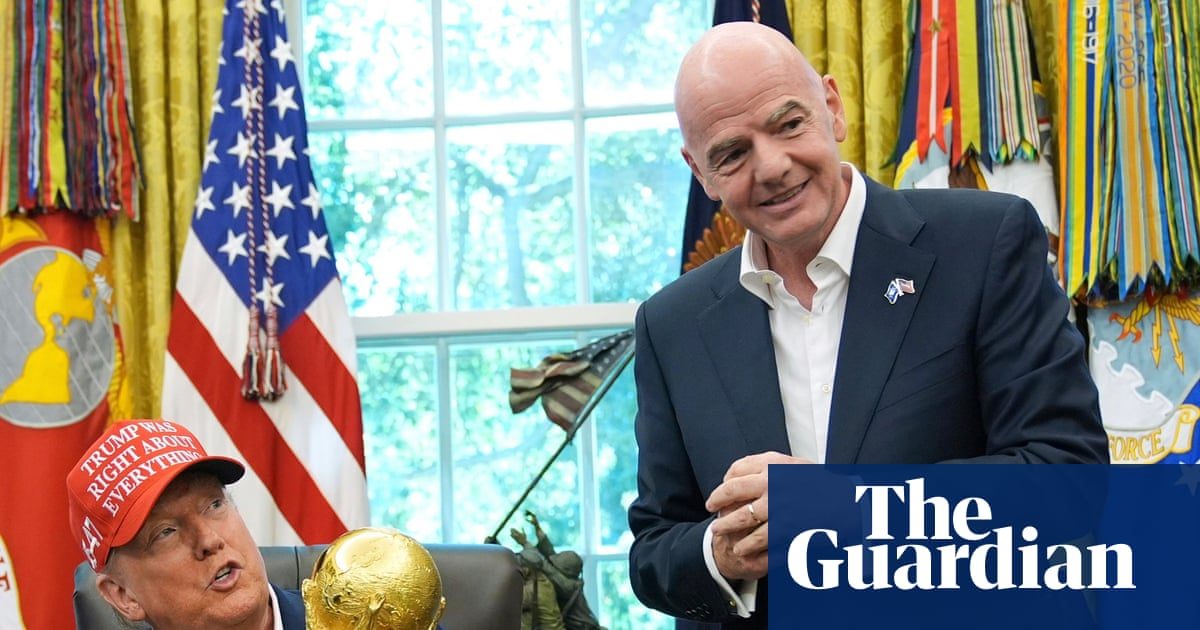
Donald Trump spoke to Fifa president before ban lifted Human rights body FairSquare sent complaint to IOC Gianni Infantino is poised to escape without sanction after complaints he breached rules on political neutrality in his dealings with Donald Trump over the Folarin Balogun affair. The International Olympic Committee this week received a formal complaint from the human rights organisation FairSquare regarding Infantino’s conduct after Trump revealed he had called the Fifa president asking him to review Balogun’s ban from the USA’s last-16 tie against Belgium . The ban was subsequently suspe
The International Olympic Committee is highly unlikely to open a formal investigation into Gianni Infantino after a human rights group accused him of breaching political neutrality rules. FairSquare filed a complaint this week regarding the FIFA president’s discussions with Donald Trump, who publicly stated he asked Infantino to review Folarin Balogun’s ban ahead of the USA’s last-16 World Cup match against Belgium.
IOC sources indicated an extreme reluctance to intervene in another international federation’s internal rule applications, particularly before internal appeals are exhausted. The balance of power between the two organisations has shifted over the past two decades, leaving the IOC increasingly dependent on FIFA for commercial revenue and relevance among younger demographics. With the 2028 Los Angeles Olympics approaching, the IOC is keen to leverage the recent US football boom that generated record World Cup ticket sales and revenue, making any disciplinary action against Infantino improbable.
The IOC charter explicitly prohibits members from accepting mandates from governments that interfere with their independence. Infantino, an IOC member since 2020, has admitted speaking to Trump about the issue, though FIFA stated they speak regularly on a variety of subjects. Infantino defended the subsequent decision to suspend Balogun’s ban for 12 months, insisting the disciplinary committee operates autonomously. “They operate autonomously, apply the Fifa disciplinary code, and decide cases based on the applicable regulations and the specific facts before them,” he said. “Their independence is essential to the credibility and integrity of football, and this must always be respected.”
FIFA has not published the written reasons for the ruling, stating only that it “was decided considering all of the specific circumstances surrounding the incident and evidence available” and that “reviewing the legal consequences of red cards in football is nothing new”. Standard World Cup disciplinary processes require three-person panels selected from 18 committee members to decide cases by majority vote. Reports suggest the Balogun ruling was made unilaterally by committee chair Mohammad al-Kamali, though other FIFA sources claim he is being offered up as a scapegoat. The identities of the actual panel members for the last-32 stage, where Balogun was sent off against Bosnia and Herzegovina, remain unknown.
Despite these procedural irregularities, neither UEFA nor the Royal Belgian Football Association has filed a complaint with the IOC. Both organisations previously condemned FIFA’s decision, with UEFA accusing the governing body of undermining the credibility of the sport. However, sources suggest the Belgian federation is prepared to drop the matter entirely, having gone silent since Spain eliminated Belgium in the quarter-finals. The federation’s president, Pascale Van Damme, currently sits on the FIFA Council, the organisation's main decision-making body.
The episode ultimately demonstrates Infantino’s entrenched position ahead of next year’s FIFA presidential election. More than 200 of the 211 FIFA member associations have already submitted letters of personal endorsement. For European stakeholders, the affair underscores a stark reality: public condemnation from continental bodies does little to counteract FIFA’s internal governance mechanisms or its commercial leverage over the wider Olympic movement.