Hungarian President Sulyok steps down after parliament forces constitutional change
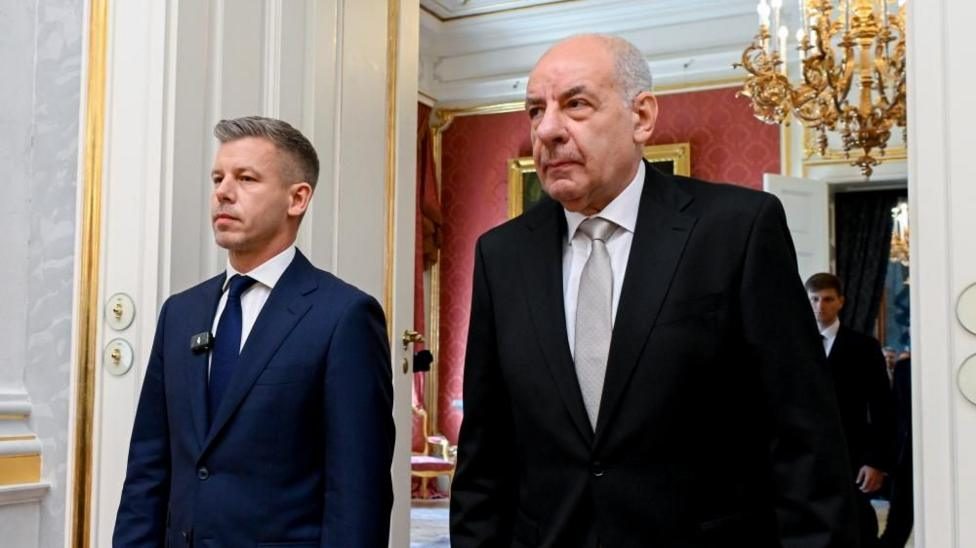
Hungarian President Tamás Sulyok has signed a constitutional amendment ending his term, marking a decisive move by Prime Minister Péter Magyar’s government to dismantle the institutional remnants of Viktor Orbán’s sixteen-year rule.
Hungarian President Tamás Sulyok has agreed to step down, signing a constitutional amendment that will end his presidency at midnight on Sunday. The decision follows a parliamentary vote by Prime Minister Péter Magyar’s Tisza party to force his removal. Sulyok faced a five-day deadline to sign the amendment or risk impeachment proceedings and a protracted constitutional crisis.
Confirming his agreement as the Saturday evening deadline passed, Sulyok issued a statement accusing the new government of violating the rule of law. He described the amendment as a breaking point in Hungarian constitutional democracy. He added that the core values of a free society have been trampled underfoot for the sake of political power.
The move represents the most dramatic action yet by the Tisza government, which secured a landslide victory in April. The ruling coalition viewed Sulyok as a loyalist puppet of former prime minister Viktor Orbán. When the vote results were announced on Monday, the 141 Tisza deputies in parliament gave the measure a standing ovation.
Orbán, who lost power in April after sixteen years in office, condemned the amendment as an act of tyranny and called for protests. His Fidesz party has been in free fall following the shock defeat, and Orbán has largely disappeared from public view. He has also refused to take his seat in parliament since the transition of power.
Between 2010 and 2026, Fidesz utilized its two-thirds parliamentary majority to reshape the Hungarian state. The party systematically filled supposedly independent state positions with loyalists to cement its control. This institutional capture was explicitly designed to ensure the regime’s survival even after an eventual electoral defeat.
For European investors and markets, dismantling this framework is a critical test of Hungary’s return to institutional predictability and rule-of-law compliance. András Baka, former head of Hungary’s Supreme Court, emphasized the immense difficulty of this transition, noting it is "very difficult to break up a sophisticated authoritarian regime... which was designed to survive even after electoral defeat." He argued that while Fidesz captured state institutions to create an authoritarian state after 2010, the president's removal is a necessary step to restore the rule of law that governed the country from 1989 to 2010.