The anti-aging industry promises to extend life. Here's the reality
The fear of aging is driving a wave of biohacking businesses promising to help restore youth and fight disease. Four Corners investigates the race to reverse the aging process.
Billionaire tech bros are pouring money into anti-aging startups, some of which have eye-watering valuations despite no product to sell.
Extraordinary claims are being made about turning old mice into young ones, curing blindness and rewinding our biological clocks.
Biohacking is in full force and people are taking risks with their bodies while longevity businesses are cashing in.
This is all becoming muddled with legitimate research in a field that could transform medicine and produce some of the corporate giants of tomorrow.
Four Corners set out to find what's simply hype, what research shows signs of promise, and what you can actually do today to live your longest life in good health.
Our journey starts at a biohacking conference in New York City, where hundreds of participants are gathered in conference rooms to sample the latest products.
Influencers film themselves as longevity business leaders give lectures.
One tells the rapt crowd he can "make your body dance the salsa".
Some presenters went to lengths to declare their anti-vax credentials, illustrating the contradictions between maintaining a facade of science while rejecting the mainstream.
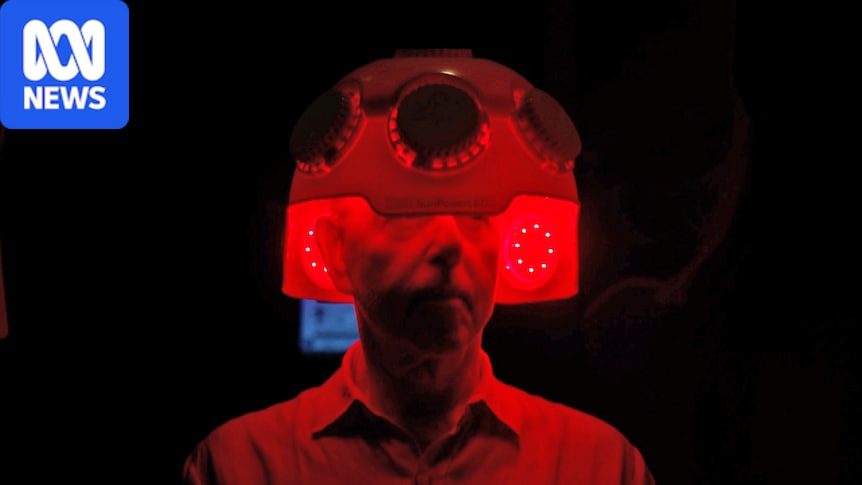
Therapies on display include everything from ozone treatments to hydrogen inhalations, red light therapy, vibration plates and free IV infusions.
One stallholder claims "exclusion zone" gel has eliminated the wrinkles around his eyes.
"I now look like I did 20 years ago," he insists (while on casual observation actually looking his age).
Another warns us about the danger of something called "blocked chi", which apparently causes numbness, fatigue, headaches and tingling fingers.
Luckily, they have a pod you can sit in to unblock your chi.
From stall to stall, these biohackers seem convinced they have the solution to staying young.
But despite the hype and attempts to sound scientific, very few of the therapies on offer are backed by human evidence.
Across the continent, in glitzy West Hollywood, there's another business chasing the cash of those racing to turn back the clock on aging.
Customers at Next Health's longevity and wellness centre are greeted by rows of sumptuous armchairs next to IV drip stands.
The company's clients, according to its founder Darshan Shah, are mostly fit and well.
Next Health promotes itself as a one-stop wellness shop where clients can get a full-body MRI and extensive blood testing before being given tailored supplements and undergoing a variety of treatments, such as whole-body red light.
Dr Shah, who's a former surgeon, says many clients visit for regular infusions of vitamins and a coenzyme known as NAD+.
"Most people are coming in after they've had either a very stressful week or they're travelling a lot," he says.
As part of its services, Next Health offers hyperbaric oxygen therapy, where clients breathe 100 per cent oxygen inside a pressurised chamber, as well as cryotherapy, which uses extreme cold in an attempt to speed up muscle recovery or destroy abnormal tissue.
The clinic also offers plasma exchange, where blood is essentially recycled through a filter and pumped back into the body.
The promised benefits include recharging your mitochondria, clearing brain fog, slowing the aging process, and helping with the early detection of serious disease.
"We will do everything possible to make your health span match your life span," he says.
But there is very little evidence behind many of these treatments.
Endocrinologist Professor Katherine Samaras is scathing about NAD+, for example.
"I think the NAD boosters are a complete waste of money," she says.
"You can optimise your mitochondrial function, which is one of the effects they're proposed to have, by cutting back on what you're eating, by not drinking too much alcohol."
Professor Luigi Fontana, an internationally recognised authority on metabolism, nutrition and aging based at the University of Sydney, agrees.
"There are interesting data in animals, but I haven't seen any randomised clinical trial proving that there is an improvement in any disease or even safety data."
There is also scientific literature, which has found that NAD+ may play a role in cancer, and that vitamin C in high doses intravenously changes from a protective antioxidant to a potentially damaging pro-oxidant.
Next Health's model is one Australian businesses are watching and modelling closely.
These peptides are unproven, with potential unwelcome side effects.
On top of that, a black market is supplying products that could have harmful contaminants.
The peptide market illustrates how parts of the longevity industry can operate in the gaps between the two main health regulators, the Australian Health Practitioners Regulation Agency (AHPRA) and the Therapeutic Goods Administration (TGA), which regulates drugs, supplements and medical devices.
The longevity market for consumers appears to be racing ahead of the evidence, but that doesn't mean the underlying science is fantasy.
Away from the clinics and online market, real scientific research is underway.
"Geroscience" is based on the idea that many chronic diseases, such as cancer, coronary heart disease, dementia and visual loss are, at their origin, diseases of aging.