Japan launches Nvidia-backed sovereign AI to dominate factory robotics
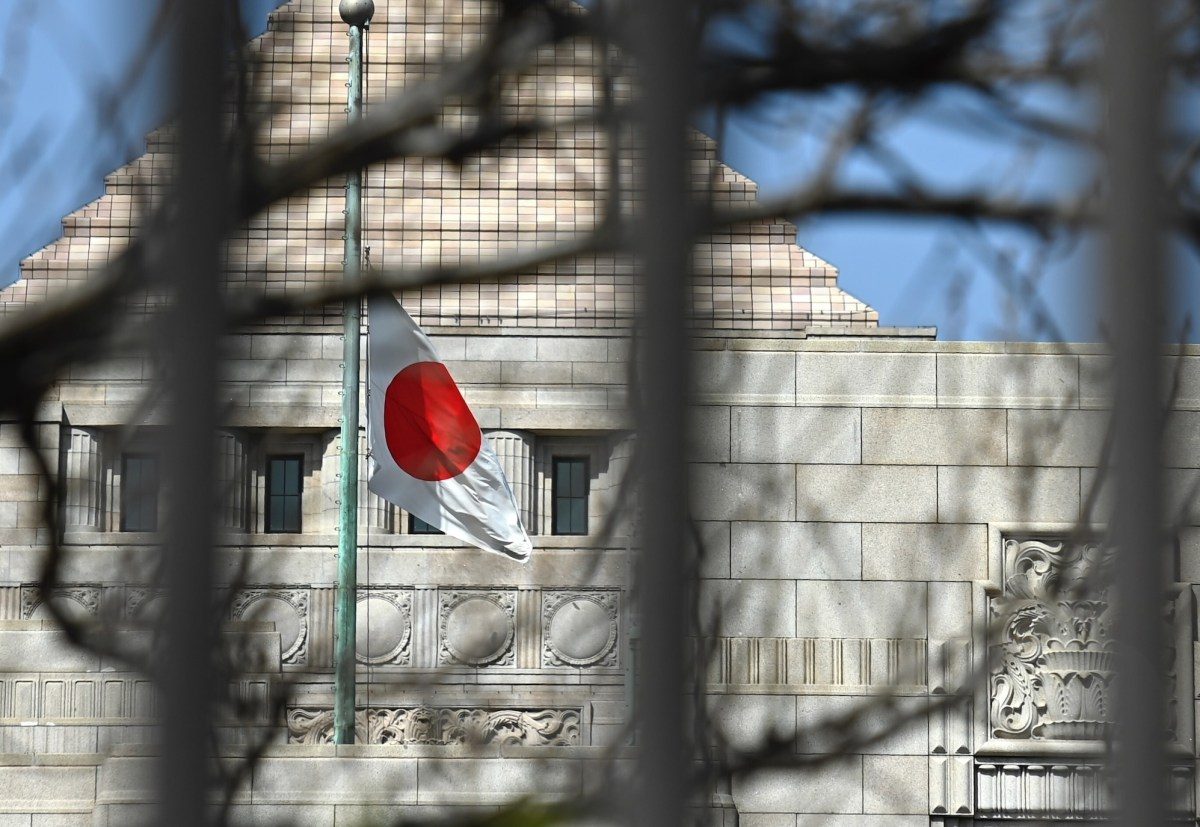
Japan has partnered with Nvidia to build a $6.2 billion sovereign AI infrastructure aimed at putting 10 million robots on its factory floors by 2040, a bold industrial strategy that European manufacturers must now compete against.
Nvidia chief Jensen Huang spent two days in Tokyo securing agreements to build Japan’s sovereign artificial intelligence infrastructure. The resulting deals span a national AI factory, a coalition of leading robotics firms, and an expanded manufacturing partnership with Toyota. The push is designed to put 10 million AI-equipped robots across 18 industrial sectors by 2040.
At the centre of the strategy is Noetra, a consortium of 44 domestic firms including SoftBank, Sony, NEC and Honda. The Japanese government is committing up to 1 trillion yen ($6.2 billion) over five years to fund homegrown foundation models for physical AI. Nvidia will supply the underlying hardware, constructing a data center packed with 27,500 Rubin GPUs and 13,750 Vera CPUs.
That facility, expected to launch in 2028, will deliver 140 megawatts of power to train models into the trillions of parameters. Noetra plans to release its software in stages, starting with a Japanese-language reasoning model in fiscal 2026. An omni-modal version handling text, images, video, and audio will follow by 2028, culminating in a "Real-world Native AI" built to run robots by 2030.
Japan’s top industrial players are simultaneously lining up behind Nvidia’s Cosmos models to use this software. Companies like Fanuc, Yaskawa, Kawasaki Heavy and Hitachi plan to adopt a newly unveiled system called Cosmos 3 Edge, which runs directly on chips inside the machines. Toyota is also expanding its use of Nvidia technology into manufacturing simulations and advanced driver assistance systems for its next-generation vehicles.
A new competitive pressure for Europe
Tokyo’s strategy carries direct implications for Europe’s own manufacturing base. Japan aims to capture more than 30% of the global AI robotics market by 2040, a segment it values at roughly $133 billion. If Japan succeeds in automating its factories to offset a shrinking workforce, it will set a formidable benchmark for European manufacturers facing identical demographic declines.
Furthermore, Tokyo’s approach highlights the difficult reality of technological sovereignty. While Japan is explicitly trying to avoid running its factories on American or Chinese AI software, its entire sovereign compute infrastructure currently relies on American silicon. European policymakers pursuing their own sovereign cloud and AI initiatives will recognize this exact hardware vulnerability.
Tokyo is backing its physical-AI ambitions with a broader plan targeting ¥370 trillion ($2.3 trillion) in combined public and private investment by 2040. As Prime Minister Sanae Takaichi makes AI and semiconductors the centerpiece of her growth agenda, the global race for industrial automation is rapidly accelerating.