FIFA secures $15bn World Cup windfall despite governance scandal
Spain won a troubled World Cup in New Jersey, but the lasting significance for investors and sponsors is FIFA's $15bn revenue haul and the governing body's emboldened push towards a 64-team tournament.
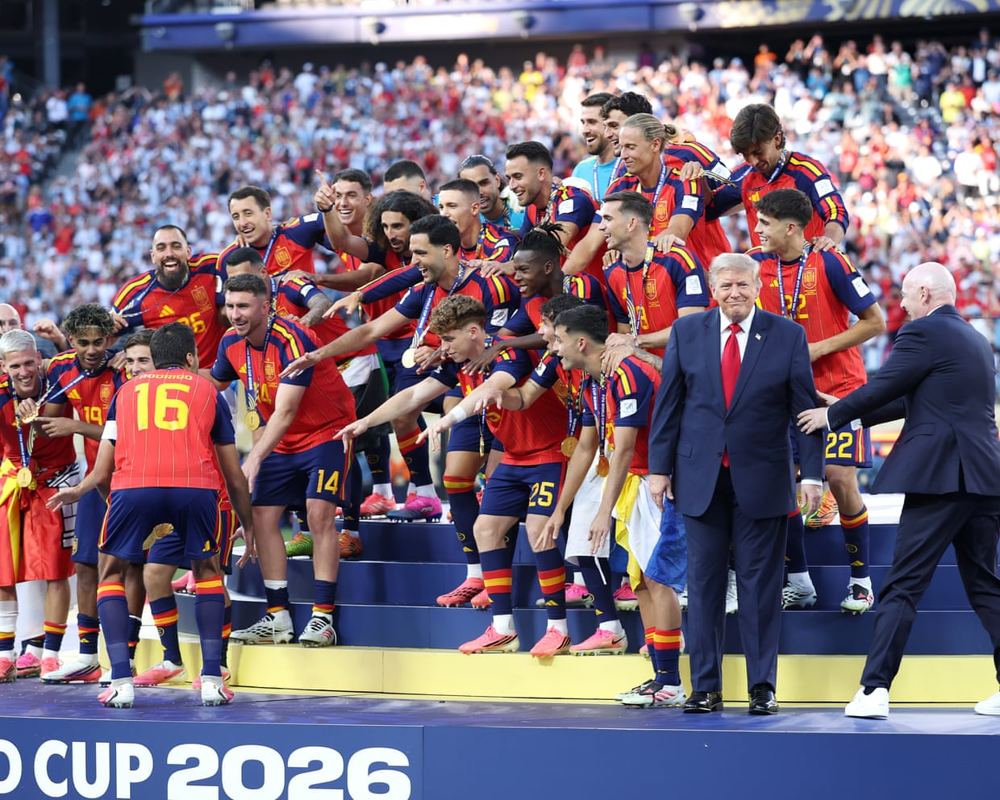
Spain defeated Argentina in New Jersey to win a World Cup that will be remembered more for its commercial scale than its football. Ferran Torres scored the decisive goal in a poor-quality final. Donald Trump and FIFA president Gianni Infantino presented the trophy to Rodri from a Louis Vuitton trunk.
The immediate takeaway for investors and sponsors is the sheer financial power of the modern game. FIFA secured $15bn in revenue from the tournament, significantly exceeding its own internal projections. This financial cushion effectively insulates the governing body from any immediate pressure to reform its operations.
That revenue is likely to fuel further expansion. Infantino’s pursuit of scale means a 64-team tournament has now moved from a theoretical concept to a legitimate discussion point. For media companies and corporate partners, this signals a future of bloated scheduling and diluted on-field products in exchange for greater broadcast inventory.
The tournament's commercial model was most visible in the stands. One hospitality provider sold pitchside seats for $1m, a price point that confirmed the event was primarily an occasion for being seen rather than watching sport. FIFA actively encouraged this elite framing by circulating a pre-match document naming 235 celebrities and VVIPs.
Yet the commercial success is paired with severe governance risks. The Folarin Balogun affair inflicted incalculable damage on trust in FIFA’s regulatory mechanisms and shredded its claims of political neutrality. For corporations tying their brands to the sport, the incident suggested an environment where outcomes remain vulnerable to behind-the-scenes relationships.
This risk is compounded by FIFA's growing political entanglements. Trump has made no secret of his desire for the US to have solo host status by 2038, and his close alignment with Infantino on the podium signals a deepening partnership. For a global sport reliant on international goodwill, this political proximity introduces unpredictable variables for future tournaments.
Away from the VIP enclosures, the economic benefits for host cities were tangible. Places like Kansas City and Houston generated significant local business by serving as team bases, offering sincere hospitality that contrasted with the administration's image. Mexico, which provided the tournament's best venue at the Azteca, also demonstrated the commercial value of raw football passion.
The tournament concluded with a tearful Lionel Messi standing before Argentina's supporters, marking the end of an era for the sport's most marketable individual. As FIFA counts its $15bn, European stakeholders must weigh whether the governing body's emboldened, hyper-commercialised trajectory is a sustainable model for the sport's long-term health.