France launches Tara Polar Station for Arctic climate mission
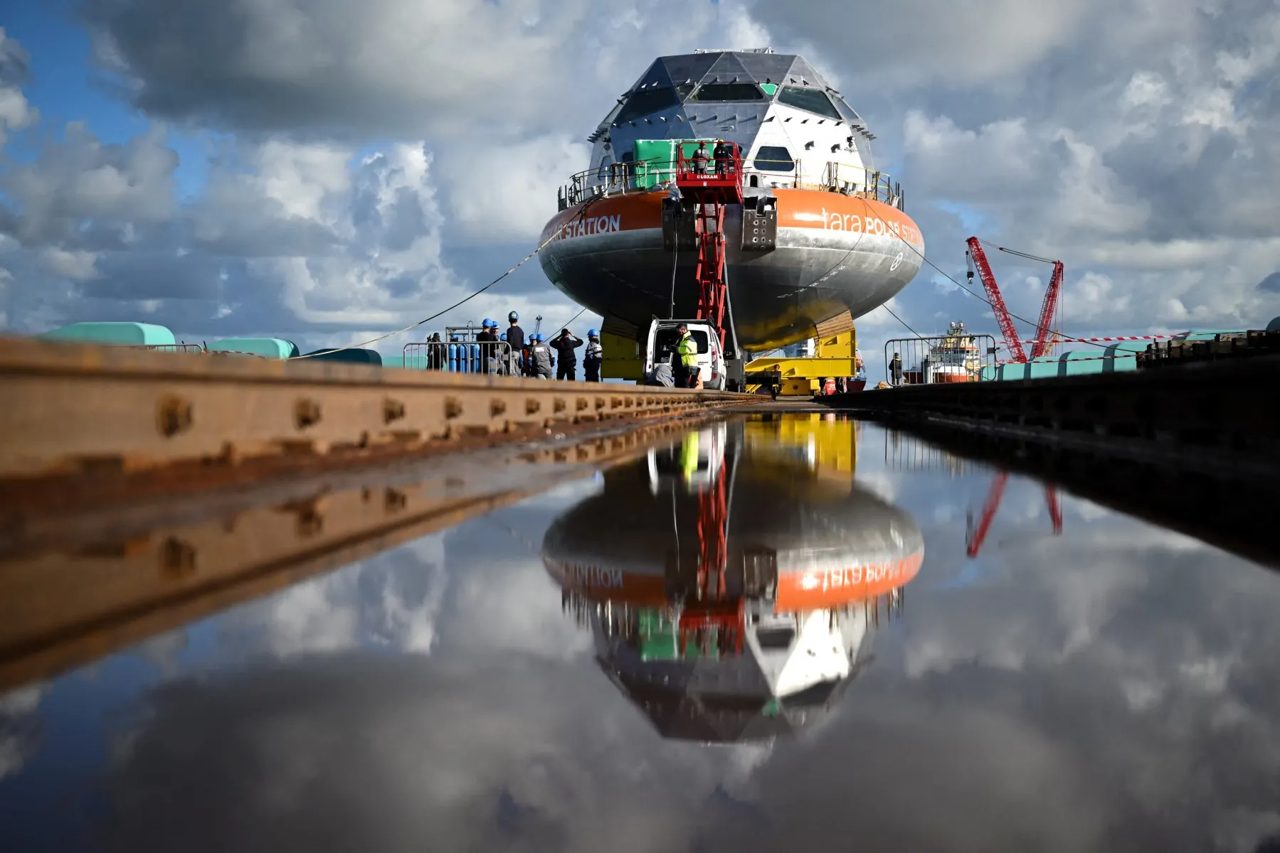
A French-built floating laboratory has departed for a two-year Arctic drift to study climate change, anchoring Europe's scientific leadership in a rapidly transforming region.
The Tara Polar Station sailed from the French port of Lorient, beginning a planned two-year drift across the Arctic Ocean. French Minister for the Sea Catherine Chabaud attended the departure as hundreds gathered on the quayside. The uniquely shaped vessel, built in France, will spend months trapped in pack ice to study polar biodiversity and the impacts of climate change.
Shaped like an igloo perched on a large buoy, the station is engineered to withstand extreme sea-ice pressure and temperatures as low as -52C. Starting in mid-August, an icebreaker will clear a path eastward along the Russian coast. By early September, the vessel will be locked in the ice, drifting at roughly 10 kilometres per day until it reaches the Fram Strait between Greenland and Svalbard by the end of 2027.
For Europe, the mission represents a strategic investment in understanding a region whose rapid transformation carries long-term economic and environmental consequences. Changes in Arctic ice directly affect global weather patterns, European maritime security, and future shipping lanes. "The Arctic is an ocean that has been little studied and is already changing significantly. It is undergoing a major transformation," said Romain Trouble, executive director of the Tara Ocean Foundation.
The floating laboratory aims to gather over 10,000 samples from the water, atmosphere, and sea ice through a specialized opening in its hull. This sustained presence addresses a critical gap in climate modelling. "You cannot understand the environment if you only spend two months a year there," Trouble added. The data will help document ecosystems at risk of vanishing before they are understood. "We could potentially lose an entire chapter of the evolution of life on this planet without even having had time to document it," he warned.
While the vessel is French, the scientific effort is broadly international. Around 30 research centres from 12 countries, including Germany, Canada, Spain, the US, Switzerland, and Japan, are participating. This collaborative model spreads the considerable cost and logistical burden of polar research while pooling expertise. Ten such expeditions are planned between 2026 and 2045, occurring every two years.
Operating the station requires a carefully selected crew capable of enduring extreme isolation. The vessel will carry 12 people during the winter, including six scientists, expanding to 18 in the summer