SpaceX delays Starship flight after $100bn wipeout
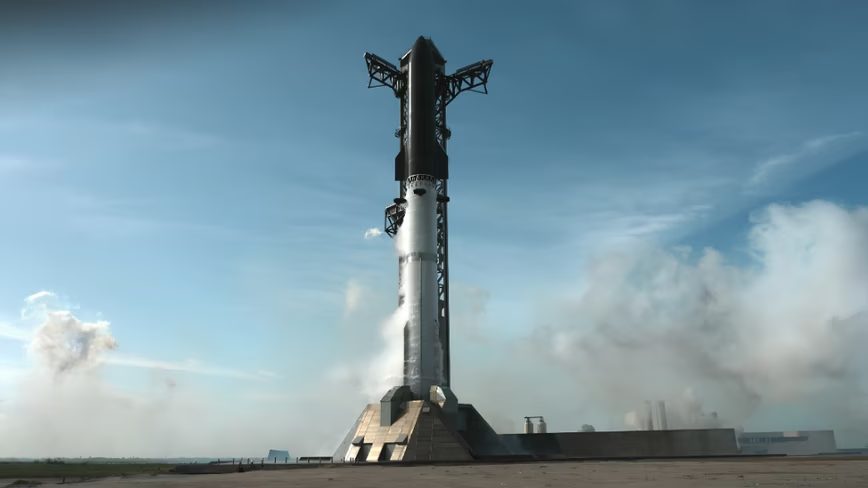
SpaceX has moved the next launch attempt of its Starship rocket to Thursday, 23 July, the latest delay for a flight that has now been scrubbed once and rescheduled twice. The company had been targeting Monday evening from its Starbase site at Boca Chica in Texas, and said it needed more time to finish work […] This story continues at The Next Web
SpaceX has rescheduled the 13th flight of its Starship rocket to Thursday, 23 July, after an aborted countdown earlier this month. The initial attempt on 16 July was automatically scrubbed when several of the 33 Raptor engines on the Super Heavy booster failed to ignite. Elon Musk said two engines would be replaced, but the company later pushed the flight back a second time from Monday to finish unspecified propulsion work.
The upcoming mission is the second for the upgraded V3 version of the vehicle. During its debut in May, the upper stage successfully released 20 mock satellites before splashing down in the Indian Ocean, but the booster was destroyed after stage separation. Thursday’s flight will repeat that suborbital profile, deploying the first batch of upgraded Starlink V3 satellites to test the dispenser mechanism and laser links before they burn up in the atmosphere.
However, the financial calculus surrounding these tests has fundamentally shifted. SpaceX completed the largest IPO in history in June, transforming technical hiccups into shareholder events. The market reacted severely to the 16 July abort, wiping roughly $100bn from the company’s value. Setbacks that once drew little more than a shrug from industry observers now directly impact a public stock price.
The commercial implications of these delays extend beyond Wall Street. The heavier Starlink V3 satellites cannot be launched at scale using SpaceX’s existing Falcon 9 rockets, meaning the company needs a reliable Starship to expand its satellite internet network. Additionally, NASA is relying on a modified Starship to return astronauts to the Moon under the Artemis programme, a timeline that slips with every scrub.
SpaceX has invested more than $15bn in the Starship programme to date. The company’s stated goal is to fly the vehicle with the frequency of a commercial airline rather than a series of one-off events. If Thursday’s window holds, it will mark the 13th attempt since 2023 and the first real opportunity for the V3 model to prove it can complete back-to-back flights without losing a booster.