Airlines and airports demand EES suspension over tripled wait times
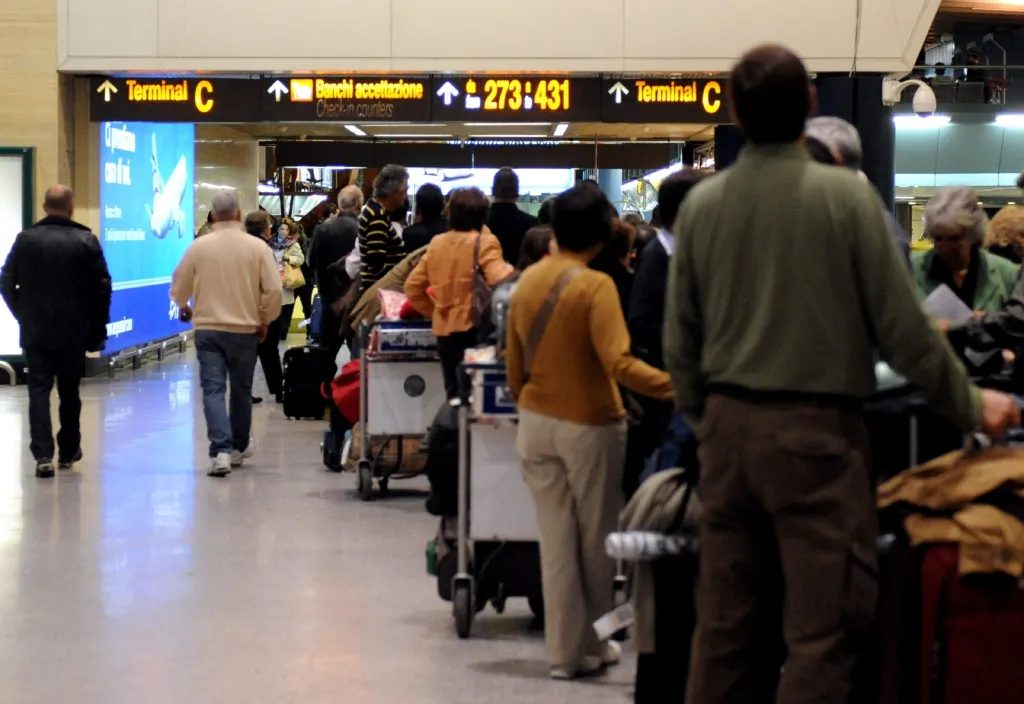
Europe's new digital border system is tripling wait times for non-EU travellers, prompting airlines and major hub operators to warn of summer capacity crises that could disrupt the continent's tourism economy.
The EU's Entry/Exit System (EES), fully operational since April 10, is causing significant bottlenecks at major European transit points. Airport bosses and airlines are now demanding the suspension of the biometric checks before peak summer travel overwhelms border infrastructure.
At Rome's Fiumicino airport, average wait times for UK nationals have jumped from seven minutes to 20. Faro airport in Portugal has seen similar surges, with queues stretching from 10 minutes to over half an hour. The International Air Transport Association (Iata) reports that passengers across Portugal, Spain, Italy, Greece, and Belgium are experiencing “delays and missed connections”.
The travel industry argues the system cannot handle peak volumes. Marco Troncone, CEO of Aeroporti di Roma, rated his concern for the summer at an “eight or nine” out of ten. “The process proves to be incompatible with the peak volumes that we are going to face. So the only way is to open up the valve,” Troncone said, noting that “there is no way that we can deliver 100 per cent of the enrollment.” Ryanair has echoed these warnings, predicting “queue chaos” at holiday hotspots, while Iata has formally called for a suspension of the controls until next summer.
Some airports are attempting to manage the friction through technology. Ivan Bassato, chief aviation officer at Fiumicino, noted that new self-service biometric kiosks have "improved things significantly." However, he conceded that "we are not at the point where you have the same quality of the process [as] before the EES." “I think that we need to fix urgently certain aspects of the system,” he added.
European officials have refused to halt the system, with the Commission stating that while the EES is “not perfect,” a suspension is “not needed” and “not possible.” EU migration chief Magnus Brunner has pledged to resolve technical issues. Defending the database, France's Interior Ministry noted that over 44,000 entry refusals have been flagged among 110 million recorded crossings, including over 1,100 security threats: “These figures demonstrate that EES effectively protects European citizens on a daily basis.”
The EES was actually designed before Brexit with British support to automate the tracking of short-stay visitors across the 29-nation Schengen area. It replaces manual passport stamps with fingerprint and facial image registration at external borders. Following the UK's departure from the bloc, millions of British holidaymakers became subject to the new infrastructure, bearing the brunt of the resulting logistical strain.